Facebook
 Google
 GitHub
 Linkedin
Electric School Bus Fleet Debuts in New Mexico
GreenPower will supply six all-electric school buses to New Mexico in a two-year, $5 million pilot program testing zero-emission transport and charging solutions.
Switching a school bus fleet from diesel to electric isn’t just replacing engines with batteries. It’s a full-scale test of range, charging infrastructure, and operational reliability. In New Mexico, where routes can stretch long distances and climates swing from desert heat to mountain snow, the challenge is even greater.
GreenPower Motor Company is ready to put that challenge to the test. The manufacturer has signed a $5 million contract with the state of New Mexico to launch a two-year, all-electric school bus pilot program. The deal covers vehicle purchases, charging infrastructure, and project management, all aimed at seeing how electric buses perform in real-world school district operations.
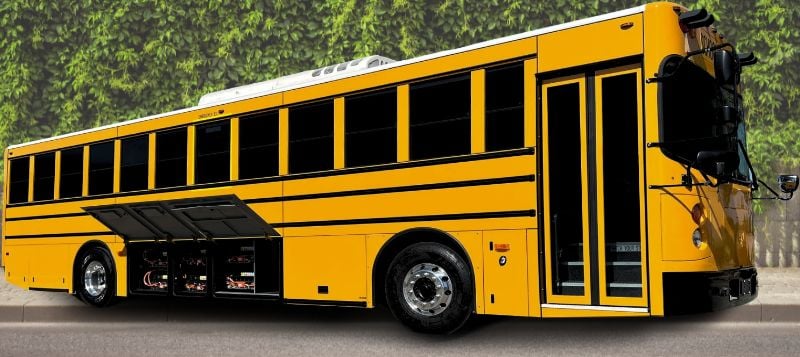
The Mega Beast. Image courtesy of GreenPower
Two Phases, Two Bus Types
In the first year of the program (2025–26), three Type A Nano Beast Access buses will be deployed across participating districts. In year two (2026–27), three larger Type D models (a mix of Beast and Mega Beast units) will join the rotation.
Each school year will be divided into five pilot rounds, with buses moving between districts every six weeks so multiple communities can participate. The state will select from districts that volunteered to participate.
The first Nano Beast Access buses are nearly ready for delivery. Manufacturing is almost complete, and deployment for the first round is scheduled for the week of September 15.
Nano Beast Access: Compact, Accessible, and Purpose-Built
The Nano Beast Access is purpose-built as an electric vehicle. Its aluminum body is formed from extrusions supplied by Constellium and integrated as a single structure for strength and corrosion resistance. Inside, it seats up to 20 ambulatory passengers and can accommodate more than three wheelchair securements using Q’Straint systems. A BraunAbility rear curbside lift for easy boarding enhances accessibility.
Power comes from a 118 kWh battery pack, delivering a range of up to 140 miles per charge. Dual charging ports are standard. Level 2 AC charges 19.2 kW (J1772) for an eight-hour recharge, and CCS-1 DC fast charging at up to 60 kW, bringing charge time down to roughly two hours. An optional wireless DC charging setup is available at the same 60 kW rate.
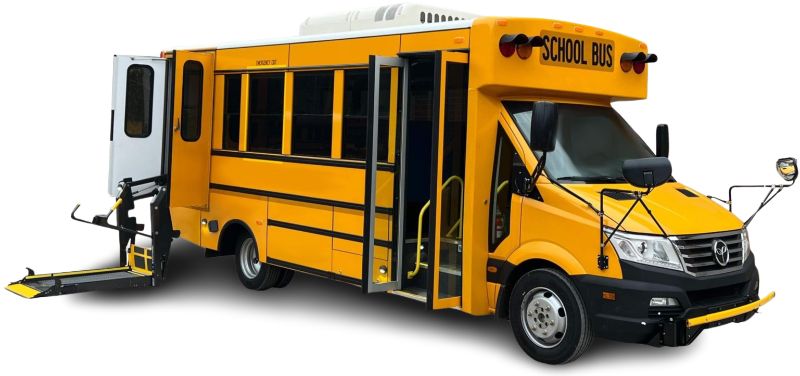
The Nano Beast Access. Image courtesy of GreenPower
Scaling Up in Year Two: The Beast and Mega Beast
When the pilot enters its second year, New Mexico will test GreenPower’s full-size electric school buses. The standout is the Mega Beast, a 40-foot Type D bus with a massive 387 kWh battery pack, giving ranges of up to 300 miles. That’s enough for rural routes with multiple runs or steep uphill climbs that challenge smaller batteries.
The Mega Beast’s design also supports vehicle-to-grid operation, allowing stored energy to be fed back into the electrical grid. This feature will be tested during the second year as part of the state’s grid resilience and sustainability evaluation.
Charging Infrastructure as a Test Case
Charging will be as much under the microscope as the buses themselves. In year one, the Nano Beat Access models will use a combination of Level 2 slow charging and Level 3 DC fast charging. In year two, DC fast charging will be evaluated for the Beast and Mega Beast models. GreenPower is partnering with Highland Electric Fleets to install and manage the charging systems for the program. This includes hardware setup and training for drivers, mechanics, and first responders to ensure safe and efficient operation.
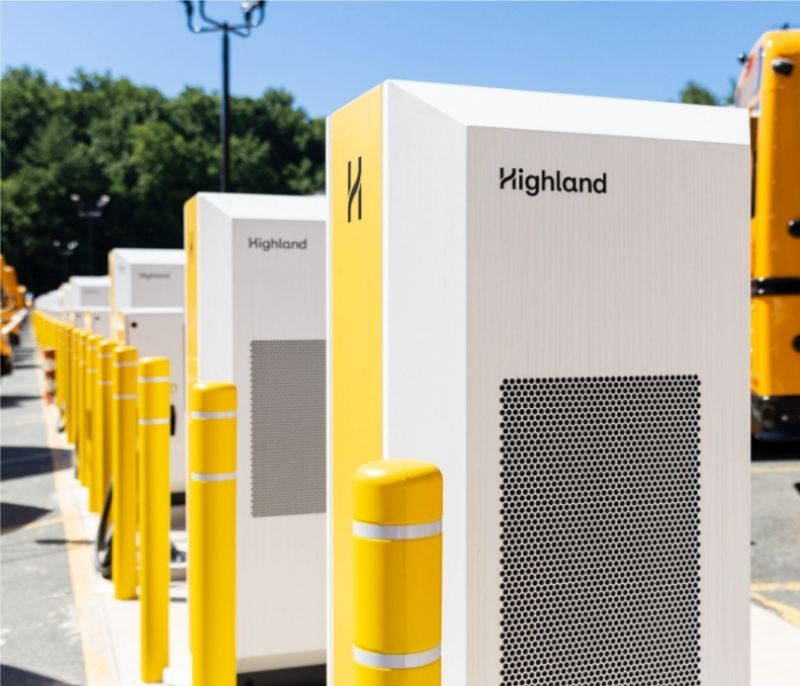
Highland Electric Fleets will supply and manage chargers. Image used courtesy of Highland Electric Fleets
As the buses move between districts in short rotations, the state will gather feedback from geographic and operational conditions. That information could guide future fleet purchases and infrastructure planning. The project’s scope mirrors a similar GreenPower pilot in West Virginia, but with a stronger emphasis on charging strategies and grid interaction. If it succeeds, it could set the stage for larger-scale deployments in New Mexico and other states watching closely from the sidelines.
The first Nano Beast Access buses are on the assembly floor, the charging gear is being prepared, and school districts are lining up to see how electric power performs in the realities of student transportation. In a few weeks, New Mexico’s pilot will roll into its first round, and the state will learn whether the future of its school buses runs on batteries.