Facebook
 Google
 GitHub
 Linkedin
Can Big Tech Help Triple Nuclear Power by 2050?
Major technology and industrial companies want to use nuclear to meet carbon-free energy demands. Who are the leaders?
Five of the world’s largest energy users—Amazon, Google, Meta, Dow, and Occidental Petroleum—are committed to tripling global nuclear capacity by 2050. The corporations have pledged with the Net Zero Nuclear Initiative (NZN) to achieve net-zero emissions worldwide through nuclear energy.
Why is Amazon committing to nuclear energy? Video used courtesy of Amazon Sustainability
These companies are among the largest users of artificial intelligence, data centers, and industrialization, whose energy needs place enormous pressure on existing power plants. Net Zero, led by the World Nuclear Association, seeks to promote nuclear energy growth for emissions-free grid resilience and security. Also joining the effort are 31 countries, 140 nuclear industry companies, and 14 banks and financial institutions.
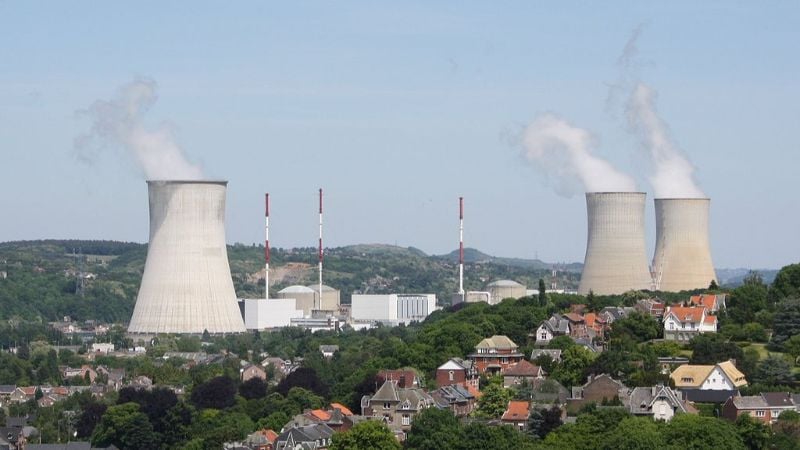
Nuclear power plant. Image used courtesy of Wikimedia Commons
The Need for Nuclear
Major tech companies like Google, Amazon, and Meta have contributed to artificial intelligence’s meteoric increase over the past several years. Apple and Microsoft, who have not signed Net Zero’s pledge, are also major AI developers and users. According to a Goldman Sachs report, data centers are projected to increase their energy demand by 165% by 2030. Global industrial growth has also stressed power infrastructure, especially at local levels.
At the same time, these companies are straining to meet their net zero or carbon reduction goals. Many have invested in wind, solar, and other renewable energy projects, either to power their facilities or for community use in carbon credit plans. For example, Amazon reported that it has been the largest renewable energy purchaser for the past five years.
Tech companies are the biggest buyers of long-term renewable energy agreements, which increased by 35% last year, according to a BloombergNEF analysis. The companies aim to secure enough energy to meet their data center power demands while also reducing their carbon footprints.
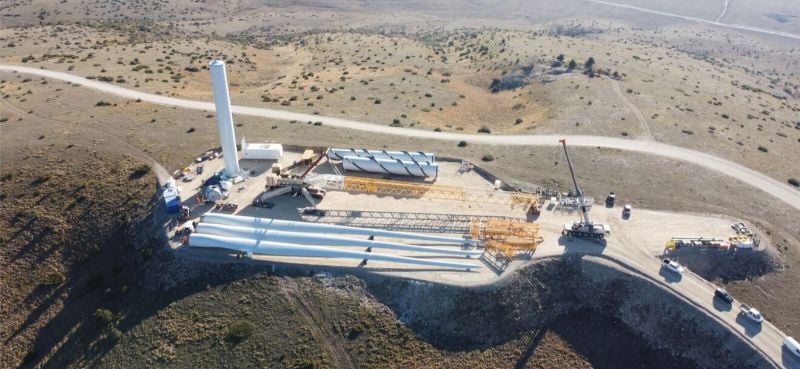
Amazon invested in the Vermio wind farm in Greece in 2024. Image used courtesy of Amazon Sustainability
The Small Nuclear Solution
However, despite their efforts, big tech’s progress in meeting carbon-free goals with renewables seems to be slowing. In 2024, Google’s Scope 2 (or indirect) emissions increased, in large part due to energy use by its data centers. As a solution, the tech giants are developing nuclear projects, including conventional nuclear plants and small modular reactors.
Major industries are also turning to nuclear. Chemical and plastics producer Dow is partnering with X-energy to build a nuclear power facility in Texas. The project will use small modular reactors to replace conventional sources in Dow’s 4,700-acre manufacturing complex. X-energy and Dow’s subsidiary, Long Mott Energy LLC, have applied for a construction permit with the Nuclear Regulatory Commission.
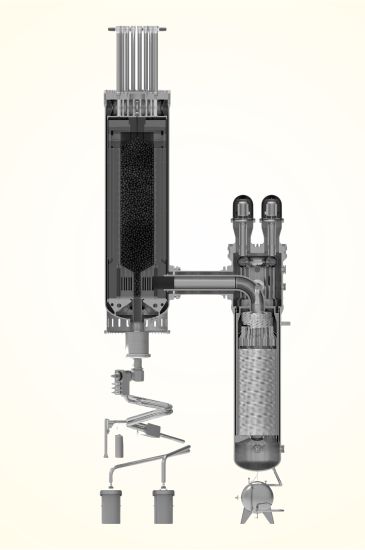
X-energy’s small modular reactor. Image used courtesy of Dow
Compared to conventional nuclear power plants, small modular reactors are less expensive and can be deployed more quickly. They need less land and can be located closer to existing infrastructure. They can also be scaled up to meet specific energy needs.
Microreactors, such as those made by Nano Reactors, may offer solutions for onsite co-generation needs. Microreactors, which produce between 1 to 20 MW of thermal energy, can supplement building-level microgrids or integrate with renewable sources. They are also scalable.
Some major tech companies are exploring nuclear fusion. Microsoft has made a deal with Helion Energy for a fusion facility that aims to produce 50 MW of electricity by 2028. Sam Altman, CEO of OpenAI, has invested $425 million in Helion.
The Nuclear Pledge Potential
According to Net Zero, nuclear reactors currently produce about 10% of the world’s electricity. Since 2000, nuclear power has generated 2,500 TWH of electricity annually.
The Nuclear Pledge asserts that to achieve decarbonization, nuclear power needs to grow at a faster rate than energy demand. Nuclear can significantly lessen the carbon impact of energy-intensive industries and provide energy resilience.
The pledge calls for banks and other financial institutions to invest or support investments in nuclear power through financing plans. It urges nuclear industry companies to work with governments and regulators to maximize existing power plants’ output and develop new nuclear projects more quickly.
Governments signing the pledge commit to investing in nuclear power and supporting nuclear developments, including advanced reactors.
The Net Zero Nuclear Pledge has gained over 130 signatures since its launch in 2023 at the COP28 Presidency Thematic Program in Dubai.