Facebook
 Google
 GitHub
 Linkedin
Briefs: Shaping the Future in Solar, Hydro, EVs, and Space
Qcells, Voith, the Missouri University of Science and Technology, and Nexperia and IAV are pushing boundaries in space technology, solar cells, electric vehicles, and hydroelectric power.
Advancements in power electronics must adapt to present-day change while planning for future energy needs. Recent developments are addressing both concerns. Qcells has expanded its solar cell manufacturing by integrating all steps under one roof, increasing capacity and protecting against future supply chain disruptions. Voith is modernizing pumped-storage turbines in Spain to provide greater grid flexibility now and to prepare for future changes.
At the Missouri University of Science and Technology, students are building on today’s technology to prepare for the possibility of extraplanetary mobility. Finally, Nexperia and IAV are rethinking the electric vehicle battery and power architecture to maximize efficiency and capacity.
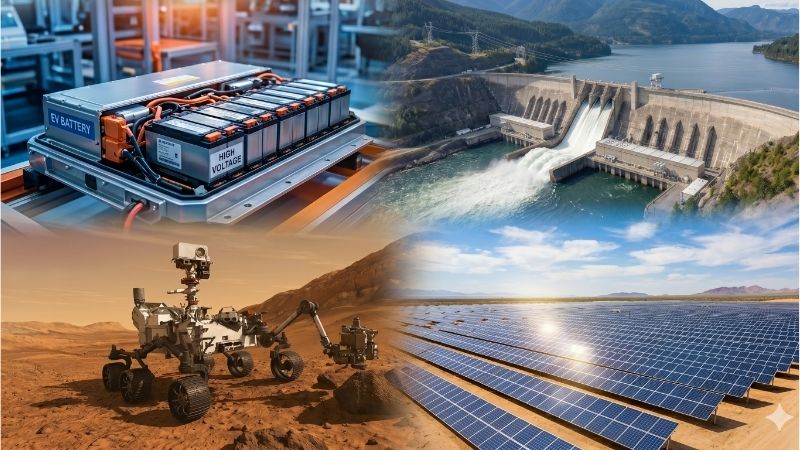
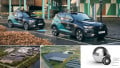
![]() Advancements in electric vehicle battery management, hydropower, Mars mobility, and solar manufacturing. Image generated from images used courtesy of Gemini
Advancements in electric vehicle battery management, hydropower, Mars mobility, and solar manufacturing. Image generated from images used courtesy of Gemini
Qcells Launches 1st Vertically Integrated Solar Cell Production in U.S.
Qcells has created the only vertically integrated solar cell manufacturing plant in the U.S. The company began manufacturing all parts of its solar cells—from major components to finished cells—all under one roof at its Cartersville, Georgia, factory. When the plant reaches full production later this year, it will be the largest solar cell factory in the U.S. The factory also assembles about 16,700 solar panels daily.
By Q3 2026, the Qcells facility will make 3.3 GW each of ingots, wafers, and cells, and 3.5 GW of modules. Another Qcells factory in Dalton, Georgia, tripled its capacity, bringing Qcells’ total daily module production to 47,000 panels, or 8.6 GW annually.
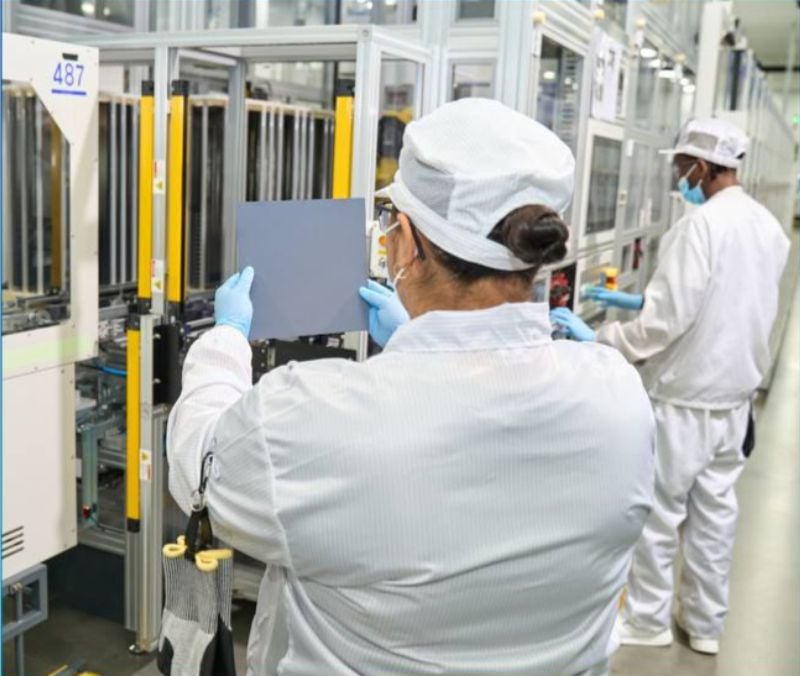
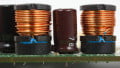
Inspecting a solar cell. Image used courtesy of Qcells
Qcells stated that its integrated U.S. production protects against supply chain and international trade problems by sourcing all components domestically.
Voith To Modernize 2 Pump-Turbines in Pumped-Storage Power Plant in Spain
Voith will modernize two pump-turbines at a hydroelectric power plant in Torrejón, Spain. The turbines have a capacity of 32.5 MW in turbine mode and 43 MW in pump mode. The project is expected to begin in 2027, with operations slated for 2028.
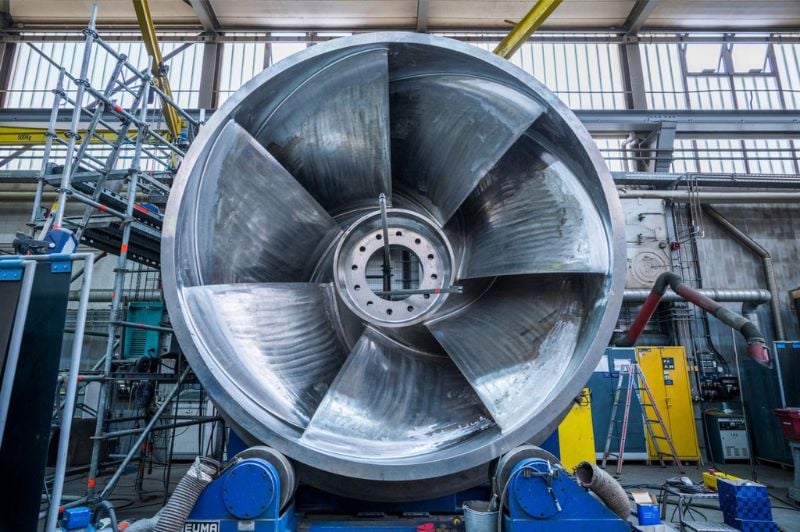
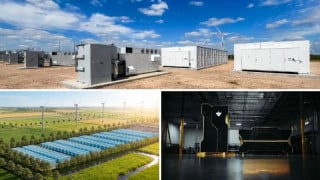
A turbine under manufacture. Image used courtesy of Voith
Voith is modernizing the plant by adapting key components for variable-speed operation, enabling the turbines to respond more flexibly to power grid fluctuations. Compared to constant-speed operation, this change improves control and increases efficiency in both pump and turbine modes, making the existing plant more viable for the future.
The modernization aims to maximize the plant’s potential and allow more grid responsiveness. Voith previously modernized two other pump-turbines at Torrejón.
Ready to Roll: Missouri Student Team Wins Mars Rover Competition
The Missouri University of Science and Technology team’s Mars rover design has captured first place for the second year in a row in the University Rover Challenge sponsored by the Mars Society, an international space advocacy organization. The rover design outperformed 35 other teams from around the world.
Held annually in Hanksville, Utah, the rovers are evaluated on science, autonomous navigation, equipment servicing, and retrieval and delivery. Teams are held to strict guidelines in weight (154 lbs or less), budget ($24,000 or less), and interventions.
The Missouri S&T team’s Rover, named Athena, scored 90.57/100 in the system acceptance review based on a written report and video. In equipment servicing and delivery, Athena finished with perfect scores.
Watch the team building and testing the rover. Video used courtesy of Missouri S&T
Nexperia, IAV Combine GaN and SiC for One Inverter to Boost Battery Power
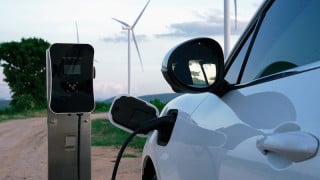
Nexperia and IAV are collaborating to create One Inverter, a software-defined system that manages an electric vehicle’s batteries, traction inverter, onboard charger, and other electronics functions as a total power system. The concept allows available battery capacity to be used more efficiently.
The One Inverter manages individual battery cells based on their actual condition. In traditional systems, the battery pack is evaluated as a whole, meaning that the weakest cell defines its capabilities. The One Inverter software allows each cell to contribute as it is able. The effect is to improve battery use and increase system robustness.
IAV and Nexperia representatives explain One Inverter. Video used courtesy of Nexperia
IAV developed the software-defined system architecture and battery control, and Nexperia contributed the wide-bandgap semiconductor components, which enable fast switching at the battery cell level.
The companies jointly demonstrated the One Inverter at PCIM Europe 2026 and the Advanced Automotive Battery Conference Europe.