Facebook
 Google
 GitHub
 Linkedin
Briefs: Advances for AI Data Centers, Fusion, and Grid Reliability
Infineon, Skeleton, Vicor, the University of Birmingham, EPRI, and the Department of Energy are developing technologies for AI data centers, power supplies, fusion energy, and grid reliability.
AI data centers and grid reliability continue to dominate developments in power technology. Infineon and Skeleton are collaborating on solid-state transformers for data centers, while Vicor is opening two fabrication centers in New Hampshire for high-power components. In a U.K.-U.S. joint venture, the University of Birmingham and EPRI are partnering on fusion reactor technology. To address grid reliability and security concerns, the Department of Energy has awarded 13 companies $75,000 each to develop risk-detection and other grid tools.
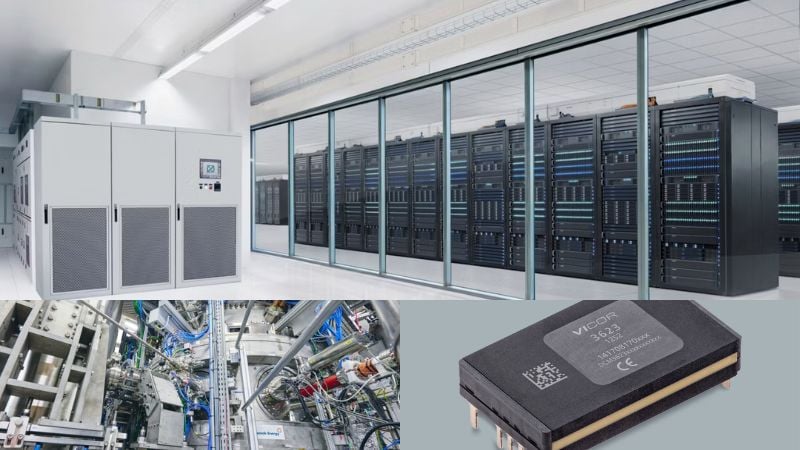
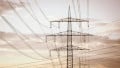
Data centers, fusion energy, and grid reliability technologies.
Infineon and Skeleton Partner for Solid-State Transformers for AI Data Centers
Infineon Technologies and Skeleton Technologies will team up to create high-efficiency power architectures for AI data centers. The partnership targets higher power density, increased energy efficiency, lower total cost of ownership, and boosted system resilience across the grid-to-core electricity distribution chain.
Under the Memorandum of Understanding, the companies will collaborate on next-generation solid-state transformers that convert medium-voltage AC input into high-voltage DC power. The designs combine high-efficiency Infineon CoolSiC power semiconductors, including 1200 V CoolSiC MOSFETs, with Skeleton supercapacitor energy storage and power conversion systems.
The joint team will develop gallium nitride peak-shaving sidecar units. These systems integrate Infineon CoolGaN power semiconductors with Skeleton supercapacitors to buffer rapid load fluctuations and preserve core grid stability.
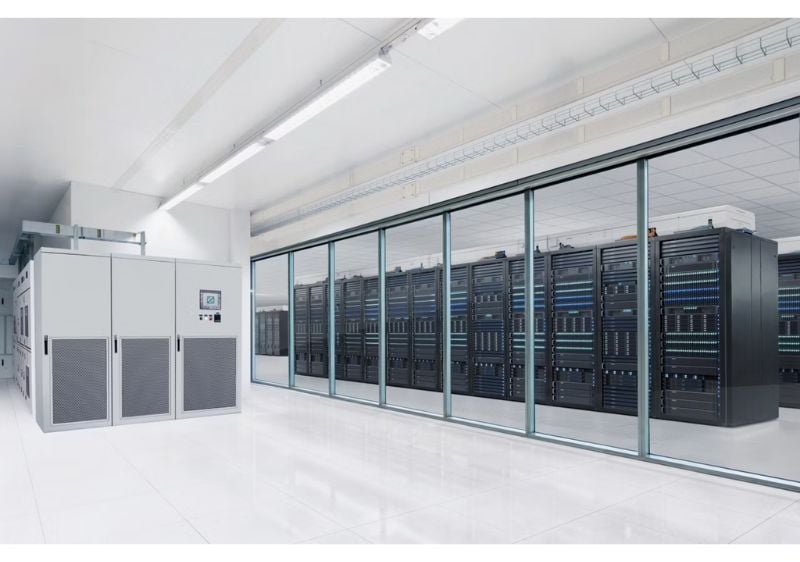
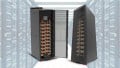
Solid-state transformers and high-power sidecars can enhance AI data center power. Image used courtesy of Infineon
Solid-state transformers replace multiple traditional conversion steps, preventing power equipment from taking up valuable facility space. The combined technology lets operators install higher concentrations of graphics processing units within fixed physical footprints.
Vicor To Open Power Component Fab Plants in New Hampshire
Vicor has purchased a 334,000-square-foot facility in Merrimack, New Hampshire, and 54 acres in Hooksett, New Hampshire, to build two power component fabrication plants. These facilities expand manufacturing capacity for high-density power modules used in advanced artificial intelligence applications.
ChiP Fab-2 and Fab-3 will together provide nearly one million square feet of space. Total production capability will surpass the 320,000-square-foot Fab-1 site in Andover, Massachusetts, which is nearing maximum capacity. Initial deployment for Fab-2 carries a one-year lead time.
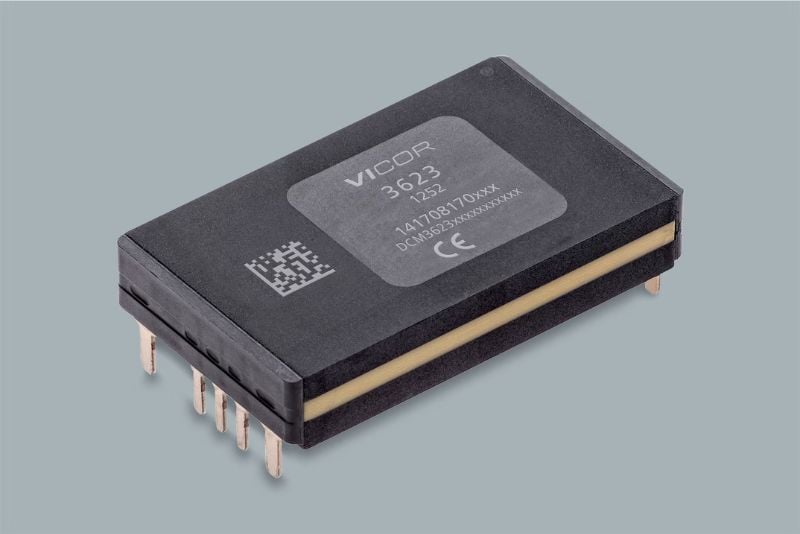
High-density power supply. Image used courtesy of Vicor
The expansion scales supply chains for original equipment manufacturers and hyperscalers using Vertical Power Delivery technology. This architecture addresses speed and power limits found in standard multi-phase and integrated voltage regulators.
The expanded output will give technology hardware providers a domestic alternative.
UK University and US Research Center Partner on Fusion Research
The University of Birmingham and the Electric Power Research Institute (EPRI) have launched a £2.63 million initiative to improve fusion reactor durability. The project, called Fusion Reactor Shielding Materials (FURESHMA), could improve grid safety and plant performance, paving the way for fusion commercialization.
Researchers will test advanced boride and carbide shielding compounds used within fusion power plants. These substances shield vulnerable internal hardware from intense neutron exposure, extreme heat, and mechanical load. Technical findings will be uploaded directly into open databases to support commercial reactor design.
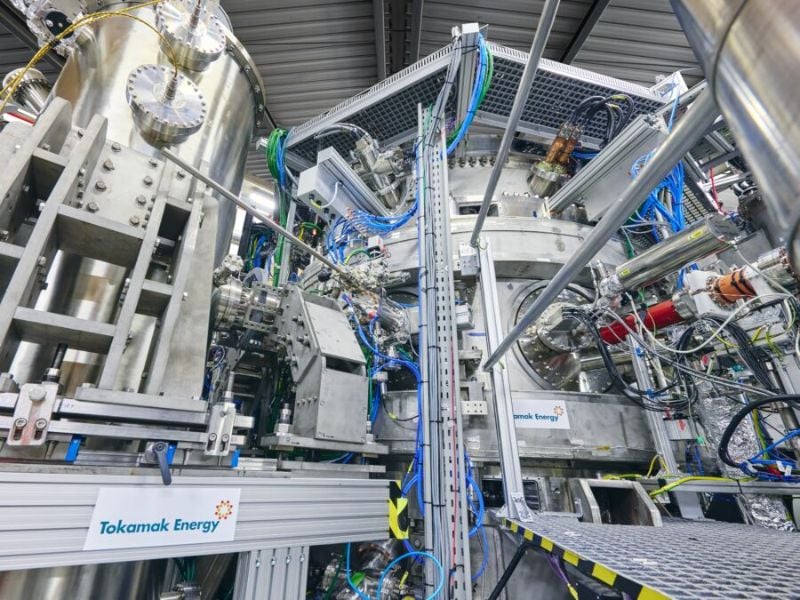
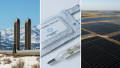
Nuclear energy technology. Image used courtesy of Tokamak Energy
EPRI brings electrical research data from over 450 global partner organizations. This expertise will help transform laboratory material benchmarks into actionable operational parameters for plant construction.
Both entities currently serve on the MatDB4Fusion steering committee. This initiative centralizes data sharing across the global nuclear research sector.
Funding originates from the Engineering and Physical Sciences Research Council, EPRI, and Element Six. Tokamak Energy previously established the initial foundation for this academic partnership.
13 Companies Win $75,000 Each in DOE’s Grid Reliability Competition
The U.S. Department of Energy's Office of Electricity selected 13 winning teams for Phase 1 of its Digitizing Utilities Prize Round 3 competition. Each group earns $75,000 to construct data tools that help utilities spot threats, prevent power outages, and reduce operational expenses.
They are:
- AI Power: Uses AI to enhance load forecasting and optimize flexible resources.
- Reactive Technologies: Uses high-resolution grid-edge sensing to reveal hidden oscillations and de-risk large loads and inverter-based resources.
- Analog Garage: Delivers accurate, timely electrical models to grid operators and planners to unlock cost savings.
- OpenDrawing/City of Elba: Converts outdated paper and PDF utility maps into digital systems.
- PowerOutage.com: Integrates outage, infrastructure, and hazard data to provide operational intelligence.
- Gridient: Unifies utility data for fast, physics-informed conservation voltage reduction.
- Theta Runaways: Uses an AI expert system to identify grid faults via synchronized voltage and current phasors.
- Moonshot: Applies machine learning to Advanced Metering Infrastructure harmonic data to identify wildfire ignition precursors.
- GridSense@UH: Uses two AI/ML tools for automated GIS/OMS model correction and real-time open-conductor detection.
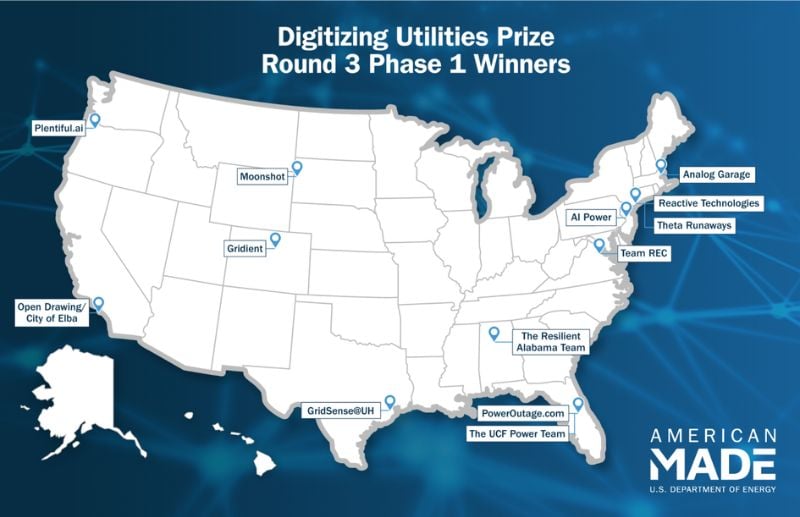
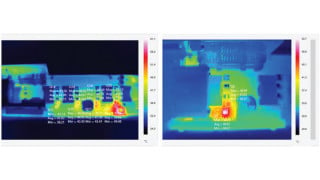
Location of winning teams. Image used courtesy of DOE
- Team REC: Uses analytics to identify and prevent outages caused by off-right-of-way trees.
- The Resilient Alabama Team: Uses LiDAR vegetation risk analytics for virtual audits to reduce physical inspections.
- Plentiful.ai: Provides a sensor-fusable digital twin layer linking all buildings in a grid infrastructure into a single operational context.
- The UCF Power Team: Creates a zero-shot AI decision-support platform using multimodal data for real-time disaster restoration.
The second stage pairs competitors directly with utility organizations and national labs to test software prototypes in real-world environments. Field evaluations aim to validate performance metrics before distributing successful technologies across the broader domestic energy industry.