Facebook
 Google
 GitHub
 Linkedin
Briefs: Achievements in Motors, Fusion, GaN Switches, and V2X
Ebara, Mitsubishi Electric, Zap Energy, Nuclear, Infineon, Nissan, Fermata Energy, and other companies reached notable goals this week.
Power electronics companies are continuously growing, expanding, and improving their products and services. The latest developments include an acquisition, a record-setting fusion test, a tool for the nuclear supply chain, a GaN-enhanced bidirectional switch, and a vehicle-to-everything demonstration.
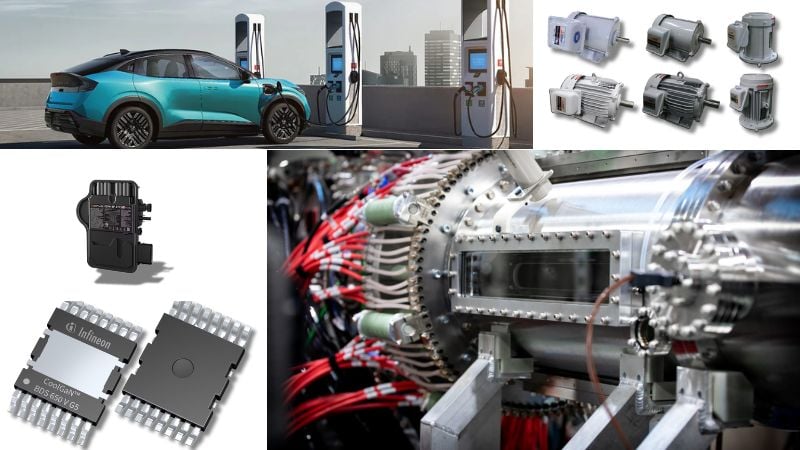
Vehicle-to-grid charging, three-phase motors, GaN bidirectional switches, and fusion.
Ebara Acquires Mitsubishi Electric’s Motor Business
Ebara will acquire Mitsubishi Electric’s three-phase motor business and other assets next year, subject to regulatory approval.
In the agreement, Ebara will take over Mitsubishi’s three-phase and IPM motor businesses from its factory in Shinshiro, Japan, and its industrial motor, pump, and die casting businesses from its subsidiary in Thailand.
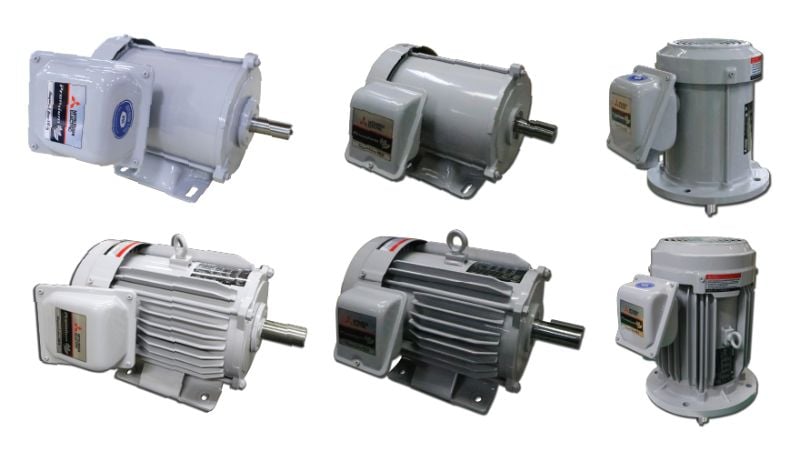
Mitsubishi Electric’s three-phase motors. Image used courtesy of Mitsubishi Electric
Mitsubishi will retain and continue to manufacture its main spindle and servo motors for CNC at the Shinshiro facility.
Ebara will obtain motor assets, design and development capabilities, and expertise. The company plans to accelerate its growth in motor and industrial machinery while focusing on energy-saving and decarbonization. After the transfer, Mitsubishi Electric will concentrate on advancing its FA Digital Solution business, which includes components such as programmable controllers, servos, and CNC systems.
Zap Energy’s FuZE-3 Reaches Record High Fusion Plasma Pressures
Zap Energy’s FuZE-3 (Fusion Z-pinch Experiment 3) has achieved electron pressures as high as 830 megapascals (MPa), or about 1.6 GPa total pressure, including electrons and ions. The pressure is the highest performance recorded in a sheared-flow-stabilized Z-pinch and is similar to the pressure found below the Earth’s crust.
The FuZE-3 sustained the pressures for about a microsecond. The plasma reached electron densities of 3-5 x 1024 m-3 and electron temperatures above 1 keV, or 21 million degrees Fahrenheit.
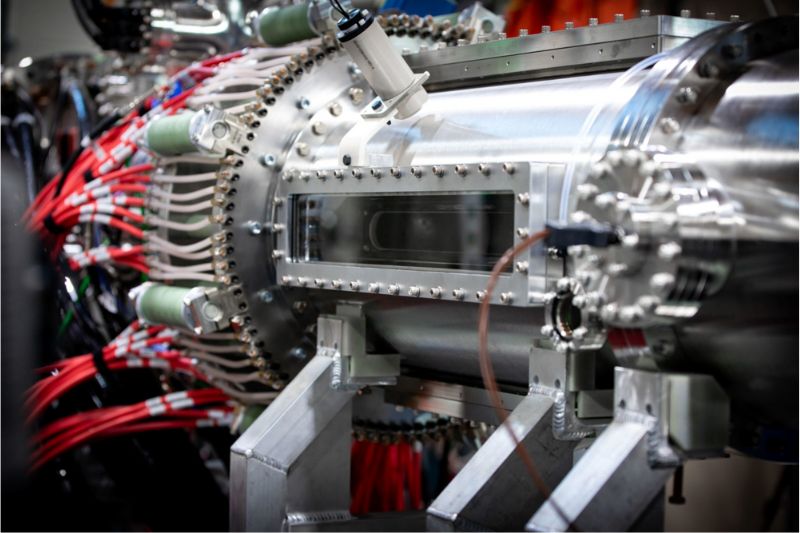
The FuZE-3. Image used courtesy of Zap Energy
The FuZE-3 is Zap Energy’s third-generation FuZE unit. It is designed to reach new levels of triple product, which combines density, temperature, and confinement time. It uses two capacitor banks and three electrodes.
Active testing on the FuZE-3 will continue as the company works toward fusion commercialization.
Nuclear Expands AI To Modernize U.S. Nuclear Supply Chain
Nuclearn has added Parts AI, an AI-powered supply chain solution, aiming to shorten supply procurement for the nuclear industry by 30% upon product completion.
Set to launch early in 2026, Parts AI aims to shorten procurement cycles, streamline workflow compliance, and increase component availability in the nuclear industry. The platform uses AI to codify the expertise, methods, judgment, and institutional knowledge of veteran nuclear procurement specialists. The result is a scalable, transparent, and traceable supply chain process.
Nuclearn’s AI product portfolio includes CAP AI, for corrective action analysis; AtomAssist, for technical documentation; and Project Genius, for project scheduling. Nuclearn aims to create a secure, regulatory-ready ecosystem for nuclear professionals.
Infineon Releases GaN Bidirectional Switch for Microinverters
Infineon Technologies has introduced a gallium nitride bidirectional switch (BDS) for Enphase Energy’s next generation of IQ9 series microinverters. The CoolGaN BDS allows single-stage power conversion to simplify power device designs.
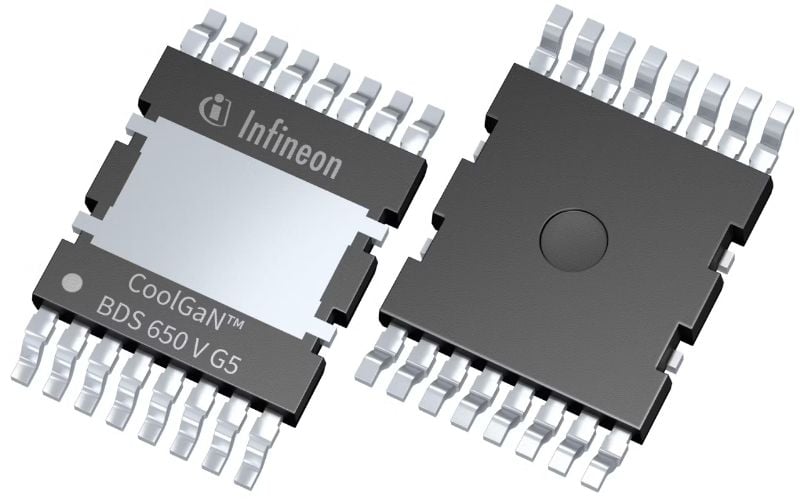
CoolGaN bidirectional switches. Image used courtesy of Infineon
Infineon’s innovation brings enhanced power output, energy efficiency, and system reliability to Enphase Energy’s microinverters. The BDS technology reduces power loss by 68% compared to conventional silicon switches and 42% compared to GaN unidirectional switches.
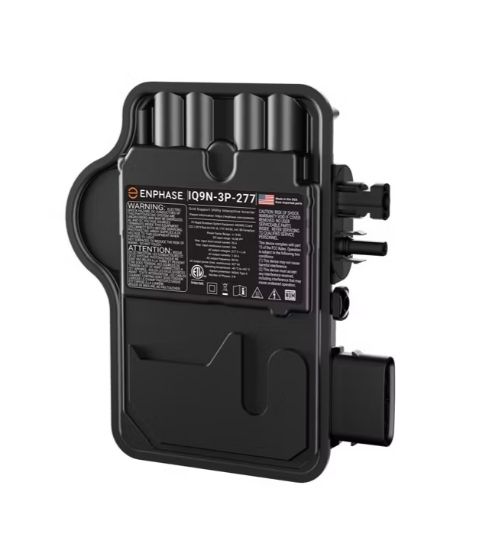
The Enphase IQ9N. Image used courtesy of Infineon
Enphase’s IQ9N-3P commercial microinverter is designed for three-phase 480Y/227 V grid configurations without using external transformers. The GaN-powered product delivers faster switching, cooler operations, and enhanced reliability compared to conventional silicon-based microinverters. It offers an efficiency of 97.5%. The unit supports solar panels up to 600 W and can handle a 16 A continuous, with a peak output power of up to 427 VA.
PG&E Partners With Nissan and Fermata Energy for V2X Tech Demonstration
Pacific Gas and Electric Company (PG&E) is partnering with Nissan, Fermata Energy, and the Schatz Energy Research Center in California to demonstrate how electric vehicles may use vehicle-to-everything (V2X) charging to provide grid support and resilience.
The project integrates electric vehicles and bidirectional chargers with a multi-customer microgrid at the Redwood Coast Airport in McKinleyville, California. The microgrid is operated jointly by the Redwood Coast Energy Authority and PG&E.
The project will use Fermata Energy’s Vehicle-to-Everything optimization platform, four bidirectional FE-20 charging stations, and two previous-generation Nissan Leaf EVs. The EVs will be plugged into the chargers when not in use, allowing their batteries to discharge energy to offset grid usage and save costs. The vehicles can respond to grid stress through California’s Emergency Load Reduction Program, which generates revenue by sending power back to the grid.
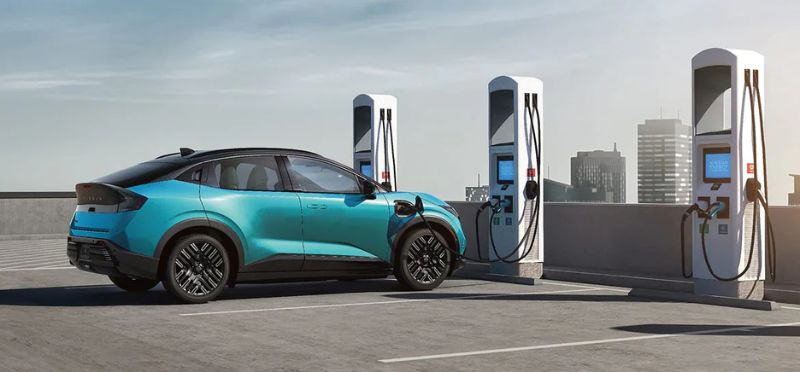
Nissan Leaf. Image used courtesy of Nissan
Schatz Energy Research Center has created a microgrid control function enabling the EVs to help the microgrid balance solar energy and battery energy storage in real time, particularly when the microgrid operates in island mode.
The project will be an industry-first in demonstrating automated grid frequency response using V2x technology in a microgrid. California’s goal is to reach 100% renewable energy and zero carbon emissions by 2045.