Facebook
 Google
 GitHub
 Linkedin
Beyond Li-Ion: 5 Top Battery Tech Advances in 2024
From solid-state to lithium-ion alternatives, battery technology leaped forward in 2024.
As successful as lithium-ion batteries have become as an energy storage medium for electronics, EVs, and grid-scale battery energy storage, significant research is occurring worldwide to further increase battery storage capability. These advancements aim to improve energy density, charging speed, safety, and cost-effectiveness across various applications, particularly in EVs and grid-scale energy storage systems. The battery technology landscape continues to evolve, driven by the need for cleaner, more sustainable energy solutions.
In 2024, battery technology advanced on several fronts. Here are five of the top developments.
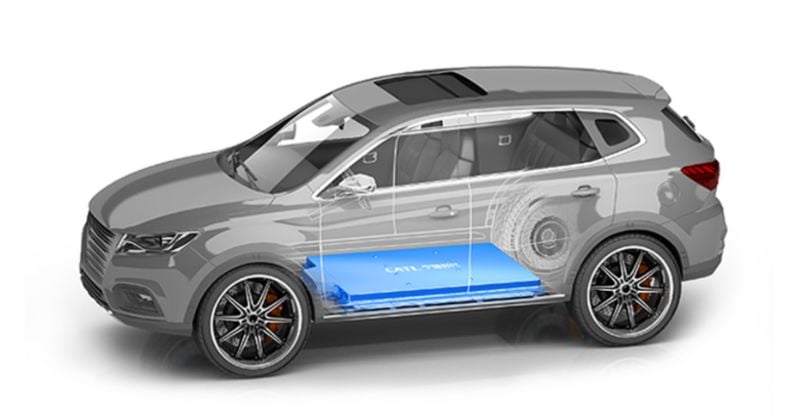
Electric vehicle battery. Image used courtesy of CATL
1. Solid-State Batteries
Unlike traditional lithium-ion batteries using liquid or gel electrolytes, solid-state batteries employ solid materials such as ceramics, polymers, or composite compounds to move lithium ions between electrodes. Solid-state batteries store more energy in a smaller and lighter package, offering two to 10 times the capacity of lithium-ion batteries and providing quicker charging capabilities. They eliminate the flammable liquid electrolyte used in commercial lithium-ion batteries and are considered safer.
- Contemporary Amperex Technology Co. Limited (CATL), the world's largest EV battery maker, made significant progress in solid-state batteries in 2024. The company has entered trial production of 20 amp-hour (Ah) solid-state cells, achieving an energy density of 500 Wh/kg—a 40% improvement over existing lithium-ion batteries. They have expanded their R&D team to over 1,000 people to accelerate development and plan small-scale production by 2027.
- Samsung is piloting a solid-state battery production line, promising batteries with a 600-mile range, 9-minute charge time, and a 20-year lifespan. The company plans to mass-produce these batteries by 2027, targeting premium electric vehicles.
- Toyota plans to introduce solid-state batteries with a range of up to 745 miles (1,200 km) and fast charging capabilities of 10 minutes or less. They aim for mass production by 2027-2028, focusing on improving energy density and safety compared to traditional lithium-ion batteries.
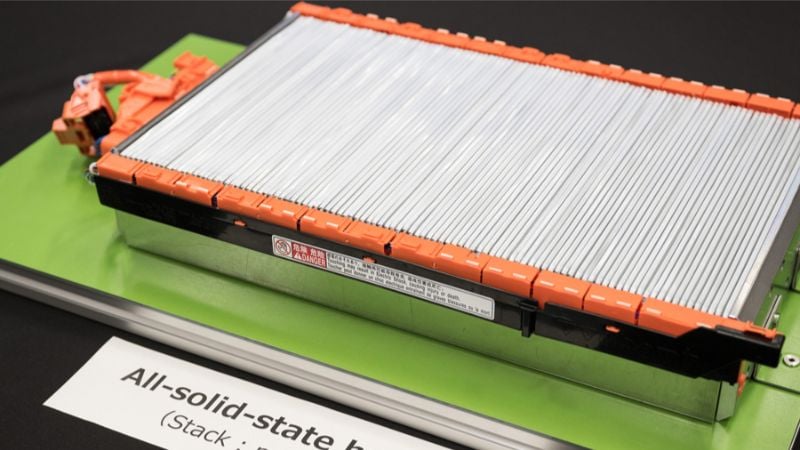
Toyota’s solid-state battery prototype. Image used courtesy of Toyota
- QuantumScape has developed a solid-state battery with over 1,000 charging cycles and over 95% capacity retention. The battery is focused on fast charging and high energy density.
- TDK Corporation developed a solid-state battery material with an energy density of 1,000 Wh/L, 100 times greater than their previous solid-state batteries. The battery uses oxide-based solid electrolytes and lithium alloy anodes, enhancing safety and performance.
- Volkswagen partnered with QuantumScape to mass-produce all-solid-state batteries with a potential output of up to 80 GWh annually. These batteries have shown higher energy density, faster charging times, and improved safety features, retaining over 95% capacity after 1,000 charging cycles and allowing Volkswagen to produce around 1 million EVs annually.
- Researchers at McGill University have made a breakthrough in solid-state lithium batteries by eliminating interfacial resistance between the solid electrolyte and the electrodes. They developed a porous ceramic membrane filled with polymer, which enhances ion mobility and battery efficiency.
2. Lithium-Sulfur Batteries
Rechargeable lithium-sulfur (Li-S) batteries use sulfur as the cathode and lithium metal as the anode. Li-S batteries promise high theoretical energy density (up to 2,600 Wh/kg), significantly higher than conventional lithium-ion batteries (typically 100-265 Wh/kg). The Li-S battery’s cathode uses sulfur mixed with carbon to improve conductivity. Pure lithium metal comprises the anode, contributing to the high energy density. Abundant and inexpensive, sulfur can reduce battery production costs. Because Li-S batteries use less toxic materials than conventional lithium-ion batteries, they are considered more environmentally friendly.
Here’s a review of notable achievements in 2024.
- Monash University has developed an ultra-fast charging Li-S battery capable of powering long-haul EVs and commercial drones. The batteries are lighter, more affordable, and provide double the energy density of conventional lithium-ion batteries.
- University of Electronic Science and Technology of China researchers have created a Li-S battery using polymer-coated iron sulfide cathodes that could enhance stability and safety.
- Stellantis and Zeta Energy have partnered to develop Li-S batteries for EVs. Their goal is 50% faster charging at a cost less than half per kWh than current lithium-ion batteries. These Li-S batteries are targeted for use in Stellantis EVs by 2030.
- Li-S Energy has developed and manufactured 10Ah semi-solid-state Li-S cells that have achieved 498 Wh/kg energy density on first discharge and retained 456 Wh/kg after cycling.
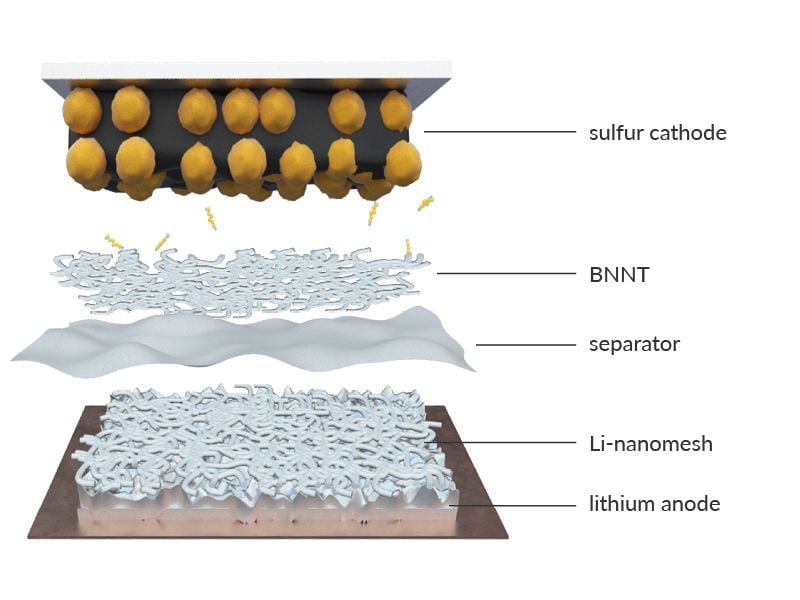
Li-S Energy’s nanotube battery technology. Image used courtesy of Li-S Energy
- The U.S. battery developer Lyten plans to build the world's first Li-S battery gigafactory with an annual capacity of 10 GWh at full scale. Production of cells, cathode materials, and lithium metal anodes at the $1 billion facility near Reno, Nevada, is expected in 2027.
- China-based General New Energy has created a Li-S battery prototype with a 700 Wh/kg energy density.
Other companies developing Li-S battery technology include Sion Power, OXIS Energy, PolyPlus Battery Company, Sulfur8, Johnson Matthey, Samsung SDI, LG Chem, Morrow Batteries, and CATL.
3. Sodium-Ion Batteries
Like lithium-ion batteries, sodium-ion (Na-ion) batteries move sodium ions between the cathode and anode during charge and discharge. Sodium is much more abundant and cheaper than lithium, potentially reducing overall battery costs. Na-ion batteries are generally considered safer than lithium-ion batteries due to sodium’s lower reactivity.
- HiNa Battery Technology Co., Ltd. completed the world's largest sodium-ion battery energy storage system in Qianjiang, Hubei Province, with a capacity of 100 MWh. This system can store enough electricity to meet the daily needs of around 12,000 households.
- Faradion Limited has developed a new sodium-ion cell design that offers 20% higher energy density and increased cycle life by a third compared to previous designs. In 2024, Reliance Industries acquired Faradion for $136 million, and the company plans to use this technology at its energy storage gigafactory in Jamnagar, India, producing utility-scale battery systems and other battery packs.
- In 2024, Swedish company Altris AB achieved a milestone with a sodium-ion battery cell with more than 160 Wh/kg energy density, making it commercially viable for energy storage applications.
- Broadbit has achieved the production of sodium-ion cells with 300 Wh/kg energy density in 2024, which is more than the average energy density of both sodium-ion and lithium-ion batteries. The company is commercializing this technology for applications in electric vehicles and grid energy storage.
- CATL has developed its second-generation sodium-ion battery, which is expected to exceed an energy density of 200 Wh/kg, up from the previous 160 Wh/kg. The new battery is set for commercial launch in 2025, although mass production is not anticipated until 2027.
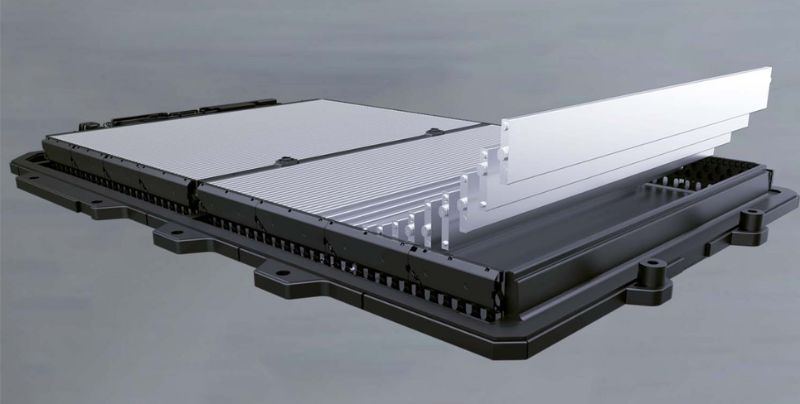
BYD’s blade battery. Image used courtesy of BYD
- BYD has started construction on a sodium-ion battery facility in Xuzhou, China, with an investment of nearly 10 billion yuan ($1.4 billion) and a projected annual capacity of 30 GWh. The facility aims to produce batteries with an energy density of 160 Wh/kg, with plans to improve. BYD has developed several innovative technologies for their sodium-ion batteries, including atom mosaic technology and ion antenna technology, which enhance performance and stability.
4. Graphene Technology
Graphene is a single layer, hexagonal lattice structure of carbon atoms 200 times stronger than steel with superior electrical conductivity compared to copper. Graphene is being incorporated into batteries in several innovative ways to enhance their performance and safety.
- Global Graphene Group produced multiple battery pouch cells using the electrochemistry of their graphene aluminum-ion battery technology with a capacity exceeding 1000 mAh, demonstrating scalability from coin cells to pouch cells. The company is currently optimizing the cells to improve energy density and scalability.
- Graphene Manufacturing Group (GMG) optimized its pouch cell electrochemistry design and achieved a battery cell capacity 1000 mAh in 2024. GMG is refining battery performance and plans to establish a pilot plant for further development, indicating energy density and scalability improvements.

Graphene aluminum-ion battery. Image used courtesy of GMG
- Toray Industries has developed an ultra-thin graphene dispersion solution with fluidity and electrical and thermal conductivity that improves battery life by 50% compared to traditional carbon nanotubes. The ion-conductive polymer membrane delivers 10-fold the ion conductivity of predecessors, which could accelerate the deployment of solid-state batteries and improve energy density and charging speed for electric vehicles and other applications.
- Swansea University researchers have developed a technique for producing large-scale graphene current collectors, significantly enhancing the safety and performance of lithium-ion batteries. The graphene foils achieve thermal conductivity nearly 10 times higher than traditional copper and aluminum current collectors.
- NanoXplore has unveiled a novel dry graphene manufacturing process that enhances scalability and cost-effectiveness, achieving a nearly 50% reduction in capital expenditures compared to traditional liquid exfoliation methods. This process allows for high-yield exfoliation without impurities, which is crucial for battery applications and is expected to improve graphene’s performance in various applications, including batteries.
- Samsung SDI developed a “graphene ball” material that enables a 45% increase in battery capacity and five times faster charging compared to standard lithium-ion batteries.
- LG Energy Solution developed a new material that suppresses thermal runaway in lithium-ion batteries, reducing battery explosions from 63% to 10% during impact testing.
5. Battery Recycling
Despite claims by naysayers that lithium-ion batteries can’t be recycled, the valuable materials contained within battery cells have significant value. Several companies made advances in battery recycling technology in 2024.
- Altilium has developed a hydrometallurgical recycling technology that achieved over 97% lithium recovery from LFP batteries. The company has demonstrated its ability to recycle both LFP and NMC batteries.
- RecycLiCo developed a method to recover up to 99% of cathode metals like lithium, cobalt, nickel, and manganese through a patented closed-loop recycling process that is adaptable, modular, and energy-efficient.
- Li-Cycle has advanced its patented Spoke & Hub Technologies for lithium-ion battery recycling, aiming to achieve up to 95% recovery rate of critical materials.
- Redwood Materials has improved its reductive calcination method to break down battery components and is focused on recycling up to 95% of materials from lithium-ion batteries.
- Umicore enhanced its combined pyro- and hydrometallurgy process for battery recycling, achieving over 95% recovery yields for nickel, copper, and cobalt and over 70% for lithium.
- Cylib has introduced eco-friendly technology to reduce water consumption and use carbon dioxide in the recycling process. The process achieved a 12% reduction in the acids required and water-based lithium recovery without additives, with recycling efficiency exceeding 90%.
Tech Improvements and Costs
As battery technology improves, costs are trending down.
In 2019, the average global lithium-ion battery pack price was $156/ kilowatt-hour (kWh). By 2023, the price dropped to a record low of $139/kWh, representing a 14% decrease from 2022, driven by falling raw material and component prices, increased production capacity, and demand growth falling short of industry expectations.
When all the numbers are crunched, pack costs for 2024 are expected to have dropped to between $80/kWh and $128/kWh as manufacturing processes continue to improve.