Facebook
 Google
 GitHub
 Linkedin
Beyond Li-Ion: Carbon Dioxide Batteries in Energy Storage
The Columbia Energy Storage Project will use carbon dioxide for long-duration energy storage.
In the transition to renewable energy, long-duration energy storage has become a critical piece of grid infrastructure. However, while lithium-ion batteries power most battery storage systems, the technology is not particularly well suited for grid-level long-term storage. As a result, researchers have been exploring alternative energy storage methods to provide reliable, long-lasting power to the grid.
Watch a demonstration of a carbon dioxide energy system. Video used courtesy of Energy Dome
Alliant Energy is planning an initiative to store energy via a carbon dioxide battery from Energy Dome. The Columbia Energy Storage Project in Wisconsin will be the first of its kind in the U.S.
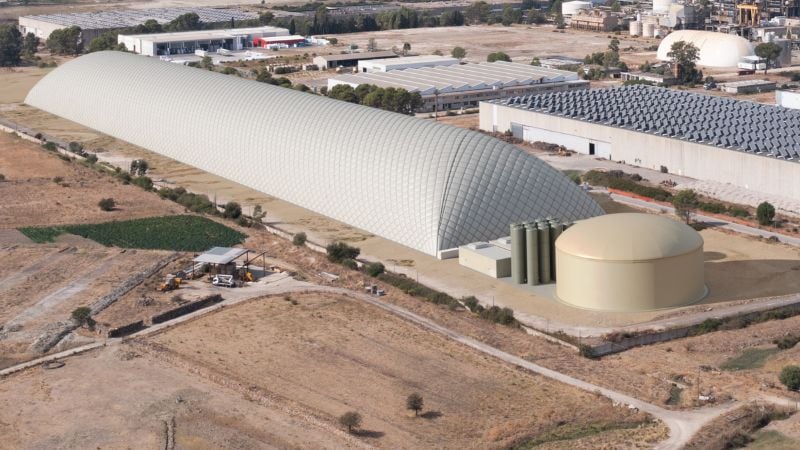
Carbon dioxide energy storage system in Sardinia, Italy. Image used courtesy of Energy Dome
Why Lithium-Ion Batteries Fall Short in Energy Storage
Traditional power grids were designed to handle consistent baseload power from fossil fuel plants, but renewable energy generation is inherently intermittent, varying with weather conditions and time of day. This variability creates challenges in maintaining a stable and reliable power supply. Therefore, energy storage systems are essential to closing the renewable energy production and consumption gap and ensuring a steady power supply even when renewable sources are inactive.
While lithium-ion batteries have made significant strides in short-term energy storage, they fall short in addressing long-duration storage needs primarily due to limitations in longevity, cost, and safety when scaled up. While they offer high energy density, which is advantageous for smaller applications, their performance degrades significantly over time, especially with frequent cycling, reducing their lifespan. Additionally, the cost of raw materials like lithium and cobalt makes large-scale deployment expensive. Safety concerns, including the risk of thermal runaway, require complex and costly management systems, further complicating their use in large-scale applications.
The Rise of Carbon Dioxide in Energy Storage
Developed by Energy Dome, the Columbia Energy Storage Project will store energy through a closed thermodynamic cycle involving carbon dioxide. During operation, CO2 transitions between gaseous and liquid phases, with the expansion process driving a turbine to generate electricity.
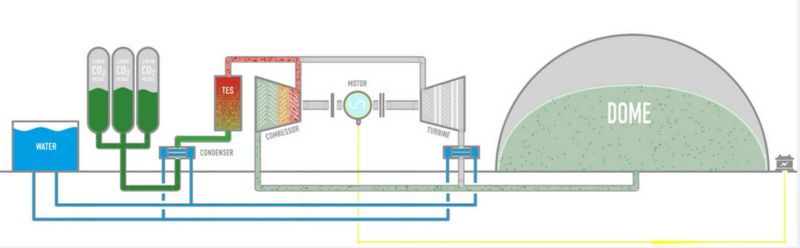
Energy Dome’s CO2-based energy storage system. Image courtesy of Alliant Energy
The system boasts a round-trip efficiency of over 75% AC-AC and MV-MV, with no degradation over its 30+ year lifespan and energy storage duration of 8-24 hours. Compared to lithium-ion batteries, it offers 100% depth of discharge, lower capital expenditures, and longer lifetime (30+ years vs <12 years). This novel technology aims to enhance grid stability and resilience. The system also operates at ambient temperature, avoiding the high costs associated with compressed air energy storage, and produces zero CO2 emissions during operation.
Overall, the system can deliver electricity to power approximately 18,000 Wisconsin homes for 10 hours on a single charge.
Catalyzing Change
As the grid relies more on intermittent energy sources, long-term energy storage solutions are necessary for a sustainable future. The Columbia Energy Storage Project offers a promising option for long-term energy storage that could fundamentally impact the future of storage. The project is still pending approval from the Public Service Commission of Wisconsin.