Facebook
 Google
 GitHub
 Linkedin
ABB Upgrades NASA Wind Tunnel With Powerful Motor Drive
ABB modernized NASA's wind tunnel drive for aircraft testing, extending its life by 10+ years.
During aircraft design, researchers use wind tunnels to test scale models of aircraft to determine how they will fly. The tests can predict forces on the actual aircraft.
The NASA wind tunnel in action. Video used courtesy of NASA STEM
The world’s largest cryogenic wind tunnel at NASA’s National Transonic Facility in Langley, Virginia, began operating in 1984. However, in 2021, NASA’s engineers determined that the tunnel’s medium voltage drive, supplied by ABB in 1997, was nearing the end of its life and in need of an upgrade.
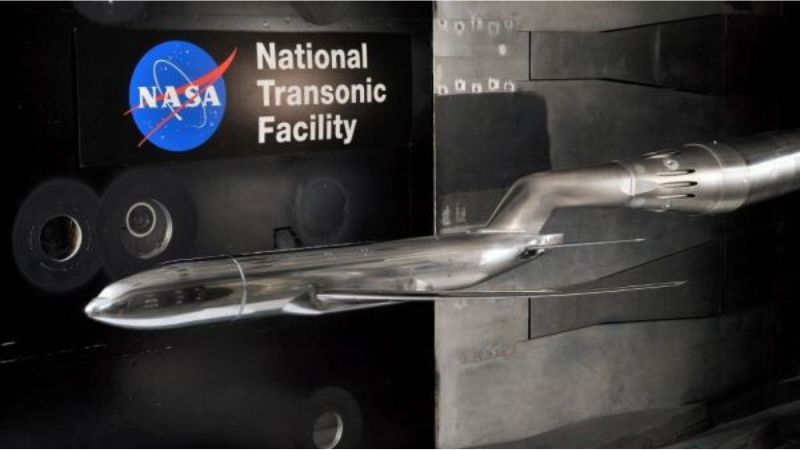
An aircraft is mounted and ready for testing within NTF’s cryogenic wind tunnel. Image used courtesy of NASA
ABB’s Motion OneCare Service Agreement
The wind tunnel at NASA’s NTF facility simulates real flight conditions using supercooled nitrogen gas and can test models as small as 1/50th the size of the actual aircraft. This facility is unique because it can also adjust the airflow according to the tested model’s size, which prevents issues that can arise at higher speeds. The tunnel has tested aircraft such as the Boeing 777, the Space Shuttle and its booster rocket, and the F18 Hornet.
At installation, ABB’s 101-megawatt drive was the most powerful of its kind. However, with the drive nearing 30 years of service, NASA ordered an upgrade project under ABB’s Motion OneCare service agreement. This agreement offers a tailored approach to maintenance, allowing organizations like NASA to bundle services for their ABB motors, generators, and drives. It focuses on optimizing lifecycle value while ensuring reliable and efficient operation throughout the equipment's lifespan.
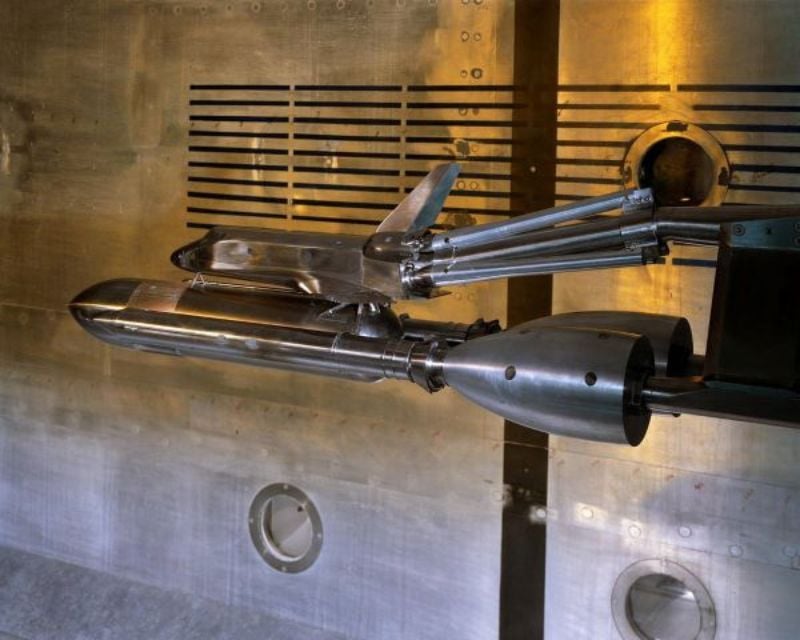
NTF has facilitated the testing of aircraft at various scales, such as the .01 scale of the space shuttle. Image used courtesy of NASA
ABB’s specialists evaluated the existing variable-speed drive’s mechanical connections and developed a modern solution to match the original drive’s maximum power usage while maintaining its reliability. The upgrade replaced a small part of the drive (control unit) while retaining the original drive's footprint, which minimized disruptions and waste. The modernization project is expected to extend the drive’s life by at least 10 years, enhancing the reliability and performance of NASA’s National Transonic Facility for future testing programs.
ABB replaced the old drive with a 101 MW variable-speed drive to control a 135,000-horsepower synchronous motor, which sets a new world record for size and power. The motor and drive control a giant fan within the wind tunnel that can generate air velocities greater than Mach 1. This allows researchers to simulate a variety of flight parameters, such as Reynolds numbers. The wind tunnel at NTF is one of the only wind tunnels that can simulate Reynolds numbers higher than 100 million.
With the replacement of the drive, the system can guarantee accurate speed control and motor torque, meaning less mechanical stress on the wind tunnel’s components, bearings, and shafts. This results in less overall maintenance and more uptime for the wind tunnel.
It's easy to forget about these services, especially with a quality product that has lasted for almost 30 years. NASA capitalized on ABB’s expertise through its Motion OneCare service agreement. This allowed NASA to prioritize the wind tunnel’s uptime and extend the asset’s life by at least 10 years.