Facebook
 Google
 GitHub
 Linkedin
A Cool Contender: Can Liquid Nitrogen Freeze Out Hydrogen?
Liquid nitrogen has several advantages as a vehicle fuel. Can it match the power of hydrogen?
While electric vehicles are a viable alternative to gas-powered cars, researchers are experimenting with other carbon-free fuels to help the environment.
How is liquid nitrogen made? Video used courtesy of Ferus, Inc.
Hydrogen fuel-cell vehicles have debuted, but liquid nitrogen-powered engines could be a strong contender for environmentally conscious cars. Liquid nitrogen has emerged as a contender. How do the two fuels compare?
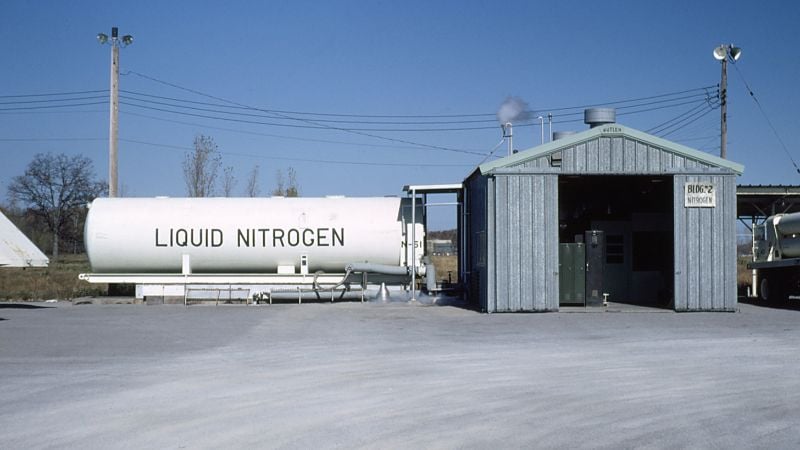
Liquid nitrogen used for rocket research. Image used courtesy of NASA
Liquid Nitrogen Engine Advantages
Liquid nitrogen engines have minimal environmental impact. Transportation is known for its high emissions, but liquid nitrogen-fueled vehicles can reduce greenhouse gas harm. The only emission these engines produce is cold air, making them a safer alternative to internal combustion (IC) concepts.
Liquid nitrogen engines also have faster refueling times. EVs require drivers to wait for their cars to recharge, whereas nitrogen-powered automobiles can refuel like a standard IC vehicle. This efficiency is critical to keeping alternative fuel vehicles on the road, especially long-haul trucks. Liquid nitrogen engines also resist fire, rust, and toxins, making them safer for humans.
Liquid nitrogen isn’t as common as gas, diesel, or hydrogen fuel sources, but research has demonstrated its potential for powering engines. George Washington University has used it for refrigeration units and generators. The cooling element makes liquid nitrogen helpful when storing food, medicine, and other critical supplies. University researchers also tested liquid nitrogen with a hybrid engine and found increased efficiency.
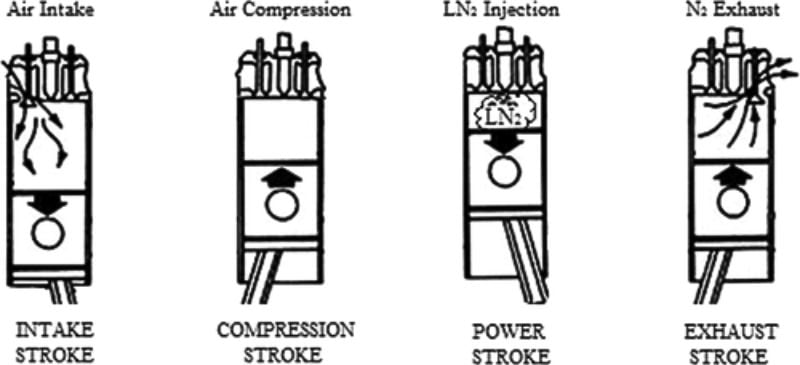
Liquid nitrogen engine operations. Image used courtesy of Rizvi et al.
How efficient are these engines? A 2021 ACS Omega study examined liquid nitrogen engines through numerical analysis. The researchers focused on in-cylinder pressure, temperature, and the conditions necessary for liquid nitrogen evaporation. Results demonstrated that this alternative fuel source was about four times more efficient than fossil fuels, at 31%.
Elevating Liquid Nitrogen Over Hydrogen Fuel
Liquid nitrogen fuel’s primary competitor for alternative energy sources is hydrogen. Which one is better for cars? Liquid nitrogen has advantages over hydrogen.
High Availability
A primary advantage nitrogen has over hydrogen is its availability. Nitrogen is the primary component of the Earth’s atmosphere. Scientists can harness it through air separation units, such as cryogenic distillation. These technologies are critical for handling liquid nitrogen because of its low temperatures. Leveraging renewable energy for nitrogen harnessing ensures cleaner alternative fuel sources.
Conversely, hydrogen is less present in Earth’s atmosphere and less available than nitrogen. Researchers must produce it through electrolysis or steam-methane reforming. The former is an energy-intensive process, thus making it an environmental liability. While cleaner methods—such as photolytic processes—have become more prominent, hydrogen harnessing remains generally more complex than nitrogen.
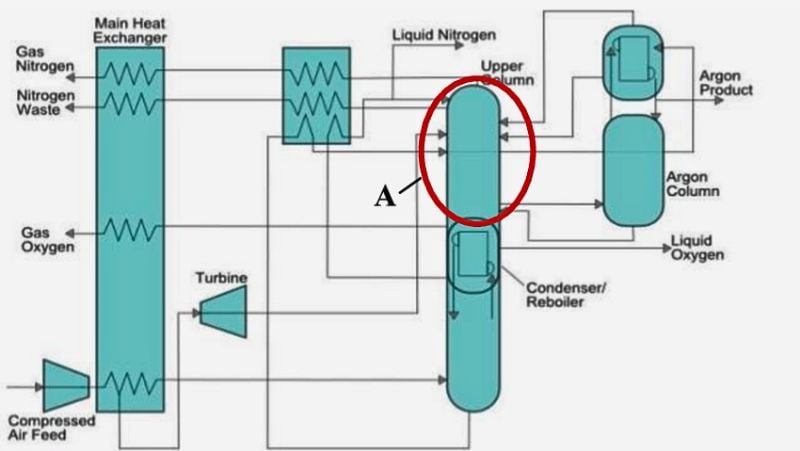
Cryogenic distillation process. Image used courtesy of Wikimedia Commons
Reduced Reactions
Liquid nitrogen is less reactive than hydrogen. Nitrogen, the seventh periodic table element, is inert because of its powerful covalent bonds. Since energy is needed to break the bonds, nitrogen doesn’t react quickly with other elements. This characteristic is critical for the liquid version because the cold temperatures make nitrogen unreactive. As a cryogenic liquid, it is stable in standard conditions.
However, hydrogen poses a problem because it is highly reactive. It easily bonds with other elements to produce hydrides and is a liability for fuel producers. While the reactivity benefits production, it can be a challenge for storage because it can make containers more brittle and subject to failures. Production can also be complex because particular conditions are necessary to harness hydrogen fuel.
Preventing Danger
Liquid nitrogen also presents safety advantages over hydrogen fuel because it is easier for humans to handle and use in cars. Its inert state does not produce flames. By contrast, IC, electric, and hydrogen-powered vehicles can catch on fire. Nitrogen provides a safer fuel option.
Hydrogen fuel presents dangers from the start due to its potential to leak. The first element has tiny molecules that can leak and cause fires if experts don’t take the proper precautions. Hydrogen has no odor or color, so detecting a leak with the human senses is challenging and a liability. These dangers make hydrogen transportation more dangerous, so special equipment is necessary to prevent leaks and protect the vehicles.
Hydrogen Fuel Advantages
While liquid nitrogen has some advantages, it may struggle to be a prominent energy source. Hydrogen fuel may be better than liquid nitrogen for cars.
Higher Energy Density
Nitrogen’s primary drawback is its low energy density. It has minimal energy in its bonds because it is consistently in a cold energy state. Liquid nitrogen is a phase-change process that removes energy in its gas conversion. Much more liquid nitrogen is needed to match the power of hydrogen fuel.
Comparatively, hydrogen fuel has a superior energy density and is more suitable for vehicles. The element has the highest gravimetric energy density on the periodic table, thus making its fuel formidable enough for motor vehicle use. Hydrogen is also the lightest element, so each ounce of its fuel heightens fuel efficiency. This characteristic is in stark contrast to gaseous hydrogen, which has low energy density.
Increased Cylinder Pressure
While research on liquid nitrogen as a fuel source is limited, some studies directly compare it with hydrogen’s power and efficiency. A 2021 study in the journal Fuel examined nitrogen and hydrogen engine performance and emissions. The researchers found cylinder pressure was highest when adding hydrogen to the reactivity-controlled compression ignition. Conversely, the nitrogen additive increased temperature and emissions.
Hydrogen fuel is better for engines because it quickly combusts and efficiently increases cylinder pressure. The Fuel study found this element improves combustion and emissions to surpass diesel and other fossil fuels. Nitrogen is less conducive to this process because its combustion capabilities aren’t as strong as hydrogen’s. Additionally, the soot production reached maximum levels once the 72% nitrogen addition entered the fuel.
More Infrastructure
Hydrogen fuel is better in the modern automotive industry because more research and infrastructure surrounds the energy source. Some U.S. states and countries have set up hydrogen fuel stations to support cars running on this option. Toyota, Honda, and Hyundai have produced and demonstrated a market for hydrogen-powered cars.
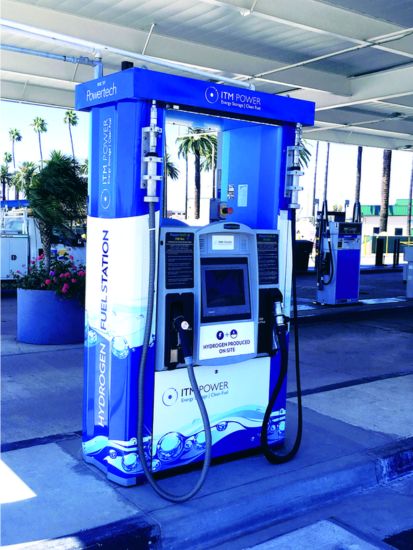
Liquid hydrogen fueling station in California. Image used courtesy of Wikimedia Commons
Liquid nitrogen cars are a long way from entering the mainstream automotive market. The University of Washington and other institutions have created prototypes, but a vehicle has not become available. For example, Washington researchers have developed the LN2000 and found it has a limited range compared to modern cars.
Comparing Nitrogen and Hydrogen Fuel
In transitioning away from oil and gas, the future is bright for alternative fuels. Liquid nitrogen is a newer concept with advantages for future vehicles, but hydrogen fuel is the more formidable source.