Facebook
 Google
 GitHub
 Linkedin
TDK Increases Buck Converter Family to 80 A in Same Footprint
The expanded i7A series offers high-current DC-DC buck converters that deliver up to 1,000 W but still weigh just 85 g.
TDK has pushed its i7A buck converter series into new territory, introducing two models rated for 60 A and 80 A of continuous output, with power delivery reaching up to 1000 W. Despite that increase, the new converters retain the same 1/16-brick footprint and analog interface that defined the earlier models, while adding redundant power pins and adjustable current limit to support high-current designs without completely rewriting the carrier board.
The 80A point-of-load delivery—achieved without parallel modules or sacrificing size, efficiency, or layout familiarity—signifies a major shift in how high-performance systems manage distributed power. Crucially, it potentially opens the door to fewer modules, shorter copper, and simpler board-level scaling in everything from AI accelerators to industrial servo drives.
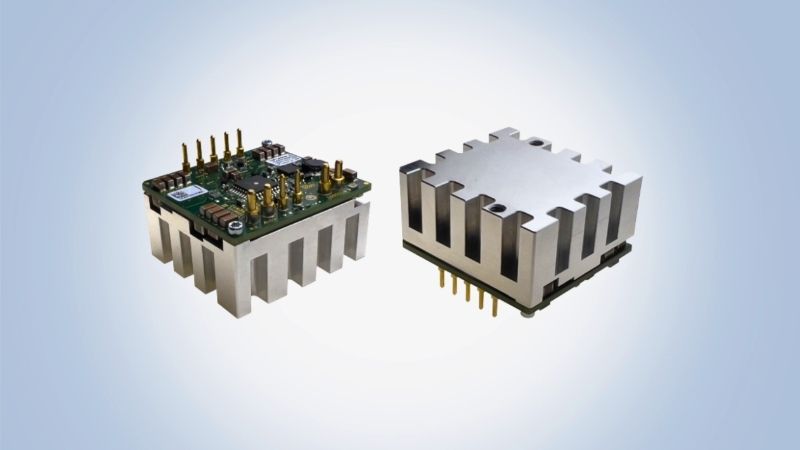
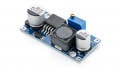
Buck converters. Image used courtesy of TDK Lambda
More Current, Same Form Factor
The i7A series has always been a non-isolated buck converter family aimed at 24 V and 48 V intermediate bus systems. It steps the input down to something usable like 12 V, 5 V, or even sub-1 V rails, typically just a few inches from the load. Before this release, the i7A’s top-end parts maxed out at 750 W and 45 A. That was already competitive, but didn’t always keep pace with growing current demands in newer ASICs and edge compute modules.
The new additions close that gap. The i7A4W060A033V delivers up to 60 A at 3.3-28 V output, with an input range of 18-60 V and peak efficiency advertised at 99%. The flagship i7A24080A033V raises that to 80 A and 1000 W, with a tighter 18-32 V input range optimized for 24 V systems. Both parts preserve the familiar 34 x 36.8 mm footprint, but now include redundant input and output power pins to spread the load across more copper and avoid connector pinch points.
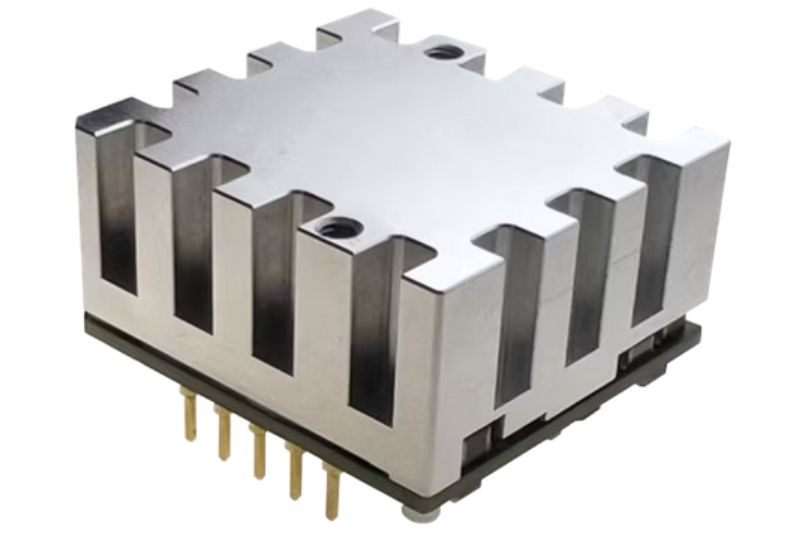
DC-DC converter. Image used courtesy of TDK Lambda
At 80 A, even slight parasitics in the power path can create loss and heating. By duplicating high-current pins, TDK reduces trace resistance and improves current sharing, both on the PCB and across connectors, without requiring a complete redesign.
Higher Power Without Higher Complexity
Unlike digital converters that offer telemetry and multi-rail sequencing, the i7A remains a fully analog module. There’s no PMBus interface or software stack to integrate. A resistor sets the voltage, the current limit is adjustable, and standard features like remote sense are present.
That analog simplicity is part of the appeal, especially in designs that need to scale across SKUs or meet tight bring-up windows. Engineers know exactly how the loop behaves and how the converter responds under transient loads. What’s new is the ability to ride that familiar topology deeper into higher power territory.
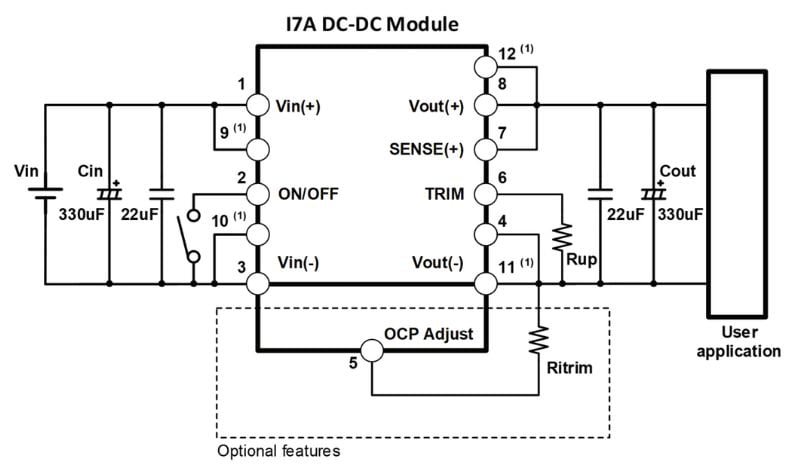
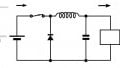
Application circuit example. Image used courtesy of TDK Lambda
Adjustable current limit, a feature inherited from earlier models, becomes more important at these levels. TDK points to its role in supporting parallel operation but stops short of calling it active current sharing. Based on the documentation, these modules likely use a droop method whereby output voltage sags slightly under load, helping adjacent converters balance without digital communication. It’s simple and predictable, which is good enough for many designs, though precision loads may still require tighter control.
TDK offers open-frame, baseplate, and optional heatsink variants, and the 80 A part weighs 85 g in its baseplate version. This is heavier than the original models, but still compact given the power involved.
What Changes on the Board
The shift from 45 A to 80 A may not sound dramatic until you calculate the layout savings. A typical 1000 W rail might have previously used two 500 W converters, each with its own control loop, output filter, and connector pair. That meant managing thermal spacing and potential sequencing concerns. With a single 80 A i7A, the same job gets done in one footprint, with one feedback loop and one set of pins to manage.
It also changes how system architects think about modular power. With 1000 W now available in a standard 1/16-brick format, designs that previously required custom boards or full half-brick converters can scale down. And since the i7A supports voltages as low as 3.3 V, it can feed downstream LDOs, auxiliary rails, or buck converters without stepping through multiple stages.