Facebook
 Google
 GitHub
 Linkedin
Melexis Unveils a Digital Current Sensor for High-Power EVs
The MLX91229 Hall sensor trades an analog output for a digital bitstream to keep current readings clean inside EV traction inverters as SiC and GaN switching push electrical noise higher.
As electric vehicles push toward higher voltages and faster-switching devices, the wiring between a current sensor and its microcontroller is becoming a liability. Melexis has unveiled the MLX91229, a Hall-effect digital current sensor built exactly for this problem. It measures current in traction inverters without the signal degrading on its way to the MCU.
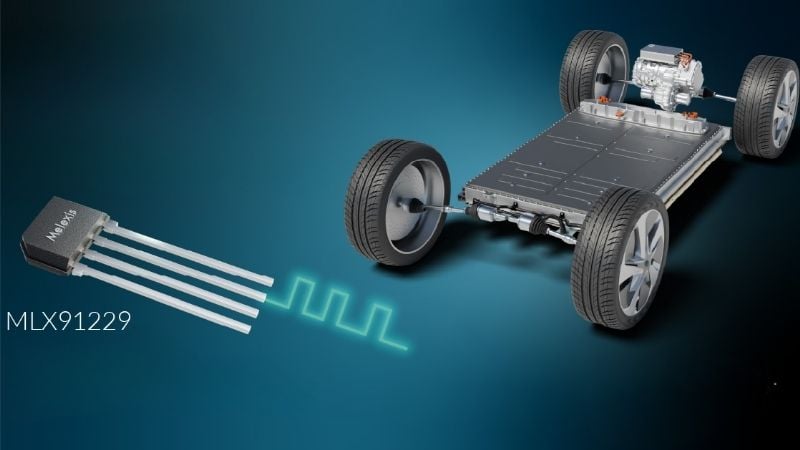
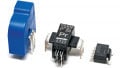
Melexis' MLX91229 digital Hall-effect current sensor targets traction inverters with a sigma-delta bitstream output. Image used courtesy of Melexis
Why Signal Integrity Matters
Current measurement plays a critical role in traction inverters. The inverter controller continuously monitors the motor current to regulate torque, detect faults, and protect power electronics during abnormal operating conditions.
Traction inverters built around wide-bandgap devices such as silicon carbide (SiC) and gallium nitride (GaN) generate more electrical noise than conventional silicon-based designs. Their higher operating voltages and faster switching speeds are great for improving efficiency but rough on nearby electronics. That switching throws off electromagnetic interference (EMI) that can couple into any signal line running through the inverter, including the line carrying current measurements back to the MCU.
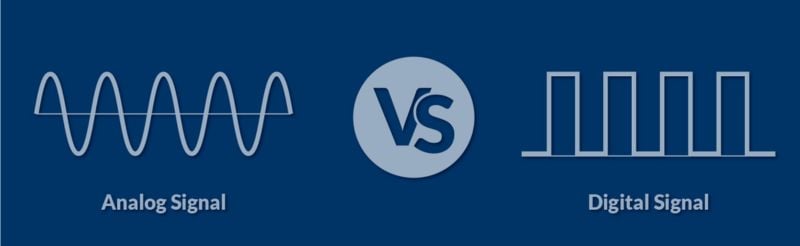
The MLX91229's sigma-delta output encodes the analog measurement as a digital bitstream, which is inherently more resilient to EMI-induced errors. Image used courtesy of Dwyer Omega
Analog current sensors represent that measurement as a small voltage. The problem: any noise picked up along the trace changes that voltage, and the MCU has no way to tell the real signal from injected noise.
Longer PCB traces or wiring harnesses make it worse, since there's more length for interference to couple into. Engineers have historically dealt with this through shielding, filtering, and careful layout, which is workable but adds design cycles.
How the MLX91229 Handles it Differently
The MLX91229 measures current by sensing the magnetic field generated around a conductor using an integrated Hall-effect element. Instead of sending a voltage, the MLX91229 sends its measurement as a sigma-delta bitstream, a high-speed stream of 1s and 0s where current information is encoded in the density of digital pulses rather than in an absolute voltage level.
That distinction matters because a digital pulse train has a built-in margin against noise, since small disturbances don't corrupt the pulse pattern the way they'd shift an analog voltage.
The sensor is designed for current measurements from 200 A to 2000 A, covering magnetic field strengths from 11 mT to 400 mT, with a 20 kHz bandwidth suitable for high-power automotive systems.
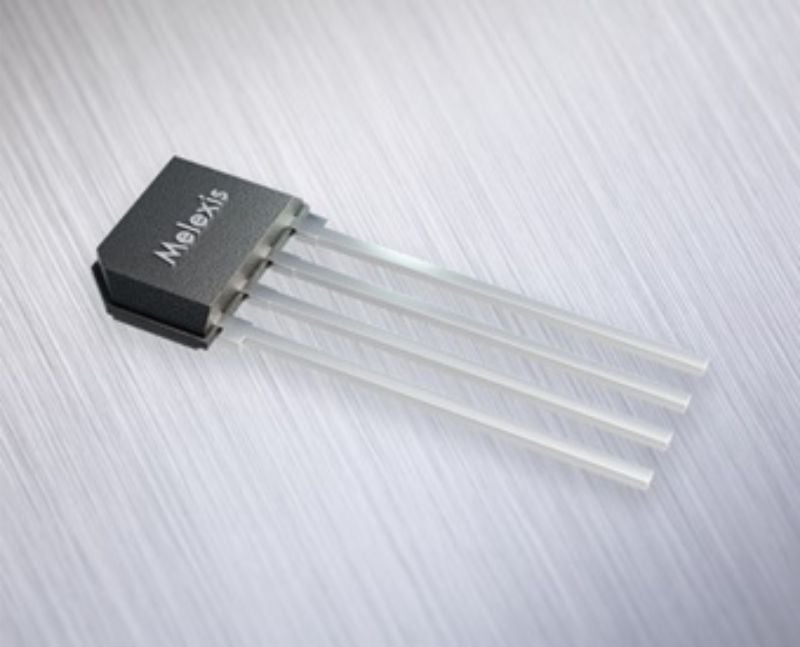
MLX91229, a 20 kHz conventional Hall current sensor with digital output. Image used courtesy of Melexis
The MLX91229 offers two clock modes. By default, it runs on an internal 10.7 MHz clock, making it self-contained and requiring no external timing reference. Alternatively, engineers can synchronize it to an external clock between 5 MHz and 12.5 MHz.
Since demodulation happens in the host MCU rather than on the sensor, the filter design is the engineer's choice. A narrow decimation filter provides high accuracy and a low noise floor, which is the right setting for torque control loops where current ripple must be resolved accurately. A wide filter gives a fast transient response in overcurrent detection, where reaction time matters more than resolution.
Each unit is factory-trimmed over temperature for native linearity, providing a calibrated baseline without end-of-line correction. Four parameters are additionally programmable via on-chip EEPROM: coarse-gain sensitivity, fine-gain sensitivity, zero-field offset, and independent overcurrent detection thresholds.
The MLX91229 ships in a 4-pin SIP through-hole package that matches the footprint of Melexis's existing analog Hall sensors. An engineer can swap the part onto an existing board, implement digital demodulation in firmware, and assess whether the signal-integrity improvement justifies a full signal-chain redesign, allowing him to verify performance before committing to one.
The MLX91229 is designed for two main applications, EV traction inverters and battery management systems. To meet automotive requirements for both, the MLX91229 is AEC-Q100 qualified and operates from -40°C to +125°C on a selectable 3.3 V or 5 V supply.
Looking Ahead
With 800 V buses becoming standard and switching speeds still climbing, signal integrity in current sensing will only get harder to maintain with analog outputs. Moving digitization onto the sensor IC and pushing demodulation decisions into firmware is a structural shift. This change gives system architects flexibility that fixed-output analog sensors fundamentally can't offer.
More information can be found on the Melexis product page.