Facebook
 Google
 GitHub
 Linkedin
Four New MOSFET Devices Address Power Needs in EV, Industrial and AI
Vishay, SemiQ, Infineon, and Alpha & Omega Semiconductor have released upgraded SiC MOSFET products to deliver efficiency, thermal performance, and reliability in electric vehicle, industrial, and AI systems.
Electric vehicle inverters, telecom power supplies, and 48 V power distribution systems for AI accelerators share similar design constraints, including limited available space, fixed cooling capacity, and high system reliability requirements. To meet performance targets, these systems often operate at higher switching speeds and power densities, which tighten thermal margins and limit tolerance for component inefficiency or drift.
Vishay Intertechnology, SemiQ, Infineon Technologies, and Alpha & Omega Semiconductor have launched products featuring innovative power semiconductor devices designed to improve efficiency, thermal management, and system integration. Although these devices are designed for specific applications, they collectively aim to address widespread design challenges across automotive, industrial power conversion, telecom infrastructure, and data center hardware.
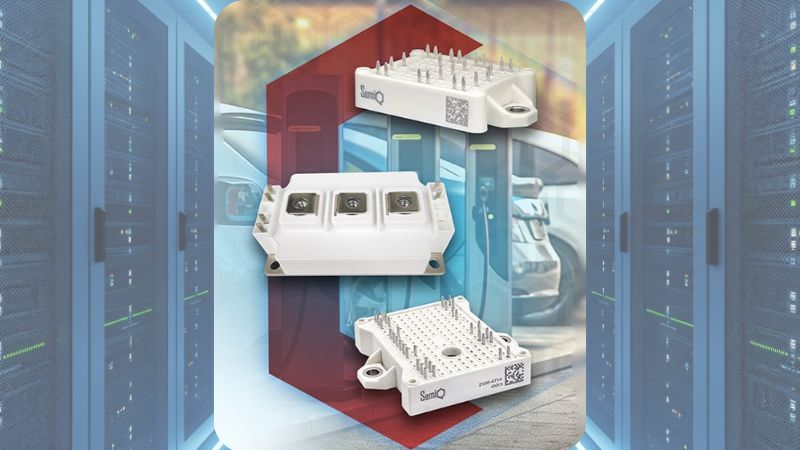
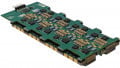
SemiQ’s SiC modules. Adapted from image used courtesy of SemiQ
1. Vishay Targets Drop-in Efficiency With 1200 V SiC Power Modules
Vishay’s 1200 V SiC MOSFET power modules focus on improving efficiency and long-term reliability without forcing major design changes. Packaged in the company’s low-profile MAACPAK PressFit format, the VS-MPY038P120 and VS-MPX075P120 integrate multiple SiC MOSFETs, fast intrinsic diodes, and an onboard NTC thermistor into a rugged transfer-molded construction. The packaging approach improves thermal resistance while supporting longer product lifecycles compared with older module designs.
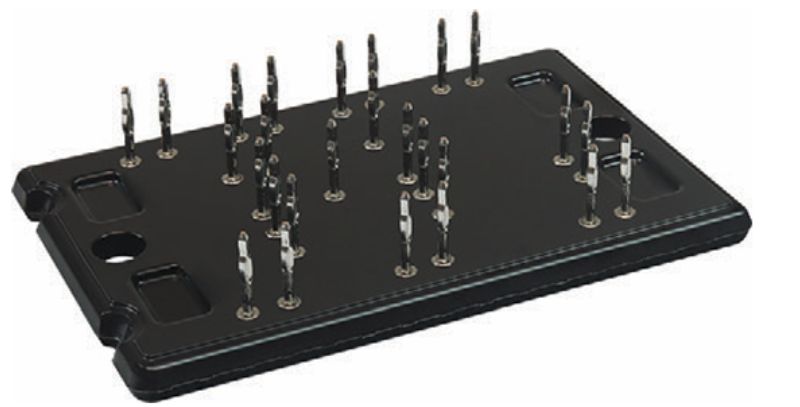
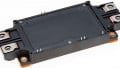
Vishay adds drop-in 1200 V SiC modules with higher efficiency and 175°C ratings. Image used courtesy of Vishay
The PressFit pin layout follows industry-standard footprints, making it easier to swap these modules into existing inverter and converter designs for board integration.
The VS-MPY038P120 is intended for full-bridge topologies and comes in at roughly 38 mΩ on-resistance with a continuous drain current of 35 A at 80°C. The VS-MPX075P120 is better suited to three-phase designs, offering 75 mΩ on-resistance and 18 A continuous current.
Both devices are rated for junction temperatures up to 175°C, making them ideal for applications such as EV chargers, solar inverters, HVAC drives, and large-scale battery storage systems.
2. SemiQ Pushes Current Density and Thermal Limits With Gen3 Modules
SemiQ has recently expanded its third-generation QSiC module lineup with half-bridge, full-bridge, and six-pack options for high-power industrial and EV systems. The range includes S3 half-bridge devices rated up to 608 A in a standard 62 mm package, which puts significant current into a mechanical format most power designers already know how to work with.
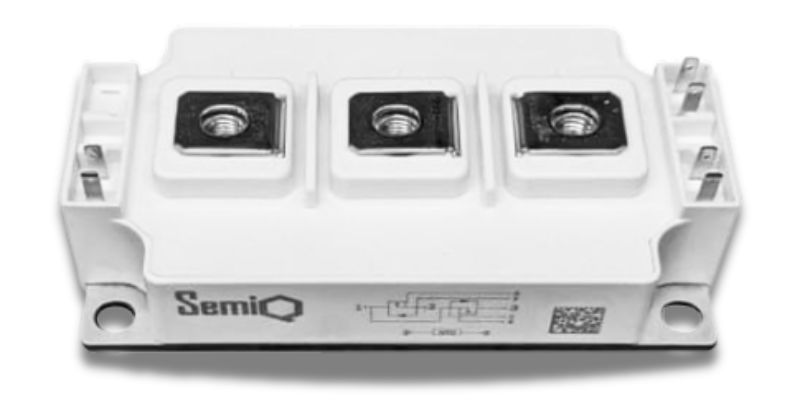
Gen3 QSiC half-bridge module. Image used courtesy of SemiQ
Junction-to-case thermal resistance is specified as low as 0.07 °C/W, helping reduce cooling demands at the system level once the module is integrated. The Gen3 device process also reduces specific on-resistance and turn-off losses by up to 30% compared with earlier generations.
To support long-term use in fast-switching, high-voltage environments, the modules undergo wafer-level gate-oxide burn-in and breakdown-voltage testing exceeding 1350 V.
3. Infineon Expands CoolSiC 750 V G2 into New Package Options
Infineon has added Q-DPAK and D2PAK options to its CoolSiC 750 V G2 MOSFET lineup, expanding the available package choices without changing the underlying device approach. In these packages, RDS(on) drops to around 4 mΩ, which is low enough to matter in a variety of automotive or industrial power stages. Because the devices stay within compact, familiar footprints, engineers can usually drop them into existing layouts, reducing the need to move to larger modules or rethink the thermal design around them.
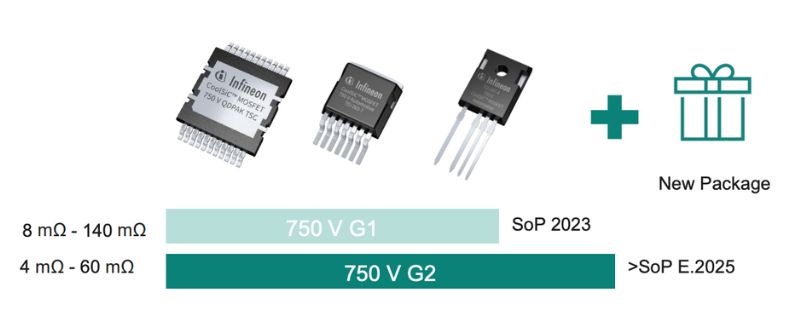
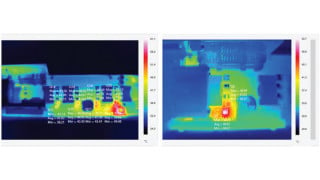
The 750 V G1 vs. G2. Image used courtesy of Infineon
The top-side-cooled Q-DPAK significantly improves thermal management, particularly in high-density configurations where effective heat dissipation is a critical challenge. Features such as the elevated threshold voltage, low QGD/QGS ratios, and compatibility with more stringent negative gate-drive conditions help maintain control over parasitic turn-on phenomena.
The MOSFETs are relevant in hard-switching applications like onboard chargers, server power supplies, and EV charging hardware, where switching behavior can get ugly fast.
4. AOS Addresses 48 V Hot-Swap Demands in AI Servers
High-voltage conversion grabs most of the attention in power electronics, but Alpha & Omega is dealing with a different pain point: 48 V power distribution in AI servers. Hot-swap is where things get tricky there, especially when you’re dealing with high inrush currents and little room for error. The AOLV66935 is clearly aimed at this use case, pairing a wide safe operating area with very low on-resistance in a compact LFPAK 8×8 package.
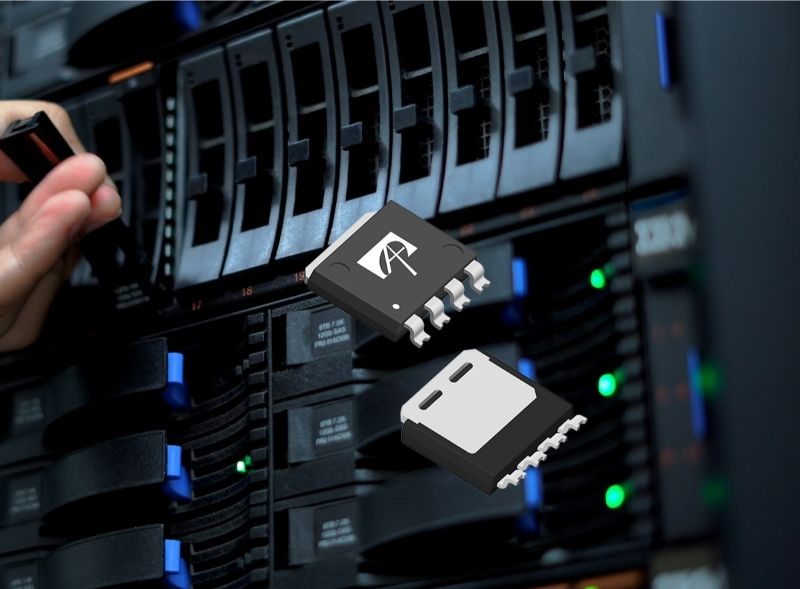
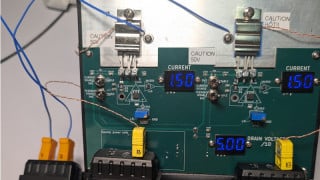
AOS adds a high-SOA MOSFET for 48 V hot-swap in AI servers. Image used courtesy of Alpha & Omega Semiconductor
It’s built on AOS’ AlphaSGT trench MOSFET process, which lets it handle those current spikes without falling apart, even up to 175°C. With a max RDS(on) around 1.86 mΩ, conduction losses stay low enough that designers don’t have to stack a bunch of devices in parallel just to stay within thermal and efficiency limits.
Across these four product launches, new devices were introduced to address similar system-level requirements using different approaches, ranging from SiC modules, discrete MOSFETs, and updated packaging. For designers working in EVs, industrial equipment, or even AI servers, these releases provide additional tools aimed at improving efficiency, thermal control, and reliability in high-power designs.