Facebook
 Google
 GitHub
 Linkedin
What Do Plastic Waste and Cow Manure Have in Common? Hydrogen!
A U.K.-based firm and a farm in Japan are converting manure and plastic waste into hydrogen with less energy and environmental impact.
Solar and wind energy sources are renewable energy staples, but producing usable hydrogen is energy intensive and relies on fossil fuels, making hydrogen a less-than-ideal clean fuel source. However, advancements in sustainable hydrogen might finally catalyze its production on a larger scale.
In the U.K. and Japan, developers are exploring how to use waste products like plastics and cow manure to drive hydrogen production. Deploying thermochemical decomposition processes can transform plastic into usable hydrogen, while anaerobic digestion can break down manure into biogas and, ultimately, hydrogen.
Powerhouse Energy Group in the U.K. already has a fully operational testing unit. It is scaling up to a commercial unit that can give a second life to plastic waste products.
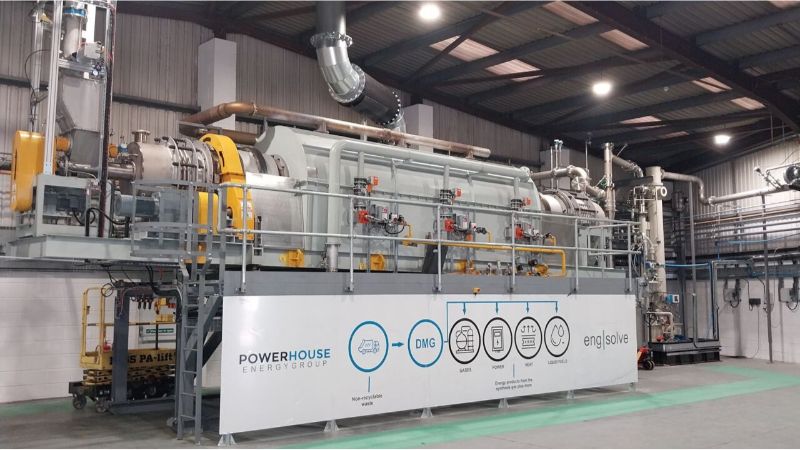
Powerhouse’s Feedstock Testing Unit. Image used courtesy of Powerhouse Energy
The Problems With Methane Pyrolysis and Electrolysis
Hydrogen seems like an ideal fuel source because it only produces water when consumed. Yet, hydrogen’s real story is more complex.
So far, producing green hydrogen using renewable energy has been plagued by problems. The process often consumes between 2 and 14 times the amount of energy as other fuel alternatives. Moreover, it’s inefficient; between 50% and 80% of the renewable energy needed to drive hydrogen production is completely lost.
Many fuels are used to produce hydrogen, and the end products are classified according to their energy efficiency. From gray to blue to green hydrogen, researchers have been struggling to find energy-efficient ways to remove waste and produce hydrogen fuel through sustainable methods.
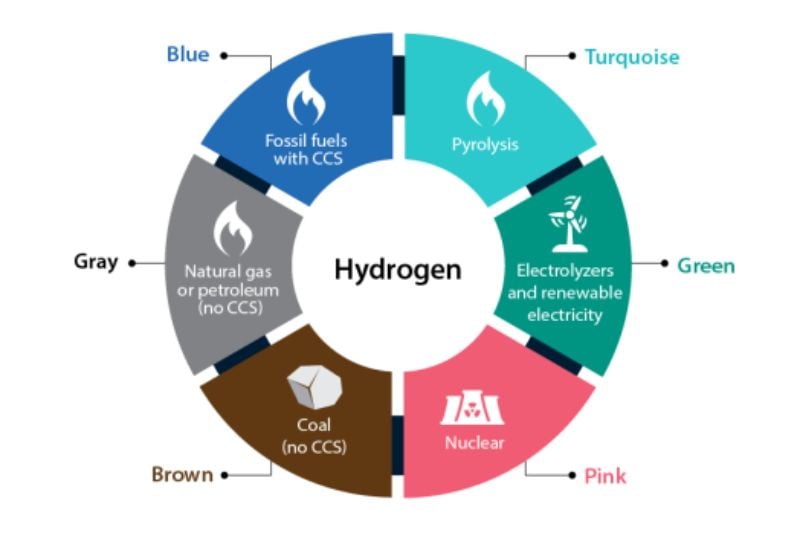
Fuels used for hydrogen production. Image used courtesy of Library of Congress
Hydrogen production can involve advanced chemical processes like electrolysis, pyrolysis, and methane pyrolysis. Electrolysis uses electricity to split water into hydrogen and oxygen. It can be used to make green hydrogen when powered by renewable energy. Pyrolysis uses high temperatures to decompose organic materials in an oxygen-free environment. The process produces wastes such as gases and carbon black, which can be dangerous if inhaled. Methane pyrolysis decomposes methane into hydrogen gas and solid carbon. The process producers lower emissions than other conventional methods.
Optimizing methane pyrolysis has proven difficult. Variations in plastic feeder material can dramatically impact efficiency and process outcomes, and deviations can increase the production of unwanted byproducts like tar. Tar management, which can be costly and complicated, must be built into the processing infrastructure.
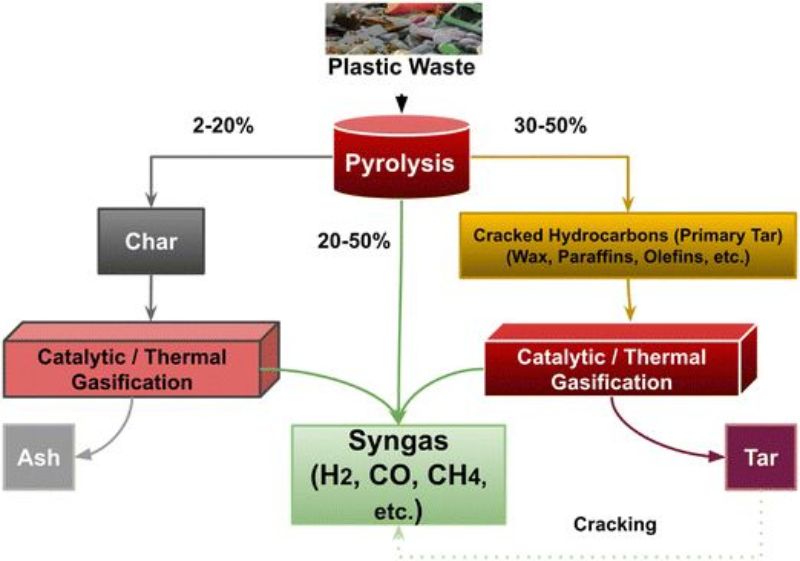
Diagram of the pyrolysis process. Image used courtesy of Bashir et al.
Using electrolysis also presents challenges. Electrolysis requires large amounts of electricity, making the process expensive and dependent on renewable energy availability. Besides overall electricity demand, electrolyzers—especially proton exchange membrane and solid oxide electrolyzers—are costly because they use rare materials like iridium and platinum. Due to such demands and costs, scaling up production to compete with fossil-fuel-derived hydrogen (gray hydrogen) requires significant infrastructure investments, policy support, and efficiency improvements that have so far remained out of reach.
Using a Rotary Kiln and Plastic Waste for Hydrogen Pyrolysis
A team in Japan has pioneered a method for reducing manure waste by using it to drive the hydrogen production process. The Shikaoi Hydrogen Farm produces 20 million tons of cow manure annually, which is an environmental hazard. Effectively using it to produce hydrogen can generate clean hydrogen and reduce contaminants.
By feeding all this manure into an anaerobic digester, the farm can produce 18,500 gallons of hydrogen, which can be used as fuel to power farm equipment, such as tractors.
Powerhouse Energy Group in the U.K. already has an operable Feedstock Testing Unit (FTU) that can run continuously without disruption. This unit successfully processes 2.5 tons of plastic waste daily. Powerhouse estimates that the commercial version of this unit will be capable of processing 35 tons of plastic waste every day.
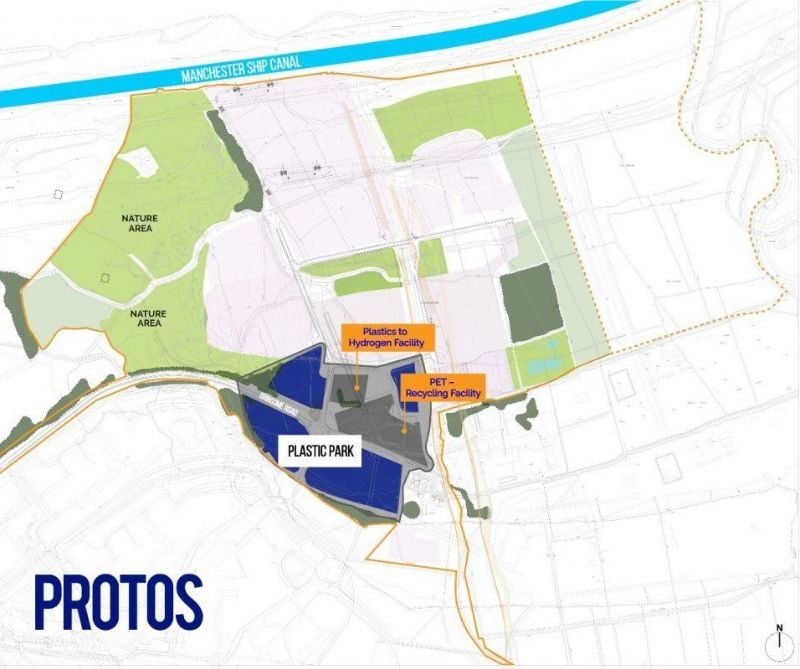
The planned site for Protos, Powerhouse Energy’s commercial plastics-to-hydrogen plant. Image used courtesy of Powerhouse Energy
The pyrolysis process is housed in a rotary kiln and engineered to maximize hydrogen output. A special purification process ensures that the syngas produced is ready for use.
Creating clean hydrogen from plastic and agricultural waste might be the next frontier for scaling up hydrogen production, which has long lagged behind other clean forms of energy.