Facebook
 Google
 GitHub
 Linkedin
Iridium-Free Electrolyzer Unlocks Green Hydrogen Potential
Researchers have identified an eco-friendly method to generate hydrogen without rare element catalysts.
While hydrogen is a promising sustainable energy, efficiently producing green hydrogen remains a significant challenge. Current methods depend heavily on nonrenewable resources that contribute to environmental pollution. Cleaner ways to produce hydrogen are available, but the reliance on scarce and expensive materials often hinders them.
Researchers in Spain have produced hydrogen using environmentally friendly methods and naturally abundant elements. The development could lead to sustainable green hydrogen production.
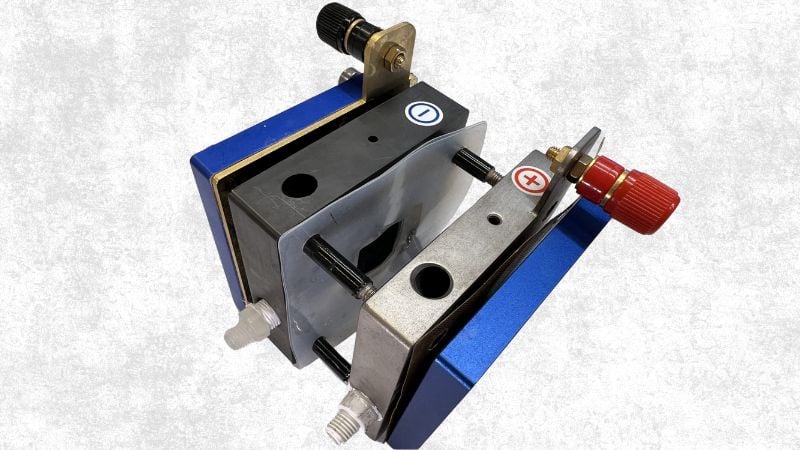
PEM electrolyzer. Image used courtesy of ICIQ
Exploring Hydrogen Challenges
Unlike conventional fuels, hydrogen does not produce carbon dioxide, making it an attractive option for cleaner energy. However, most hydrogen is produced through methane reforming, which emits large amounts of carbon dioxide, undermining hydrogen’s environmental benefits.
A more sustainable solution lies in water electrolysis, which generates green hydrogen when powered by renewable energy sources. Using cathode and anode catalysts that split water molecules into hydrogen and oxygen, the solution results in a clean, carbon-free fuel alternative.
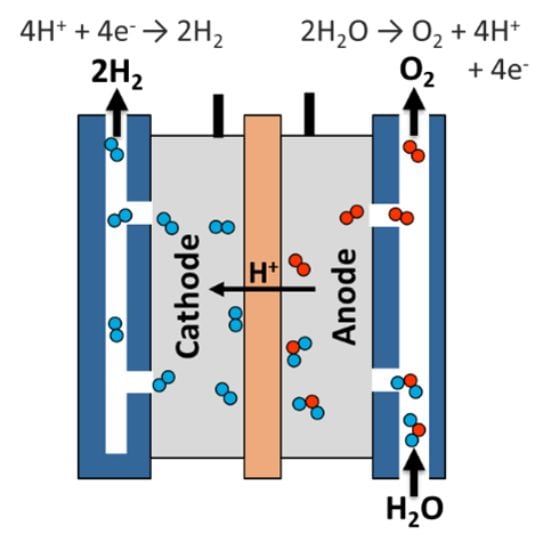
Electrolysis process and reaction. Image used courtesy of the Department of Energy
Proton-exchange membrane (PEM) electrolysis is a potential method for producing green hydrogen. This technology stands out because it combines high production rates with impressive energy efficiency. However, PEM electrolysis has traditionally depended on catalysts made from scarce and expensive elements like platinum and iridium.
To date, only iridium oxides have demonstrated the stability required for industrial-scale applications, but iridium is one of the rarest elements on Earth. Iridium occurs in the earth’s crust is only about 0.001 ppm. These materials are among the few offering the necessary activity and stability in the reaction’s harsh chemical environment. The challenge is especially pronounced for anode catalysts, which must operate in highly corrosive acidic conditions. This scarcity drives the urgent need for alternative materials to maintain performance without relying on these limited resources.
Green Hydrogen Milestone
Researchers in Spain have developed an innovative iridium-free electrolyzer that achieved record stability and energy density.
The invention focused on an anode catalyst made from cobalt-tungsten oxide (CoWO4), employing a novel delamination process where water replaced part of the tungsten oxide in the lattice structure. This resulted in a more robust catalyst with enhanced performance. The new material, designed to actively involve water and its fragments in its structure, demonstrated remarkable stability for over 600 hours at a high energy density of 1 A/cm2. This stability is a record for iridium-free catalysts, making it a significant advancement for PEM electrolysis.
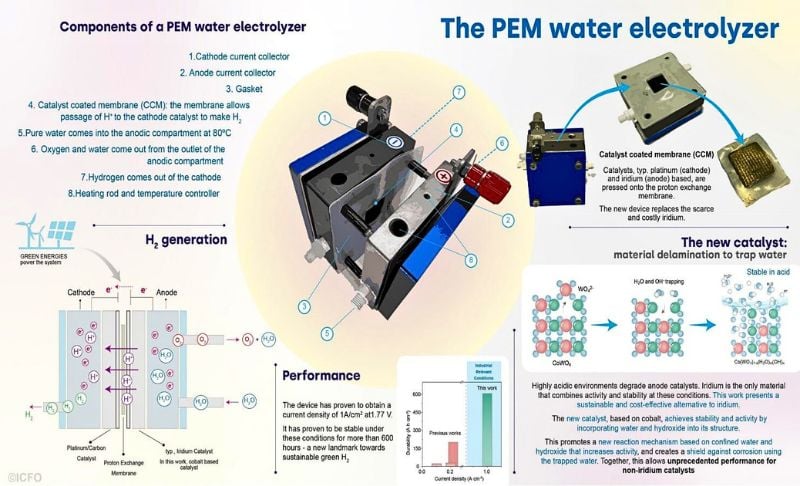
The delamination process. Image used courtesy of ICIQ
The delamination process in the activation treatment enhanced the material's activity by increasing the number of active sites and altering the reaction mechanism. Specifically, removing tungsten oxide created vacancies immediately filled by water and hydroxide ions in the medium. This spontaneous filling stabilized the catalyst by preventing cobalt dissolution, thereby maintaining the integrity and effectiveness of the catalyst components.
The research team’s approach also prevented cobalt from degrading, a common issue with previous iridium-free catalysts, which has typically failed at scale.
Powering the Future
By using an abundant material like cobalt, the researchers could avoid iridium's scarcity and high cost. The cobalt-tungsten oxide catalyst showed superior performance and stability compared to other cobalt-based catalysts, setting a new benchmark for industrial applications. And, while the stability falls short of commercially available PEMs, the researchers plan to explore other elements using their novel design strategy.