Facebook
 Google
 GitHub
 Linkedin
No Land Needed: Solar Canopies Cover California Canals
The pilot project generates electricity from solar panels installed over irrigation canals while conserving agricultural land and water.
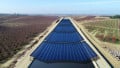
A first-of-its-kind pilot project to build solar canopies across irrigation canals in California has completed construction. Project Nexus provides 1.6 MW of renewable power along several sections of the Turlock Immigration District (TID). The system includes an iron-flow battery energy storage system with a 75 kW capacity.
While generating electricity for surrounding areas, Project Nexu also offers the dual benefits of reducing water evaporation and minimizing land use for the installation.
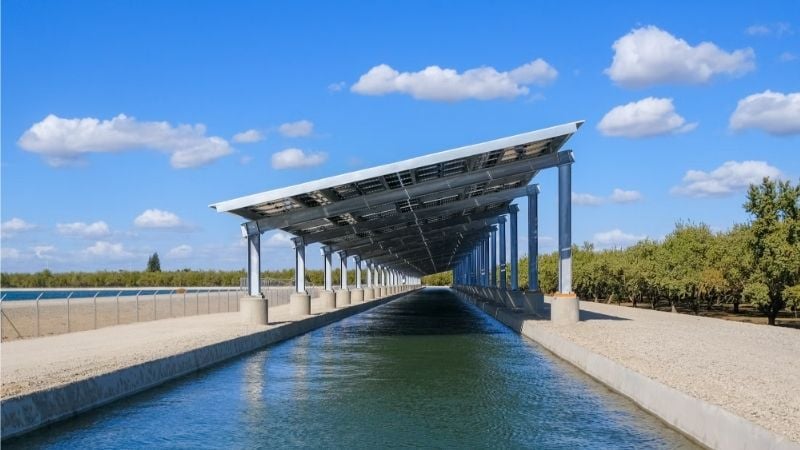
Project Nexus. Image used courtesy of State of California
Project Nexus
The $20 million Project Nexus was developed through a public-private partnership between the California Department of Water Resources, Turlock Immigration District, Solar AquaGrid, and the University of California, Merced (UC Merced). The project aimed to help California better manage water resources while simultaneously expanding clean energy production.
In 2021, a UC Merced study suggested that covering all 4,000 miles of California’s irrigation canals with solar panels could generate sizeable water, energy, and cost savings for the state. The potential for the project to reduce water loss from evaporation before it reaches end users is especially promising as California faces hotter, drier days.
Project Nexus began construction in 2022 and was completed in September 2025, with an official launch in April.
The ongoing project will measure clean energy generation and water saved by reducing evaporation. It will also evaluate whether water quality improves and whether canal coverings reduce maintenance costs. This includes limiting vegetation growth, potentially cutting millions in annual maintenance costs.
Learn more about Project Nexus from the engineers who designed it. Video used courtesy of Turlock Immigration District
While the state funded the initial investment, TID will manage the ongoing project operations and maintenance.
All Around Environmental Benefits
The UC Merced study also suggested that the project could save 63 billion gallons of water and generate 13 GW of power annually. After one full irrigation season, initial results appear to align with the study’s findings.
PV-covered canal sections experienced evaporation reductions of 50-70%, along with an 85% decrease in algae growth. This reduction in algae is a notable operational benefit, as it lowers canal maintenance needs and associated costs.
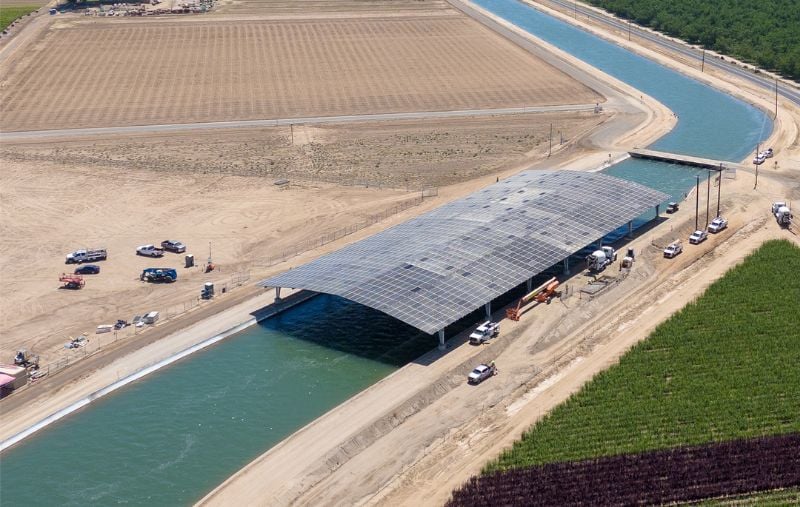
Project Nexus’ solar canopy at the canal’s wide span. Image used courtesy of State of California
Installing solar arrays above canals rather than on land provides important land-use benefits. By utilizing existing infrastructure corridors, the project avoids converting agricultural or undeveloped land for energy production. This approach is particularly valuable in California, where competition for land between farming, development, conservation, and renewable energy projects continues to increase.
Planning to Scale
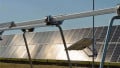
Project Nexus created an opportunity to test multiple design configurations, including large-span structures over wider canals, smaller systems on narrow canals, and even vertical and retractable prototypes. Evaluating the range of options helps assess the system’s adaptability across different hydraulic and structural conditions.
The project scaling is critical to the long-term benefits demonstrated so far and projected by the UC Merced study. TID continues to seek ways to generate sufficient power for its customer base while meeting California’s renewable energy goals, which mandate that 60% of the state's electricity come from renewable sources by 2030 and that the electricity sector become 100% carbon-free by 2045.