Facebook
 Google
 GitHub
 Linkedin
Transforming Transmission With Superconducting Lines
VEIR’s superconducting transmission lines can move significantly more power without increasing voltage or footprint.
Renewable energy tech is experiencing a gold rush period of development. The power grid must catch up with clean energy mandates and financial incentives that are rapidly driving growth. The U.S. Department of Energy reports 11,600 green energy projects in the development pipeline. Still, those projects must wait while grid infrastructure is built to support this growth.
A major stumbling block to grid expansion has been the rising cost of transmission line installation. Material costs, permitting problems, and community opposition have all stymied necessary transmission line growth.
One solution may be VEIR’s superconducting transmission lines. These lines can significantly increase power transmission without the need to raise voltage or tower size. VEIR is pioneering the materials used to make the superconducting transmission lines and has developed a proprietary cooling system using nitrogen to cool the cables passively. These developments make it possible to significantly increase power without increasing voltage.

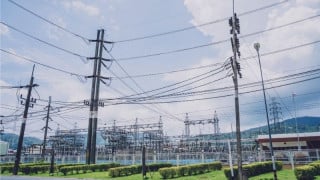
Transmission lines. Image used courtesy of Adobe Stock
Rising Costs of Conventional Transmission Line Installation
Most experts agree the utility grid must double or triple its capacity to handle the power needs looming on the horizon. The electric vehicle market, artificial intelligence data demand, and growing renewable technology will all put enormous stress on the grid. Soaring temperatures and increasing natural disasters also cause significant stress.
Supply chain issues, market conditions, and permitting complexities all inhibit the construction and installation of conventional high-voltage transmission lines in the U.S.
The protracted bidding process intersects with increasingly complex regulatory compliance issues, resulting in a wrecking ball to contractor motivation. When such delays occur, material prices can skyrocket, resulting in busted budgets. It is not unusual for transmission line projects to inflate by 20% before they even begin, meaning millions of dollars lost for bigger projects.
Complications of Superconducting Transmission Line Installation
While superconducting transmission lines were hailed as a great solution to the various drawbacks associated with conventional lines, installing them also comes with unique challenges. Superconducting materials require extremely low temperatures, often near absolute zero, to maintain their superconducting state. This necessitates using complex and costly cryogenic cooling systems to keep the lines operational, significantly increasing installation and maintenance costs. Additionally, the infrastructure must be robust enough to handle these cooling systems, which adds to the complexity of the installation.
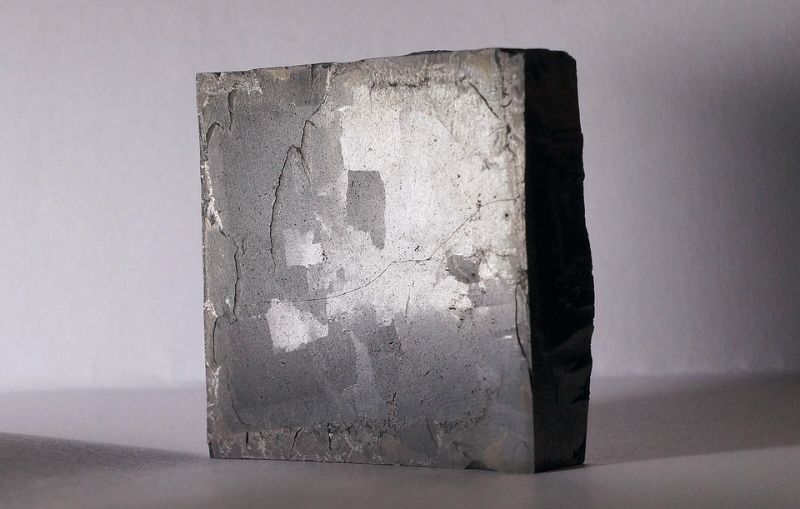
Yttrium barium copper oxide. Image used courtesy of Wikimedia Commons
The materials used in superconducting lines, such as yttrium barium copper oxide, are expensive and difficult to manufacture in large quantities. These materials’ fragility requires careful handling and specialized techniques to avoid damage during installation. Another challenge is the need for seamless integration with existing power grids, which often involves sophisticated engineering to ensure compatibility and reliability.
How Nitrogen Cooling Keeps Voltage Down
VEIR, a startup co-founded by MIT alumnus Tim Heidel, is pioneering a solution rooted in cooling innovation. It leverages the nuclear fusion industry’s advancements in developing high-temperature superconducting tapes.
VEIR’s superconducting transmission lines can transmit 5 to 10 times more power than conventional lines while not increasing the voltage or footprint. This tandem consequence has always been difficult to escape.
Keeping the voltage low will be critical in reducing opposition to infrastructure development in residential neighborhoods. VEIR has installed lines in Woburn, Massachusetts, where their work is indistinguishable from conventional transmission lines. The technology allows the scale and size to remain consistent, thus preventing the need for huge towers or other imposing infrastructure elements.
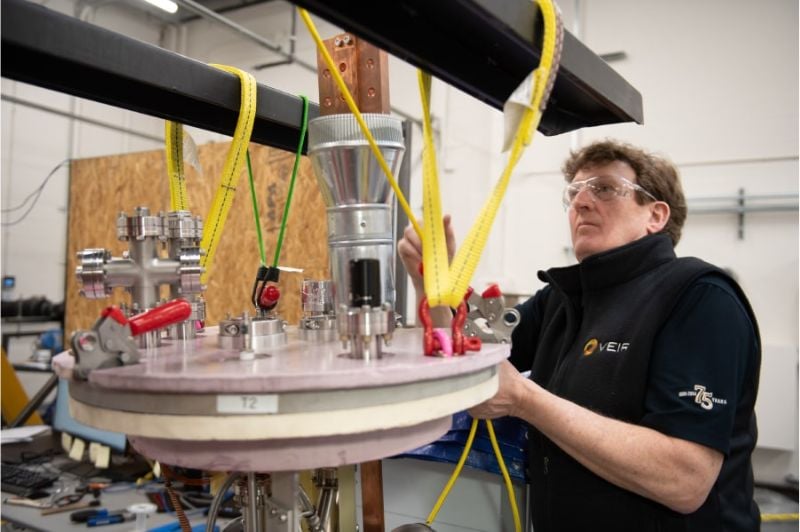
Developing superconducting transmission lines. Image used courtesy of VEIR
VEIR’s core innovation tech is the cooling system. VEIR co-founder and advisor Steve Ashworth had already developed this cooling technology for a Department of Energy research project that was eventually abandoned. However, his innovation is finding a second life at VEIR. The VEIR system uses a vacuum-insulated pipe surrounding the superconducting material and nitrogen to create streamlined, passive cooling. Some transmission towers will include heat exchange units to support the line cooling mechanisms. By using distributed evaporation, the VEIR line creates 20 times the cooling power per kilogram of liquid nitrogen coolant.
VEIR’s first commercial-scale project will be ready in 2026. The company plans to sell its superconducting transmission technology to U.S. markets. It is also developing a commercial alternating current line that can transmit up to 400 megawatts and up to 69 kilovolts of voltage.
VEIR’s contribution to moving superconducting transmission lines into the future will help quicken grid growth to keep up with the rapid evolution of renewable energy.