Facebook
 Google
 GitHub
 Linkedin
SiC-Based E-Fuses vs. Traditional Fuses: A Modern Comparative Analysis
Electronic circuit interruption solutions protect the wiring and limit short-circuit let-through current and energy delivered to a faulted load. This article provides a demonstration of SiC-based E-Fuses vs. traditional fuses. See how they compare.
This article is published by EEPower as part of an exclusive digital content partnership with Bodo’s Power Systems.
Silicon carbide technology will play a pivotal role in sustainability applications as we collectively chart a path forward to reduce emissions and reach net zero targets. These applications can be enabled by adding power electronics to systems, such as motor drives, or enhancing the power electronics in existing systems to reach higher voltages and increase efficiencies. As more applications integrate electric systems, the need for electric circuit protection is essential.
The cost to service or replace components can be significant, so designers are implementing more robust methods of circuit protection. Circuit interruption devices limited to protecting wiring are no longer sufficient with sensitive electronic loads. An electronic circuit interruption solution, such as an E-Fuse, protects the wiring and limits the short-circuit let-through current and energy delivered to a faulted load, which may prevent the load from damaging itself.
Limitations of Traditional Circuit Protection Devices
The traditional fuse is a single-use device that requires replacement after clearing a fault. As such, fuses are specified to blow only at sustained high currents. This may protect wiring in a system but does not protect sensitive loads and may result in system-level downtime. Fuses degrade over time, which significantly affects their performance; for example, fuses become more sensitive, which increases the risk of a nuisance trip, or they become less sensitive, requiring an even higher current to trip. Design for serviceability is important in systems with fuses since they are replaceable devices. Accessibility to a fuse is essential from a service standpoint but has an adverse effect on the long-term reliability of the system. The fuse, fuse holder, and additional wiring are required between the protected circuit and the fuse compartment. The compartment typically includes a panel, fasteners, and a gasket for environmental protection. In high-voltage systems, an interlocking loop is commonly implemented to de-energize the system when the fuse panel is opened. These additional components enable serviceability, and each represents an opportunity for failure, further decreasing the lifetime. Additionally, in high-voltage systems, a fuse can only be replaced by trained, qualified personnel.
Similarly, a relay or contactor controls the power feed to loads. A relay has a small voltage drop across its contacts even at high currents, but it suffers from degradation when switching into capacitive loads and when interrupting inductive currents. Precharge circuits consisting of a relay and surge resistor are often used to charge downstream capacitors to within 20V of the system voltage. This prevents the relay or contactor contacts from welding shut upon activation and wets the contacts to minimize oxidation that would otherwise cause higher resistance and power dissipation. Despite this, the contacts still experience degradation with each activation, which is one of the long wear-out mechanisms that decrease their lifetime. Many DC distribution systems using contactors or relays with capacitive loads include a high-precision voltage measurement circuit at the input and output to ensure the voltage differential condition is met. The greater the error in the voltage measurement, the higher the potential differential across the contacts and the further degradation that ultimately decreases their lifetime. When a relay or contactor switches off, the contacts separate, forming an air gap between the input and output circuits. However, this does not mean they are not electrically connected. In many cases, when a relay opens, the current continues to flow for a brief duration by means of arcing across the air gap. This further degrades the contacts.
System-Level Benefits of High-Voltage E-Fuse
The inaccuracy of a fuse, its limitation to one-time use, and the lack of ruggedness of a relay and contactor are some of the reasons why designers are turning to an electronic solution, such as E-Fuse. Many times, the reliability targets are the primary reason. The improved accuracy, integration, functionality, resettability, and system uptime are among the top benefits of an E-Fuse. However, the main driver is the opportunity to dramatically increase system reliability.
An E-Fuse is a controllable and configurable solid-state circuit interruption device. In 400 V and 800 V systems, silicon carbide (SiC) is the optimal power semiconductor technology due to its high breakdown voltage rating, low on-state resistance, and high thermal conductivity. An E-Fuse can be a unidirectional semiconductor switch that blocks voltage and current in one direction or a bidirectional switch that blocks voltage and current in both directions (e.g., source-to-load and load-to-source). An E-Fuse combines the functionality of a fuse and electromechanical relay and may include additional features, such as load current reporting, which eliminates the need for a standalone current sensor in a system.

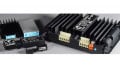
Figure 1. Microchip’s E-Fuse technology demonstrator. Image used courtesy of Bodo’s Power Systems [PDF]
The fast response time, as implemented in the Microchip SiC-based E-Fuse demonstrator in Figure 1, limits short-circuit currents to only a few hundred Amps. With a wide bandwidth current sensing circuit and using the default settings, it detects a short-circuit in under 700 nanoseconds and clears a fault in the range of 1 to 6 microseconds, depending on the system inductance. The trip behavior defined by the Time-Current Characteristic (TCC) curve in Figure 2 is configurable by software or over the Local Interconnect Network (LIN). The TCC curve includes three detection methods: junction temperature estimation, an Analog-to-Digital Converter (ADC) based current sampling, and a software-configurable hardware detection circuit.
The detection circuit in Figure 3 includes a shunt resistor with Kelvin sense connections to provide a precise voltage measurement, an operational amplifier with a high gain-bandwidth product, a fast comparator with a configurable reference, and Set-Reset (SR) latches to realize a fast short-circuit detection and protection. For overloads that do not require an immediate response, the current sense signal is processed by the microcontroller’s ADC and firmware. The design includes two modes of operation: edge-triggered or ride-through mode. In edge-triggered mode, an over-current exceeding the threshold triggers an immediate shutdown. In ride-through mode, an over-current immediately drives the SiC MOSFET gate to a lower voltage to extend its short-circuit withstand time. If the over-current persists longer than the predefined, configurable duration, then the SiC MOSFET switches off, interrupting the circuit. However, if the current drops below the threshold, the MOSFET gate is driven back to full gate drive.

Figure 2. TCC curve. Image used courtesy of Bodo’s Power Systems [PDF]

Figure 3. Over-current detection and protection implementation. Image used courtesy of Bodo’s Power Systems [PDF]
Superior Short-Circuit Protection
Figure 4 shows the let-through current in a charged-capacitor short-circuit test with a traditional 30 A fuse and the 30 A E-Fuse demonstrator. To demonstrate the fast response time, the E-Fuse was tested in a harsher operating condition with six times lower source inductance, which resulted in a current ramp that was six times steeper than that in the fuse test. Even under this condition, the short-circuit current peaked only at 216 A in the E-Fuse test, while the fuse allowed a peak current of 3.6 kA. The total fault clearing time was 672 ns with the E-Fuse and 276 µs with the traditional fuse. Beyond the fast fault-clearing time allowing for a low shortcircuit Let-Through (LT) current, the let-through energy is hundreds to thousands of times lower than a traditional fuse. In this test, the corresponding let-through energy of the E-Fuse was 406 mJ compared to 85J with the circuit protected by the fuse. This dramatic difference in performance has the potential to prevent a faulted load from becoming a hard failure when protected with an E-Fuse.

Figure 4. Short-circuit test with fuse (top) and E-Fuse (bottom). Image used courtesy of Bodo’s Power Systems [PDF]
Additionally, in the fuse test, the DC-link capacitance was completely discharged. However, with the circuit protected by an E-Fuse, the 450 V DC bus decreased by only 2V for less than 200 ns. This is a key advantage as it allows systems to continue operating without the concern of a device failure causing a dip or dropout on the DC bus. In many systems, where malfunctions can be hazardous or result in costly downtime, an E-Fuse provides a superior level of circuit protection. Summarizing the test results, the E-Fuse cleared the short-circuit fault 300 times faster with 16 times lower let-through current and 200 times lower let-through energy while maintaining a stable DC bus.
As demonstrated, a SiC-based E-Fuse offers several system-level benefits that not only protect the wiring and loads more effectively than traditional solutions but also simplify system design and integration of protection, control, and sensing. The demand for wide bandgap semiconductors will continue to increase as the electrification of everything requires higher voltage, higher efficiency, and lower switching losses. The electrical systems in these applications benefit from an E-Fuse solution as it eliminates design for serviceability constraints and increases system uptime, reliability, and safety.
This article originally appeared in Bodo’s Power Systems [PDF] magazine.