Facebook
 Google
 GitHub
 Linkedin
Breaking Down the Complexities of BMS ICs
This article features the most essential advancements in battery management system integrated circuits.
This article is published by EEPower as part of an exclusive digital content partnership with Bodo’s Power Systems.
A battery management system (BMS) IC is a relatively complex system. Unlike most power management ICs, it integrates numerous interdependent functions that must work accurately, seamlessly, and harmoniously to deliver a fully functional BMS. In any battery-operated device, the BMS is one of the most critical and sensitive components—often the most important.
Li-ion batteries, while powerful, are highly sensitive and can pose safety risks if mishandled. Improper care can also significantly shorten their lifespan, resulting in diminished capacity or even rendering the battery unusable. The BMS IC is the key element responsible for ensuring the battery pack’s health, reporting its status, and maintaining optimal performance—either independently or in collaboration with a system processor.
Four Critical Functions
Among the many tasks a BMS IC performs, these four functions (in no particular order) are the most critical, as they are all vital for a reliable and efficient battery management system:
1. Protection and Safety
2. Balancing
3. State of Charge Determination & Reporting
4. State of Health Assessment
Protection, Safety, and Balancing: The Role of Accurate Voltage Measurement
Protection, safety, and balancing depend heavily on accurate cell voltage measurement. Among its many tasks, the ability to precisely measure cell voltage is one of the most challenging for a BMS IC. This becomes particularly critical when balancing the cells.
Li-ion batteries are highly sensitive to specific voltage thresholds. Exceeding the minimum or maximum limits can damage the cells while overcharging poses a significant risk of fire or explosion. Accurate voltage measurement is essential to maintain these limits, as inaccuracies can require adding buffer margins, reducing the usable capacity of the battery. The size of these margins is directly tied to measurement accuracy.
Further complicating this is the fact that cell voltage is influenced by battery impedance and current. This variability necessitates dynamic adjustments to thresholds, making precise impedance assessment an essential part of the process. These challenges also extend to state of health (SOH) assessments, which we’ll explore later.
Balancing, on the other hand, is even more demanding. It requires not only precision but also the ability to assess the relative energy stored in each cell. For emerging chemistries like Lithium Iron Phosphate (LFP), balancing is especially critical due to their flat open-circuit voltage curves, where even small voltage differences translate to significant energy imbalances. Poor balancing can exacerbate the issue, leading to long-term degradation of the battery pack capacity.
To effectively balance cells, simultaneous measurement of all cells is key. By measuring all cells at the same time, current variations – which can distort readings – are eliminated. This approach simplifies the balancing process and avoids the need for complex filters or algorithms that can introduce further inaccuracies.
Simultaneous Measurement
Achieving simultaneous measurement hinges on having a dedicated ADC per cell. However, implementing this traditionally poses significant challenges:
- Die area and cost: Adding an ADC per cell significantly increases the silicon area, driving up costs.
- Tight tolerances: Ensuring consistent accuracy across multiple ADCs is critical, as performance variations can negate the benefits of simultaneous measurement.

Figure 1. NB1400 internal block diagram. Image used courtesy of Bodo’s Power Systems [PDF]
Novan Semiconductor's patented Digitally Assisted Analog (DAA) technology has achieved a remarkable breakthrough: reducing measurement error across the operating range to an unprecedented 1 mV accuracy while minimizing size and maintaining affordability, making dedicated ADCs per cell viable and eliminating the substantial errors caused by time-multiplexed measurements, without needing calibration.
State of Charge: Precision Matters
Accurate SOC determination hinges on precise coulomb counting—the measurement of energy flowing into and out of the battery. Many products today rely on “pseudo-coulomb counting,” using 16-bit Σ-Δ ADCs to measure current and try to integrate it over time. However, even small errors in this process can accumulate over a few cycles, leading to substantial inaccuracies. To mitigate this, many systems rely on complex battery modeling and guardrails, which add cost and complexity without guaranteeing accuracy.
By combining an industry-first 22-bit ENOB resolution with a unique averaging method, Nova’s PureAveraging technology accurately measures coulombs regardless of current shape or frequency. This approach accounts for nearly all electron movements, achieving an extraordinary 0.02% repeatability–orders of magnitude better than traditional methods. Notably, this precision is achieved without relying on battery modeling or guardrails, as shown in Figure 2.

Figure 2. SOC measurement, Nova vs Others. Image used courtesy of Bodo’s Power Systems [PDF]
State of Health: A Crucial Insight
Finally, SOH may be the most critical of all BMS functions, as it provides early warnings of battery degradation and potential failures. Accurate SOH assessments require measuring both the impedance and impedance shifts of each cell over time. As with balancing, simultaneous measurement of all cells and current is essential for precise analysis. This ensures an accurate correlation between voltage shifts and current changes. Again, dedicated ADC per cell and advanced technology excel here, delivering the most accurate and reliable measurements.
NB1400 and NB1600: Versatile, Full-Featured BMS Solutions
Nova’s existing NB1400, which has been available for samples, and the upcoming (Q1, 2025) NB1600 are 14-cell and 16-cell BMS devices that redefine accuracy, versatility, and functionality. These advanced ICs are uniquely designed to operate either as analog front ends (AFE) or as fully functional, standalone BMS solutions.
When used as standalone systems, the NB1400 and NB1600 require no external microcontroller to perform all critical BMS functions, including protection, balancing, SOC determination, and SOH assessment. This independence simplifies system design, reduces component count, and enhances overall reliability. Of course, it is possible to use the device in a hybrid approach, where individual functions can be enabled or disabled to best fit the system.
With the NB1400 already setting new standards in performance and the NB1600 building on that legacy with additional capabilities, Nova continues to lead the way in delivering cutting-edge solutions for battery management.
Use Cases and Advantages of NB1400 and NB1600
The NB1400 and NB1600 excel across diverse applications, from consumer electronics to industrial systems, electric vehicles, and renewable energy storage. In EV battery packs and certain industrial applications, where users often implement unique features and algorithms, these ICs stand out as the most accurate and capable AFEs.
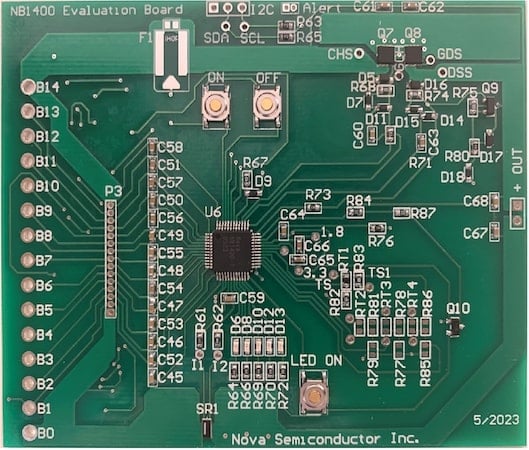
Figure 3. NB1400 Evaluation Board. Image used courtesy of Bodo’s Power Systems [PDF]
Both devices are optimized for next-generation chemistries like Lithium Iron Phosphate (LFP), which require exceptional precision due to their flat voltage profiles.
With unparalleled SOH and SOC assessment capabilities, the NB1400 and NB1600 set new industry standards for accuracy and reliability, ensuring optimal performance and safety in every application.
New BMS Benchmarks
By tackling the challenges of accurate voltage measurement, precise SOC determination, and reliable SOH assessment, Nova is setting benchmarks for safety, reliability, and performance in battery management systems.
This article originally appeared in Bodo’s Power Systems [PDF] magazine.