Facebook
 Google
 GitHub
 Linkedin
Battery Breakthroughs Target EVs, Materials, and Supply Chain
Advanced cathodes, solid-state batteries, and battery recycling technologies are addressing needs for performance and efficiency.
Batteries are undergoing a rapid transformation, with 2025 emerging as a year for breakthrough innovation and sustainability in energy storage. As electric vehicle adoption accelerates and global demand for high-performance, eco-friendly batteries intensifies, a wave of technological leaps promises to redefine mobility, resource management, and manufacturing.
The drive for cleaner, more efficient batteries is reshaping the entire value chain. Finnish company Fortum’s industrial-scale battery recycling solutions are setting new benchmarks for sustainable material recovery. Integrals Power’s nanotechnology-driven cathode materials boost both performance and supply chain resilience. Meanwhile, BMW’s collaboration with Solid Power on solid-state lithium batteries exemplifies the race to deliver next-generation cells with higher energy density, improved safety, and longer lifespans—technologies now moving from the lab to real-world vehicle testing.
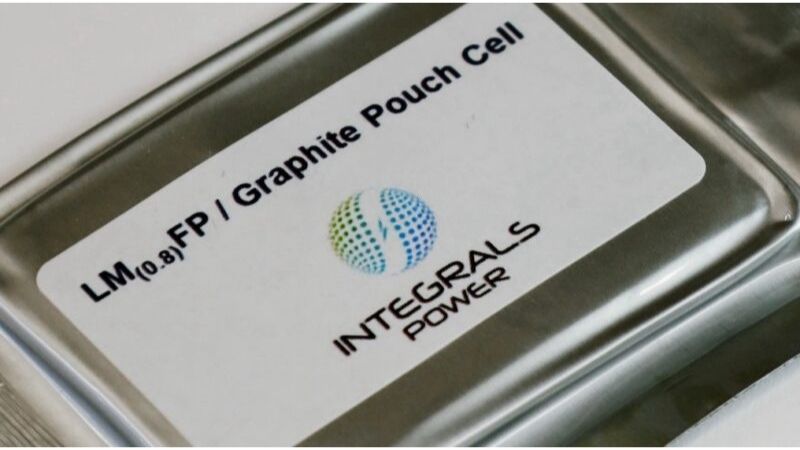
LMFP EV battery. Image used courtesy of Integrals Power
Integrals Power’s Cathodes
Lithium-based batteries operate by the movement of lithium ions between the anode and cathode during charge and discharge cycles. Among the battery’s components, the cathode is often the primary factor limiting performance, as it contains the most valuable metals and largely determines the battery’s capacity, lifespan, and stability. Enhancing the properties of cathode material particles can lead to lithium-ion batteries with significantly improved performance.
U.K.-based Integrals Power is using nanotechnology to develop advanced cathode materials for lithium-ion batteries, focusing on lithium iron phosphate (LFP) and lithium manganese iron phosphate (LMFP) chemistries. Their approach enhances battery performance, sustainability, and supply chain resilience through molecular-level engineering and scalable production methods.
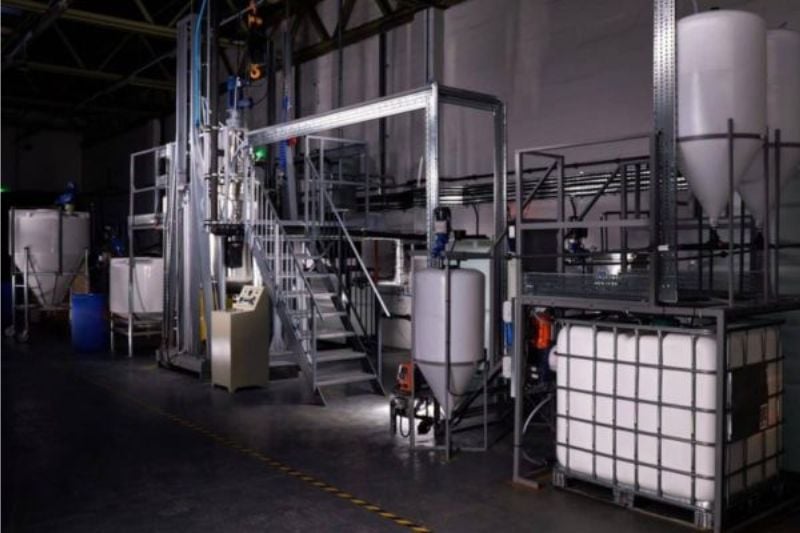
Nano-material application facility. Image used courtesy of Integrals Power
A key feature of Integrals Power’s nanotechnology is molecular-level material design. The company synthesizes cathode active materials at the nanoscale using pure raw materials like lithium, iron, manganese, and phosphoric acid, avoiding impurities common in bulk precursors. This "bottom-up" method ensures precise control over particle size, structure, and composition, optimizing energy density and electrochemical stability.
Integrals’ proprietary LMFP technology achieves 80% manganese content—surpassing the industry’s 50 to 70% range—while maintaining a specific capacity of 150 mAh/g and operating voltage of 4.1 V (vs. LFP’s 3.45 V). This eliminates the traditional trade-off between manganese content and capacity loss, enabling 20% higher energy density compared to standard LFP and coming close to rivaling nickel cobalt manganese (NCM) chemistries at a lower cost.
According to the company, the process also produces batteries with faster discharge rates, improved performance at extreme temperatures, and a longer cycle life with reduced capacity degradation over time.
The company’s proprietary pilot plants in the U.K. produce 20 tonnes per year of nanomaterials for global OEM evaluations. Modular facility design supports rapid scaling to tens of thousands of tonnes.
Integrals Power’s nanotechnology positions them as a leader in next-generation battery materials, combining affordability, sustainability, and performance to accelerate the transition to electric mobility.
BMW and Solid Power
BMW, in partnership with Solid Power, is advancing solid-state lithium battery technology through real-world testing and strategic infrastructure development, positioning itself as a leader in next-generation EV energy storage.
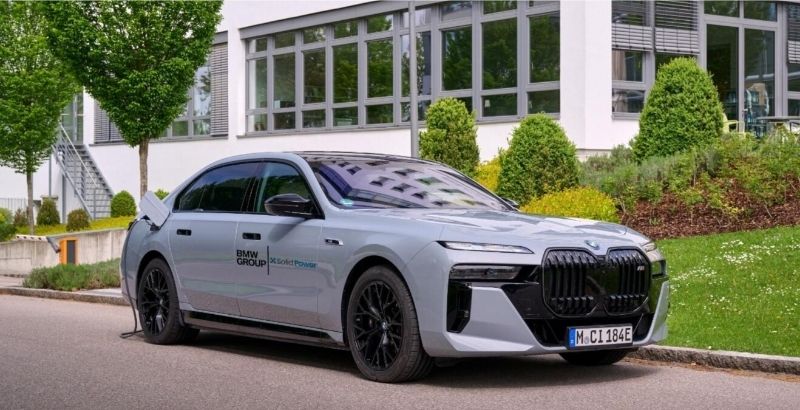
The all-electric BMW i7. Image used courtesy of BMW
Since 2016, BMW and Solid Power, a Colorado-based battery startup backed by Ford and BMW, have collaborated on sulfide-based solid-state batteries, which replace flammable liquid electrolytes with a thin, solid sulfide layer. The all-solid-state battery (ASSB) design eliminates liquid electrolytes, enabling:
- Higher energy density: Up to 560 Wh/kg and 930 Wh/L (vs. ~250–300 Wh/kg in current Li-ion batteries).
- Improved safety: Reduced thermal runaway risk due to non-flammable solid electrolytes.
- Compact packaging: Smaller cells allow more flexible integration into vehicle architectures.
In May 2025, BMW began testing ASSB-equipped i7 sedans in Munich, focusing on real-world performance by monitoring cell expansion, temperature management, and pressure dynamics under varying driving conditions. The i7 prototype uses prismatic ASSB cells and revised module designs to accommodate the new technology. Early data suggests ASSBs could enable a 20 to 25% longer range than current Li-ion packs.
BMW operates a dedicated ASSB production line at its Cell Manufacturing Competence Center in Parsdorf, Germany, replicating Solid Power’s Colorado pilot line. The Parsdorf facility tests manufacturing processes for future mass production, addressing challenges like material consistency and yield rates.
BMW plans to showcase a pre-production ASSB prototype by late 2025 but has not committed to a market launch date, emphasizing continued refinement of lithium-ion tech in parallel. ASSBs remain two to three times more expensive than current lithium-ion batteries, which is delaying commercial rollout timelines.
Ultimately, smaller ASSB cells could enable lightweight, high-range EVs in BMW’s sub-brands like MINI, addressing current packaging constraints. BMW’s methodical approach—combining real-world validation, scalable manufacturing R&D, and cost analysis—positions it to leverage solid-state batteries once the technology matures economically.
Fortum's Battery Recycling Program
Fortum operates one of Europe's most advanced and comprehensive battery recycling programs, focused primarily on lithium-ion batteries from EVs and industrial applications. The company offers a full-service solution covering every stage of the battery lifecycle—from waste collection and safe handling to pre-treatment, recycling, and the production of sustainable raw materials for reuse in new batteries.
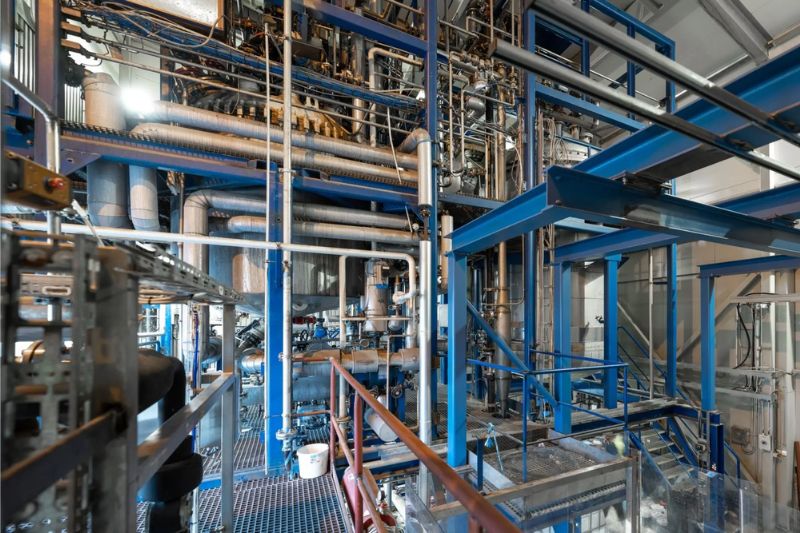
Recycling facility. Image used courtesy of Fortum
Key features of Fortum's battery recycling program include:
- Low-CO₂ hydrometallurgical Technology: Fortum uses a combination of mechanical and hydrometallurgical processes to recycle lithium-ion batteries. This approach enables the recovery of up to 95% of valuable metals such as nickel, cobalt, manganese, and lithium, while producing 74% less CO₂ emissions compared to primary extraction methods.
- Closed-loop recycling facilities: Fortum operates Europe's largest closed-loop hydrometallurgical battery recycling facility in Finland, with additional processing sites in Germany. These facilities are designed to handle both end-of-life batteries and production waste from battery manufacturing.
- Pan-European infrastructure: The company provides collection, transport, and recycling services across Europe, ensuring regulatory compliance and supporting the continent’s circular economy and resource security goals.
- Regulatory compliance: Fortum’s processes are aligned with the EU Battery Regulation, which mandates high recycling rates and material traceability. Customers receive official recycling certificates and full chain-of-custody documentation to support their compliance and sustainability reporting.
Fortum’s Battery Box
In May 2025, Fortum launched the Battery Box in Germany and Finland—a certified, safety-focused container system designed specifically for the collection, storage, and transport of end-of-life lithium-ion EV batteries.
The Battery Box is engineered to meet international dangerous goods standards, with reinforced structures and leak-absorbent materials to mitigate risks such as thermal runaway during storage and transit. Each container is equipped with IoT sensors that monitor temperature and structural integrity. A digital platform provides real-time tracking, automated documentation, and chain-of-custody records, reducing manual paperwork and simplifying regulatory compliance by about 30 percent compared to traditional processes.
Businesses can order Battery Boxes via Fortum’s online platform, with delivery typically within 48 hours in major markets. Once filled, containers are picked up by certified partners and transported to Fortum’s recycling facilities. The service is scalable, supporting both small and large disposal volumes, and offers volume-based discounts.
In Germany, each Battery Box costs around €1,500, with discounts for bulk orders. This pricing structure is designed to be more economical than potential regulatory fines for improper disposal, and it reduces the need for businesses to invest in specialized hazardous material handling infrastructure.
By facilitating high recovery rates (up to 95%) and using low-emission processes, the Battery Box system supports significant reductions in carbon footprint. It advances the circular economy by returning critical materials to the battery manufacturing supply chain.