Facebook
 Google
 GitHub
 Linkedin
3 Types of Photovoltaic Systems
This article highlights the applications, features, and functionality of three types of PV systems: day-use-only, DC with storage, and DC powering AC loads.
Photovoltaic (PV) systems can be designed to meet various energy needs based on the setup and application. One type operates only during daylight hours, converting sunlight directly into electricity without storing it for later use, making it suitable for remote water pumping and ventilation systems. Another configuration uses DC with battery storage, allowing for continuous power, even at night or on cloudy days, and is common in off-grid or remote setups. A system that powers AC loads uses an inverter to convert DC to AC, making it compatible with residential and commercial appliances.
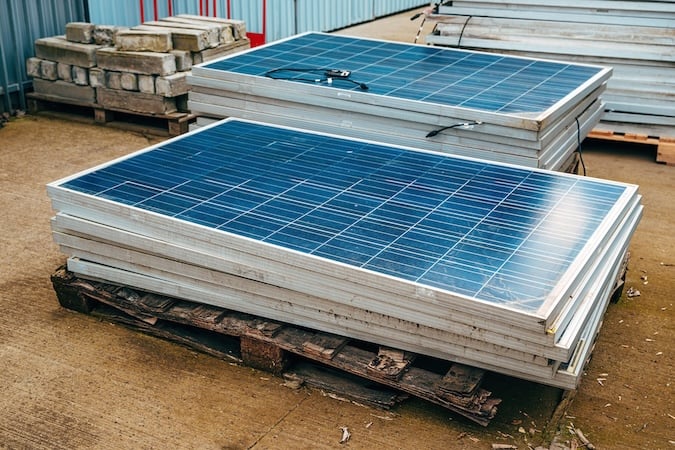
Image used courtesy of Adobe Stock
Day-Use-Only
Day-use-only PV systems (Figure 1) are the most basic, designed to operate solely during daylight hours. They directly convert sunlight into electricity and supply it to DC loads without storing energy. Since these systems have no electrical storage capabilities (i.e., no batteries), they can only power loads when the sun shines.
Key Applications
Day-use-only PV systems are highly effective for off-grid and remote applications, especially when power is needed only when the sun shines. Key applications include:
1. Remote Water Pumping Systems: Day-use PV systems are commonly used to power water pumps in agricultural and livestock applications. These systems can drive pumps to irrigate fields or provide water to livestock during the day when the need for water is often highest.
2. Solar-Powered Ventilation and Blowers: These systems are ideal for driving fans and blowers in solar water heating or ventilation setups, where power is required only when the sun is up, providing natural synchronization between power generation and demand.
3. Standalone Lighting or Signage Systems: Sometimes, day-use systems can be paired with light-sensitive loads, such as electronic signs, traffic signals, or warning lights that need to function only during daylight hours.
These systems are rarely implemented in residential or commercial buildings because such facilities require electricity around the clock.
Key Features
1. Simple Design: Day-use-only PV systems have a straightforward design with only solar panels, wiring, and DC load. No charge controllers, inverters, or battery banks are involved, making them easier to install and maintain. The absence of these components reduces the likelihood of system malfunctions and simplifies troubleshooting.
2. Direct Connection to DC Loads: These systems are designed specifically for DC loads, directly powering devices without requiring an inverter to convert the electricity to AC. However, this limits the range of applications since most household and commercial appliances run on AC.
3. No Electrical Storage: One of the defining features of day-use-only systems is their lack of energy storage. Because there are no batteries, these systems cannot provide power outside daylight hours. This is a significant limitation but simplifies the system’s structure and reduces cost.
4. Cost-Effective Solution: These systems are highly affordable because they do not include complex components like inverters and batteries. This makes them a popular choice for small, off-grid applications without continuous power. This system provides a cost-effective alternative to more complex solar setups for users who need a reliable power source during the day and are located far from the electrical grid.

Figure 1. Day-use-only systems are the most basic and cost-effective type of PV system. Image used courtesy of Ahmed Sheikh
DC With Storage
Direct current photovoltaic systems with storage batteries (Figure 2) offer a significant enhancement over basic day-use-only systems by storing solar energy for use during the night or on cloudy days. These systems incorporate a battery bank to store the energy generated by solar panels during sunlight hours. As a result, DC systems with storage provide a continuous power supply, making them suitable for powering electrical loads around the clock.
In these systems, solar panels generate DC electricity, which charges the storage batteries. The stored energy is then used to power DC loads when sunlight is insufficient. Additionally, because batteries are used, a charge controller is needed to control the charging process and prevent overcharging or deep discharging, which can extend battery life and improve system efficiency.
Key Applications
DC systems with storage are often deployed in off-grid settings or remote locations where reliable access to power is required at all times. While less common in residential and commercial applications due to the predominance of alternating current (AC) loads, these systems still have important niche applications, such as:
1. Remote and Off-Grid Power Solutions: These systems are ideal for powering DC appliances in off-grid cabins, remote weather stations, or isolated telecommunications equipment. They are especially useful when connecting to the electrical grid is not feasible or cost-effective.
2. Backup Power Systems: In regions prone to power outages or low grid reliability, DC systems with battery storage act as backup power for critical DC loads, ensuring uninterrupted equipment operation.
3. Rural Electrification Projects: In developing regions, DC systems with storage can provide reliable electricity to rural communities, powering essential devices such as LED lighting, water pumps, and communications systems, especially when connection to the utility grid is impractical.
Key Features
1. Energy Storage for Nighttime Use: One of the most important features of DC systems with storage is their ability to store electricity in batteries, making them highly useful for powering devices after sunset or during reduced sunlight. This flexibility enables the system to deliver continuous power, even when solar energy is not immediately available.
2. Charge Controller for Battery Management: A charge controller is integrated into the system to ensure the battery bank is properly charged and protected from damage. The charge controller manages electricity flow to the batteries, preventing overcharging, which can shorten battery life, and deep discharge, which can damage the batteries.
3. Limited Use in Residential and Commercial Buildings: Although these systems offer energy storage, they are not commonly installed in residential or commercial settings due to the dominance of AC loads in these environments. The widespread use of AC appliances means that DC systems require additional components like inverters to convert DC to AC, which adds complexity and cost.

Figure 2. A DC system equipped with storage batteries is a PV system that can supply power to loads during the day and at night. Image used courtesy of Ahmed Sheikh
With advancements in battery technology, such as the development of lithium-ion and other high-efficiency storage solutions, DC systems with storage are expected to become more efficient and cost-effective. As storage costs decrease, these systems could become more widely adopted in off-grid and grid-tied applications, especially in regions with unreliable grid access.
DC Systems Powering AC Loads
Direct current systems powering alternating current loads are designed to convert the electricity generated by solar panels from DC to AC using an inverter. This conversion is crucial because most modern electrical devices and appliances operate on AC power.
In this setup, solar panels generate DC electricity, fed into the inverter. The inverter converts the DC electricity into AC electricity, allowing it to power various AC loads. This type of system is widely used in residential and commercial settings, making it one of the most common configurations for PV installations worldwide.
Key Applications
DC systems powering AC loads are versatile and suitable for a wide range of applications:
1. Residential Solar Installations: This system type is the most common choice for homes that use solar power. Converting DC electricity into AC allows homeowners to use solar energy to power all standard household appliances, HVAC, lighting, and other electrical devices.
2. Commercial Solar Installations: Businesses and commercial buildings use these systems to reduce their reliance on grid electricity. Solar energy is used to power office equipment, lighting, and industrial machinery, significantly lowering energy costs and enhancing sustainability.
3. Grid-Tied Solar Systems: Most grid-connected PV systems use this setup to supply AC power to buildings. Any excess electricity is sent to the grid, allowing users to benefit from net metering or other incentive programs.
Key Features
1. Inverter for DC-AC Conversion: The inverter is a critical component that ensures the smooth conversion of DC electricity into AC. Modern inverters are highly efficient and can handle varying loads while maintaining grid compatibility.
2. Compatibility with AC Loads: This system type's main advantage is its ability to power virtually all standard electrical devices and appliances that run on AC. This makes it highly practical for residential, commercial, and industrial applications.
3. Scalability: These systems are scalable and customizable to meet the energy demands of homes or large commercial buildings. Multiple inverters can be installed to handle larger loads or expand system capacity.

Figure 3. A DC system powering an AC load is a PV system that uses an inverter to convert the DC electricity to AC electricity. Image used courtesy of Ahmed Sheikh
Takeaways
Photovoltaic systems provide flexible, sustainable energy solutions across different settings. Each system serves a unique role, from powering off-grid applications during daylight hours to offering continuous energy through battery storage or supplying AC power for standard residential and commercial appliances. Their adaptability ensures reliable energy access in remote areas, reduces dependency on traditional power grids, and supports the growing demand for renewable energy. As solar technology advances, these systems will be vital in diversifying energy sources and promoting environmental sustainability.