Facebook
 Google
 GitHub
 Linkedin
Google Makes History With 3 GW, $3 Billion Hydropower Deal
Google and Brookfield will begin an unprecedented partnership to create up to 3 GW of hydroelectric power to support Google’s data centers and net-zero goals.
Google has partnered with Brookfield Asset Management and Brookfield Renewable to supply up to 3 GW of carbon-free hydroelectric power across the United States. The deal marks the largest corporate clean energy agreement for hydropower in history.
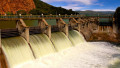
The groundbreaking Hydro Framework Agreement includes 20-year Power Purchase Agreements (PPAs) for Brookfield’s Holtwood and Safe Harbor hydroelectric facilities in Pennsylvania. These facilities total more than $3 billion in value and provide 670 MW of clean energy capacity.
Initially, the agreement will focus on the Mid-Atlantic (PJM) and Mid-Continent electricity markets, eventually expanding into more of the U.S. The PPAs in Pennsylvania support Google’s existing work in PJM Interconnection—the largest U.S. power grid, often criticized for slow renewable integration and rising prices. The deal is structured to allow Brookfield to continue serving existing customers like Amtrak from the Safe Harbor facility alongside Google’s expansions.
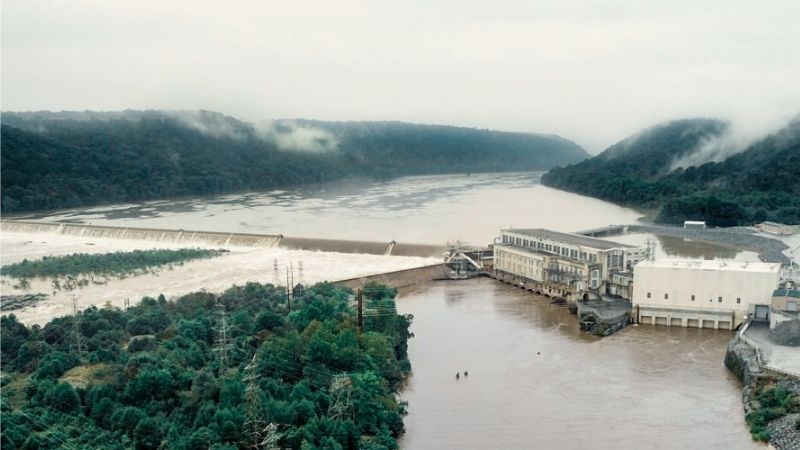
Brookfield’s Holtwood facility. Image used courtesy of Brookfield Renewable
Why Google Is Investing in Hydropower
Google also plans to invest $25 billion over the next two years in developing data centers across Pennsylvania and neighboring states.
Driven by the surging demand for AI and cloud computing, the tech industry is urgently seeking large-scale clean energy solutions. Google is responding with bold “moonshot” goals—ambitious targets aimed at driving transformative change across its entire value chain. Central to this effort is the company’s journey to net-zero carbon emissions, with data centers playing a critical role, with demonstrated reductions in operational and construction-related emissions.
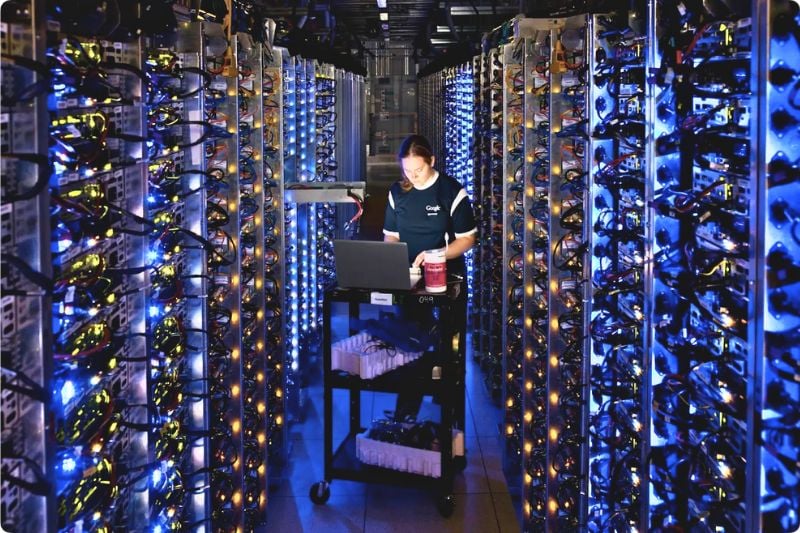
A Google data center. Image used courtesy of Google
In 2024, Google led the industry in energy-efficient data centers, using 84% less overhead energy than the average. Its expansion into hydropower supports its net-zero goals, leveraging a proven, low-cost technology that delivers reliable, carbon-free electricity.
Hydropower is a renewable and highly flexible energy source, capable of quickly ramping from zero to full output, making it ideal for providing immediate backup during outages or disruptions. Construction costs of new facilities are often reduced by leveraging existing infrastructure like bridges, tunnels, and dams. For energy-intensive operations like data centers, which require reliable, around-the-clock power, hydropower’s on-demand and affordable supply makes it a strong, sustainable solution.
Brookfield’s Hydroelectric Dams
The Holtwood and Safe Harbor dams are on the Susquehanna River in Pennsylvania. Holtwood is the region's oldest of three major dams, originally constructed between 1905 and 1910. The facility includes a 2,392-foot-long, 55-foot-high concrete dam, two powerhouses, and an impoundment, Lake Aldred. It has 252 MW of generation capacity.
The Safe Harbor dam began operations in 1931. It features a 4,869-foot-long, 75-foot-high dam, a powerhouse, and Lake Clarke's impoundment. This facility boasts 417.5 MW of capacity and is seeking a new license for modernization projects.
Beyond electricity generation, hydropower supports flood control, irrigation, and clean drinking water while creating recreational and economic opportunities for the community.