Facebook
 Google
 GitHub
 Linkedin
Tesla, Musk, Trump and EVs: How Will It Work?
Part 3 of this three-part series examines Elon Musk and Tesla’s possible influence on electric vehicle policies during a second Donald Trump term.
The uncertainty surrounding Donald Trump's energy policies in his second term may deter investment in U.S. electric vehicle manufacturing, prompting companies to shift focus and resources overseas. As a result, U.S. manufacturers could fall behind in EV and battery technologies as foreign competitors innovate and produce EVs.
This change becomes significant as new battery technologies, such as solid-state lithium batteries and the adoption of other new battery materials, reach the market. Without a strong U.S. EV manufacturing presence, these innovations won’t be used in U.S. products, enhancing China's auto industry, as it benefits from Chinese government support and incentives for EV production, research and development, and innovation.
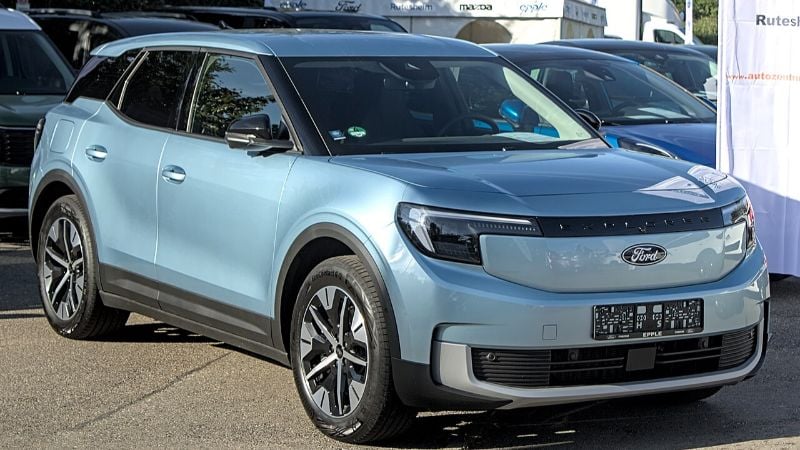
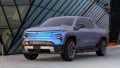
Ford Explorer EV. Image used courtesy of Wikimedia Commons
Unable to Compete
If U.S. policies make it harder for American companies to compete globally, European firms may find opportunities to expand their market share in the U.S. and other international markets. Additionally, if Trump’s administration imposes high tariffs on imports, European manufacturers might ramp up their investments in local production facilities within the U.S., further solidifying their presence. European automakers have already been increasing their exports of electric and hybrid vehicles to the U.S., with exports rising significantly over recent years. If U.S. support for domestic EVs wanes, European manufacturers could fill the gap left by American companies struggling with reduced demand.
Traditional automakers like Ford and General Motors could face significant challenges. The policy change could affect the 30 gigafactories in development in the U.S. and disrupt the efforts to establish a domestic supply chain for EV batteries. A reduced focus on EVs could temporarily benefit US automakers' traditional vehicle sales but may leave them unprepared for long-term global shifts toward electrification.
How California Affects EVs
Under the Clean Air Act, the Environmental Protection Agency regulates vehicle emissions nationwide. In 1967, the California emissions waiver was added to the Federal Air Quality Act, a precursor to the current Clean Air Act. It was included due to California's severe air pollution and smog problems. The state had already established its own emission standards for motor vehicles. Section 209 of the Act allows California to request a waiver to set its own stricter emissions standards, which the California Air Resources Board administers.
Since receiving this authority, California has requested and been granted waivers more than 50 times. The EPA has fully denied only one waiver request (in 2008) and later reversed that decision. A significant expansion of California's authority came in 2009 when the EPA granted California a waiver to set greenhouse gas emission standards for vehicles beginning with the 2009 model year.
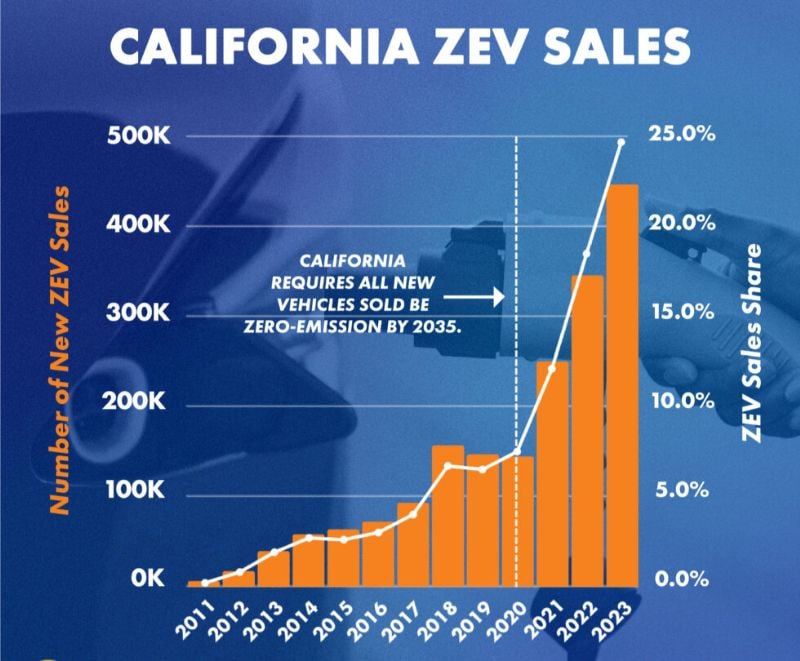
Growth of zero-emission vehicles in California. Image used courtesy of California Governor Gavin Newsom
As of 2024, 17 states and the District of Columbia have adopted California's current vehicle emissions standards, including Colorado, Connecticut, Delaware, Maine, Maryland, Massachusetts, Minnesota, Nevada, New Jersey, New Mexico, New York, Oregon, Pennsylvania, Rhode Island, Vermont, Virginia, and Washington. Together with California, these states represent over 40% of new light-duty vehicle sales in the United States.
In addition to stricter emissions standards, California has implemented a Zero-Emission Vehicle mandate. In August 2022, the California Air Resources Board approved a new rule requiring 100% of new light- and medium-duty vehicles sold in the state to be zero-emission by 2035. Some states, such as New York, Massachusetts, Oregon, and Washington, have indicated they intend to follow California's lead on this rule. Others, like Colorado and Pennsylvania, have stated they will not.
Trump's second term to could challenge California's climate initiatives, including plans to phase out gasoline-powered vehicles by 2035, overturning President Biden's electric vehicle mandates, and rescinding waivers related to California's emissions regulations.
Tesla, Elon Musk, and EVs
It’s impossible to consider the U.S. election and its effect on the EV market without examining the influence of Tesla CEO, Elon Musk. Musk reportedly contributed approximately $132 million to support Trump and other Republican candidates leading up to the election, including direct donations of $43.6 million and $75 million to Trump's campaign via the America PAC, which Musk founded. Musk's America PAC was responsible for a comprehensive grassroots mobilization effort, spending over $175 million on voter outreach in critical battleground states, targeting nearly 11 million households.
Tesla's position on the EV tax credits differs from other automakers in a few key ways. Tesla has supported eliminating the $7,500 consumer tax credit for electric vehicle purchases, while other automakers wanted to keep it in place. Musk has stated that ending the tax credits would be "devastating" for Tesla's competitors but would only affect Tesla "slightly," predicting it would help Tesla in the long run.
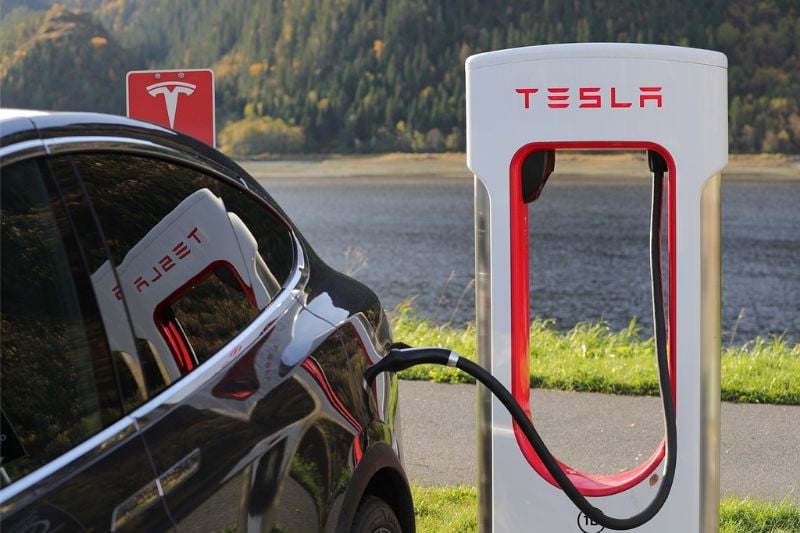
Tesla with Supercharger. Image used courtesy of Pixabay
Other major automakers, represented by the Alliance for Automotive Innovation trade group, have urged Congress to keep EV tax credits. They argued the credits were critical to U.S. global leadership in the future of automotive technology and manufacturing. Tesla, however, is not part of this group.
Currently, Tesla is the only profitable U.S. EV maker. Tesla’s support for ending the subsidies that its competitors viewed as crucial will make it harder for others to catch up, widening Tesla's competitive and technological advantages in the EV market due to its established market dominance, manufacturing scale, and ability to produce EVs at lower costs.
Making Billions From Tax Credits
In California, zero-emission vehicle (ZEV) credits are a key component of the state's efforts to reduce vehicle emissions and promote the adoption of electric vehicles. Credits are earned by automakers that sell zero-emission cars and trucks. The number of credits per vehicle varies depending on the drivetrain type and electric range. Companies that exceed their ZEV credit requirements can sell excess credits to other automakers. In contrast, those who don't meet ZEV credit requirements must purchase credits from other manufacturers or face penalties.
Tesla has significantly benefited from the ZEV credit system, generating substantial revenue by selling its excess ZEV credits to other automakers. In 2023 alone, Tesla earned $1.79 billion from regulatory credit sales. The revenue from ZEV credit sales has been crucial for Tesla, especially in its earlier years, helping to fund its growth and expansion. Not surprisingly, and despite its now close ties to the second Trump administration, Tesla does not favor eliminating the California emissions waiver and ZEV credit system.
Tesla has also benefitted significantly from the Biden administration’s effort to build a nationwide EV-charging network. This year, Tesla’s network of Supercharger stations received more than $17 million in grants from the 2021 Bipartisan Infrastructure Law, allowing the company to install more charging plazas than any other company.
The Result
Overall, Trump's EV stance could weaken the domestic auto industry while bolstering China's and Europe's positions in the global market. As American manufacturers grapple with reduced demand and potential shifts in investment strategies due to changing regulations and tax incentives, competitors may capitalize on these developments by enhancing their market share, technological leadership, and production capabilities.
Part 3 concludes this three-part series evaluating how changes in Washington, D.C. may affect EVs. Part 1 reviewed climate change and investment policies. Part 2 examined the possible impacts on EV technology.
The views and opinions expressed in this article are those of the writer and do not necessarily reflect those of EEPower or EETech.