Facebook
 Google
 GitHub
 Linkedin
Optimizing Battery Cell Manufacturing Processes
This article reviews key factors in EV battery cell manufacturing, discusses best practices for yield enhancement, and examines ongoing technology developments.
As the electric vehicle market expands, manufacturing EV batteries has become a key focus in the automobile industry. Creating these components is complex and filled with environmental and supply chain challenges. EV batteries require vast amounts of critical minerals like lithium, cobalt, and nickel, mainly controlled by a few large global producers. This control raises concerns about sustainability and ethics in their sourcing.
EV battery manufacturing is not without environmental impact. Although EVs produce fewer greenhouse gas emissions over their life cycle than an internal combustion engine vehicle, manufacturing is more carbon-intensive. Therefore, optimizing manufacturing processes to achieve the best quality and yield of battery cells has become necessary.
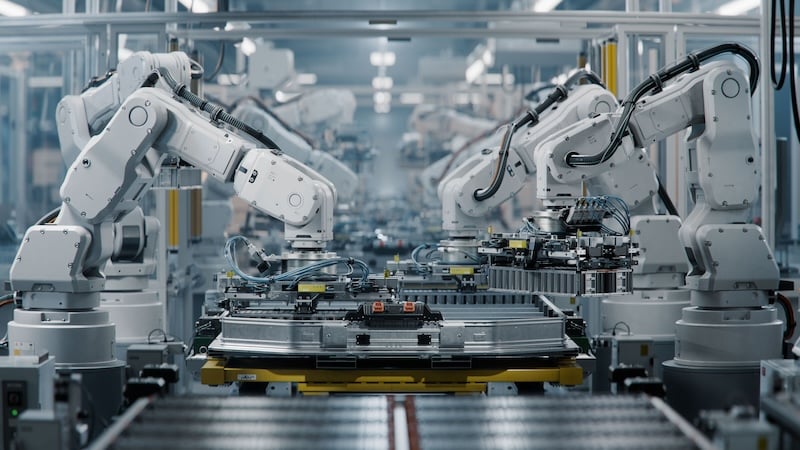
EV manufacturing requires precise control and measurements to ensure high quality and yield. Image used courtesy of Adobe
Process optimization can identify and eliminate inefficiencies, reduce wastage, and thus improve battery output and durability. As the industry scales up to meet growing demand, these improvements are crucial for maintaining sustainability and ensuring that EVs contribute positively to the goals of the global energy transition.
Key Factors in Battery Cell Manufacturing
Before exploring the opportunities for process optimization, let's review a few of the most important factors involved in battery cell manufacturing.
Raw Materials
High-quality materials are essential for the production of reliable and efficient EV batteries. The choice of materials impacts everything from the battery's capacity and output to its safety and longevity. Materials like lithium, cobalt, nickel, and graphite must meet stringent purity standards to prevent performance degradation and ensure the battery's operational integrity over time.
Using subpar materials can lead to increased failure rates and lower overall yields in battery production. Impurities in raw materials can cause inconsistencies in battery cell performance, leading to higher rejection rates during quality checks and shorter life spans for the final products. This not only affects production costs but also impacts the brand's reputation for quality.
Manufacturing Equipment
Specialized machinery is critical in the battery manufacturing process to ensure precision and efficiency. Equipment such as coating machines, calendering systems, and assembly lines must be specifically designed to handle the delicate components of battery cells, ensuring that each layer is applied with precision to avoid defects that could impair battery performance.
Regular maintenance and calibration of manufacturing equipment are crucial for minimizing downtime and maintaining high production standards. Calibration ensures that machinery operates within specified tolerances, essential for producing battery cells that meet exact specifications. Regular maintenance also prevents unexpected breakdowns and prolongs the life of the equipment, thus protecting the investment and ensuring continuous production flow.
Quality Control Procedures
Quality control procedures are integral to ensuring that each battery cell meets established performance and safety standards before leaving the factory. Thorough testing and inspection at various stages of the manufacturing process help identify and rectify defects early, preventing faulty cells from making it to the final assembly and into the market.
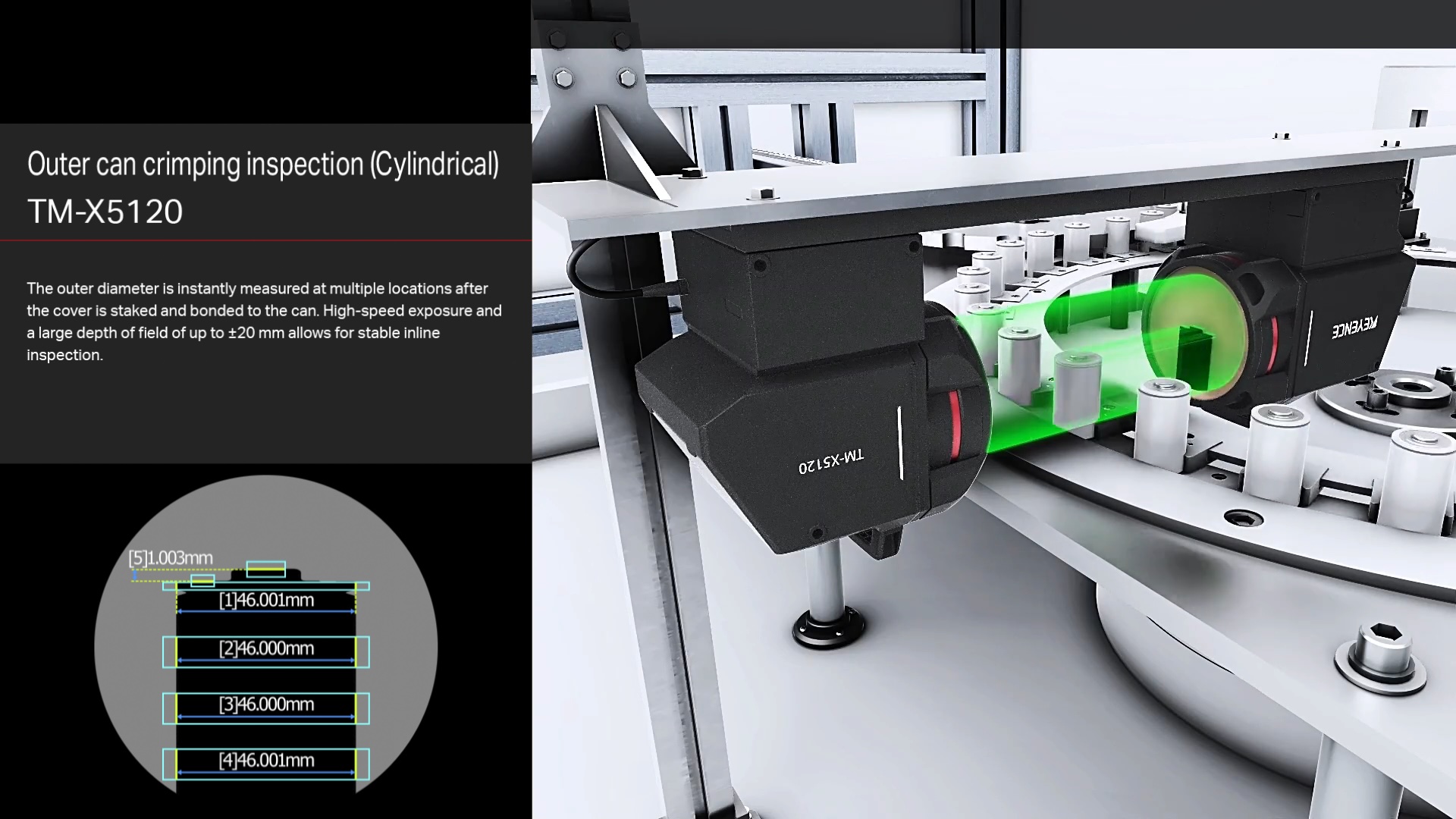
Telecentric measurement systems analyze an object's silhouette for precise measurements. Image used courtesy of Keyence [click to enlarge]
Implementing rigorous quality control standards across the production process ensures that all battery cells have uniform performance and reliability. These standards help maintain consistency across production batches and play a critical role in upholding the manufacturer's reputation for quality. Adherence to these standards also reduces the risk of costly recalls and enhances customer satisfaction by delivering products that meet or exceed expectations.
Industry Best Practices for Yield Improvement
Let's examine a few measures companies can take to improve their battery cell manufacturing yield.
Standardized Processes
Establishing uniform practices across the battery manufacturing industry significantly boosts yield and ensures consistent quality. By standardizing key processes such as electrode preparation, cell assembly, and cell finishing, manufacturers can minimize variations that lead to defects and inefficiencies.
For instance, adopting uniform standards for the thickness and composition of electrodes can prevent malfunctions and extend the lifespan of battery cells. These standards streamline manufacturing and reduce waste and cost by limiting the range of acceptable material and process deviations.
Examples of industry-wide standards include the ISO/IEC standards, which provide guidelines on the manufacturing processes, testing methods, and quality assurance for battery production. Additionally, the EPA introduced the Battery Manufacturing Effluent Guidelines and Standards (40 CFR Part 461) in 1984 and changed the regulation in 1986. This regulation covers direct and indirect dischargers and is integrated into NPDES permits for direct dischargers and control mechanisms and/or permits for indirect dischargers, as outlined in the Pretreatment Program.
The impact of these combined standards is profound; they ensure that battery cells are produced under stringent quality control measures, which directly translates to higher yields and better performance of the final products. By adhering to these guidelines, manufacturers ensure compliance with environmental regulations while maintaining high production standards.
Data Analysis
Another critical practice is utilizing manufacturing process data to identify improvement areas. By analyzing data collected during manufacturing, companies can pinpoint inefficiencies and defects at their source and modify the process to eliminate them. This data-driven approach allows continuous process improvement, vital in maintaining competitiveness in the rapidly evolving battery industry.
Integrating advanced analytics and machine learning tools into production planning enables manufacturers to predict and preemptively address potential issues before they affect yield. For example, predictive maintenance algorithms can analyze historical and real-time operational data to forecast equipment failures and schedule maintenance accordingly, thus avoiding unplanned downtime that could interrupt production.
Automation
Automation in battery cell manufacturing enhances precision and efficiency, which are crucial for achieving high yields. Robotic assembly lines and automated quality control systems ensure that each battery cell is produced with minimal human error and consistent adherence to specifications.
This includes integrating cutting-edge tools like 2D/3D laser profilers, which significantly improve the measurement and calibration of battery components, enhancing the precision of the entire manufacturing process. Automation also allows for safer and more efficient handling of hazardous materials, reducing the risk to human workers and increasing the overall safety of the manufacturing environment.
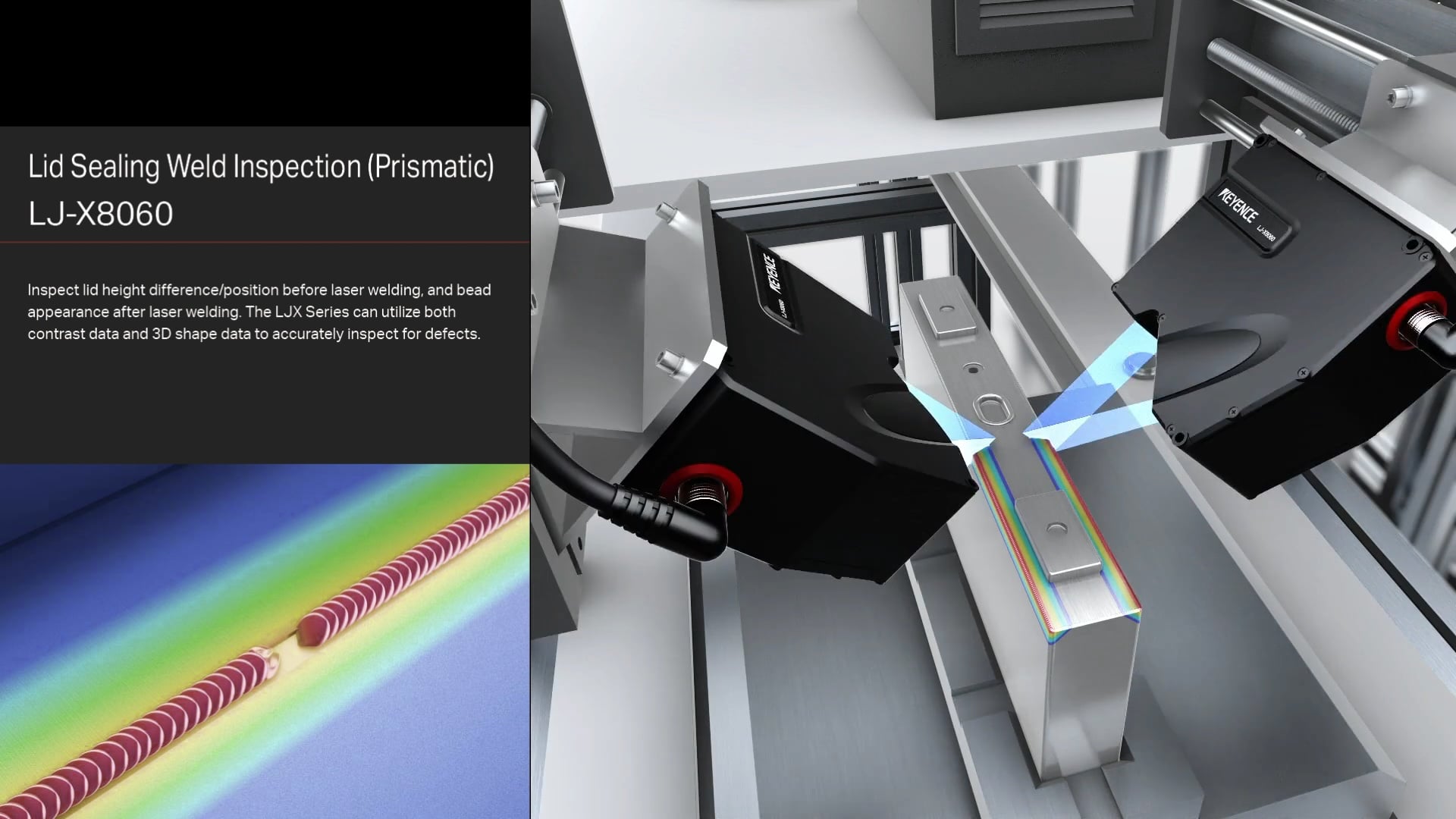
Laser 2D/3D profilers can improve defect inspection and provide data to drive yield enhancement. Imaged used courtesy of Keyence [click to enlarge]
The advantages of automation extend beyond precision and safety; automated systems can rapidly adjust to changes in production requirements, allowing manufacturers to scale operations up or down based on demand. This flexibility is essential in an industry where the demand for batteries, particularly electric vehicles, is expected to grow exponentially.
Technological Advancements in Battery Cell Manufacturing
As the EV industry progresses, technological advancements in battery cell manufacturing are playing a crucial role in improving production efficiency and effectiveness. New technologies are being developed to enhance battery performance, reduce charging times, and extend the operational range of EVs.
One notable breakthrough involves the introduction of silicon anodes in place of traditional graphite anodes. For example, Panasonic is collaborating with Sila Nanotechnologies to incorporate nano-composite silicon anodes into future battery production. This change is significant because silicon can store up to ten times more energy per gram than graphite, substantially increasing batteries' energy density. Higher energy density translates to longer ranges on a single charge and shorter charging times, addressing two of the most pressing consumer concerns in the EV market.
However, silicon expands significantly when charged, which can cause mechanical stress and degrade the anode over time. To counter this, advancements in nanoscale engineering are crucial. Researchers are developing nano-engineered silicon that can accommodate expansion without breaking, enhancing the longevity and performance of batteries.
Other research initiatives are also exploring alternative materials and technologies to improve battery performance. For example, using xanthan gum to create protective films on battery electrodes enhances the durability and efficiency of energy storage systems. This biopolymer helps prevent the formation of detrimental crystal structures during charge cycles, thereby extending battery life.
Investments are also being made in developing zinc-ion and sodium-ion batteries as safer and potentially more cost-effective alternatives to traditional lithium-ion batteries. These batteries use multivalent cations, which could provide higher energy storage capacities and improve the safety of battery technologies used in both electric vehicles and grid storage.
Continuing Investment to Drive Advancements
The success of battery cell manufacturing hinges on several critical factors: high-quality materials, efficient manufacturing equipment, thorough quality control procedures, standardized processes, adept data analysis, advanced automation, and continual technological advancements. Each element plays a vital role in enhancing the yield, reliability, and efficiency of batteries, essential for meeting the growing demand in the electric vehicle market.
Companies must continuously invest in and improve these areas to stay competitive and address the increasing expectations for sustainable and high-performing batteries. Emphasizing these investments will lead to better products and propel the industry forward, ensuring that manufacturers can keep pace with the rapid advancements in EV technology and the expanding needs of consumers and the environment.