Facebook
 Google
 GitHub
 Linkedin
Hovering Solar Balloon Provides Power in a Pinch
A balloon equipped with solar cells could generate quick, portable power.
Chinese and Swedish researchers have created a solar-generating balloon system that could provide emergency electricity.
Cool Earth Solar’s balloon solar power system. Video used courtesy of Sandia National Laboratories
The balloon-integrated photovoltaic system (BIPVS) could be launched to provide temporary power after a natural disaster, accident, or any situation where power is needed quickly. While it won’t work under all conditions, the concept could become an option for an easy-to-deploy microgrid.
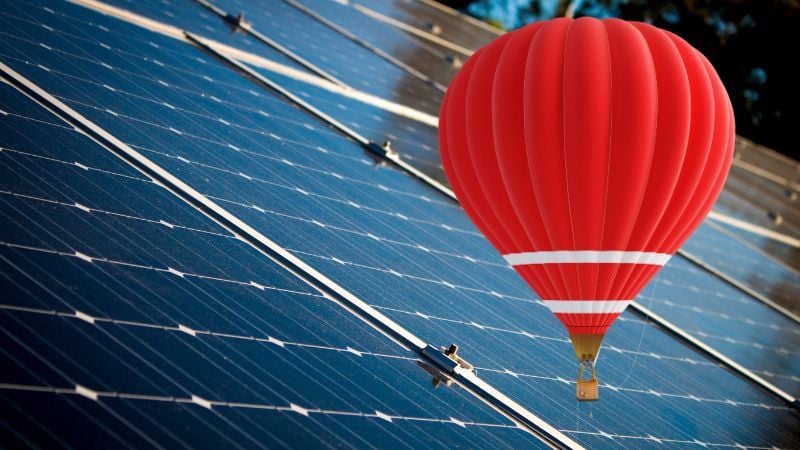
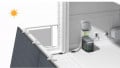
How can a balloon equipped with solar panels help in power emergencies? Adapted from images used courtesy of Canva
How It Works
A combination of hot air and helium lifts the low-altitude balloon, which is tethered by four cables and attached to a cord reel. An exhaust valve allows control of the gas and balloon height. The top half is made from a thin, transparent material designed to capture and concentrate solar radiation. The bottom contains thin-film solar cells made from cadmium telluride, which absorbs light better than silicon and other photovoltaics. The researchers claim a 19% efficiency.
The upper half of the balloon also shields the solar cells from rain, hail, and snow. If the weather becomes severe, the exhaust valve activates automatically and deflates the balloon.
Researchers conducted several physical tests and used simulations to predict the BIPVS's performance in five major cities worldwide. The average monthly production was between 3.5 and 4 GWh of power.
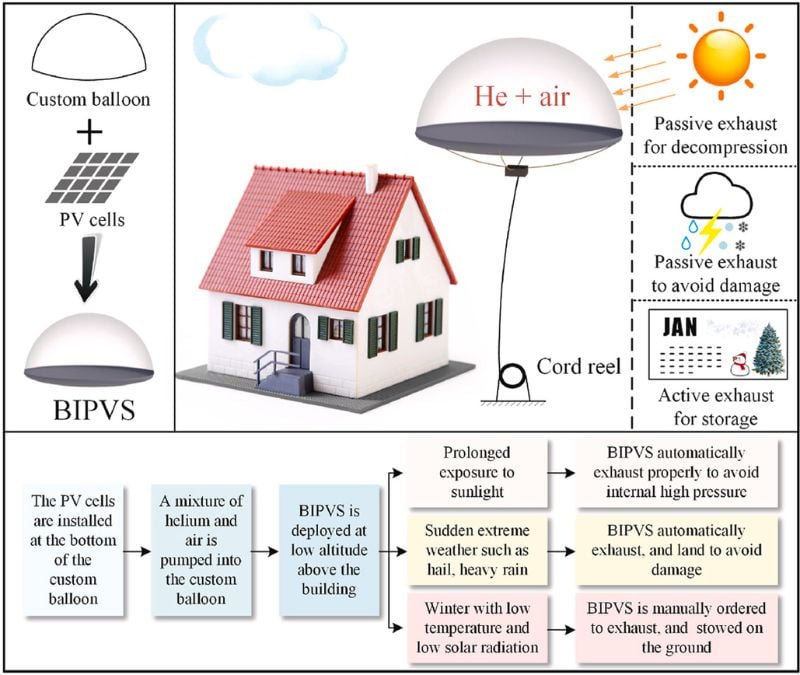
BIPVS system processes. Image used courtesy of Zhang et al.
Balloon Power Advantages
The BIPVS can be deflated for easy storage and portability. This makes it ideal for use after natural disasters or in remote areas when emergency power is needed. The balloon can be launched high enough to avoid shade from buildings, trees, or other obstacles.
The system’s footprint is small, so it can be used on most types of terrain. If needed, several balloons can be used together to increase power.
In a study in Energy, researchers reported the BIPVS could output power between 480-700 GWh over its life cycle and lower greenhouse gas emissions by 696 kg per kWh of electricity produced.
Other Balloon Solar Devices
The researchers are not the first to propose a balloon-based PV system. In 2009, California-based Cool Earth Solar designed metal-coated balloons with a solar cell in the middle. The company coated half the balloon with aluminum. The other half was left transparent, creating a mirror effect. The balloons were about 8 feet in diameter.
In 2013, Cool Earth Solar switched to a thin plastic cylinder inflated with helium or hydrogen. The company partnered with Sandia National Laboratories to test the system. However, at that time, researchers had not devised a way to send electricity from the balloon to a ground station.
Cool Earth Solar does not currently market balloon-based PV systems.
The Need for Portable Solar
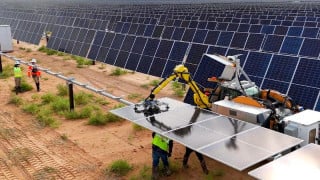
Solar microgrids can provide fast, on-demand power during prolonged power outages after natural disasters. After Hurricane Helene left North Carolina residents without power for weeks, many people used pop-up emergency solar microgrids with PV panels and inverters. Others utilized mobile solar generating systems mounted on trailers and trucks.
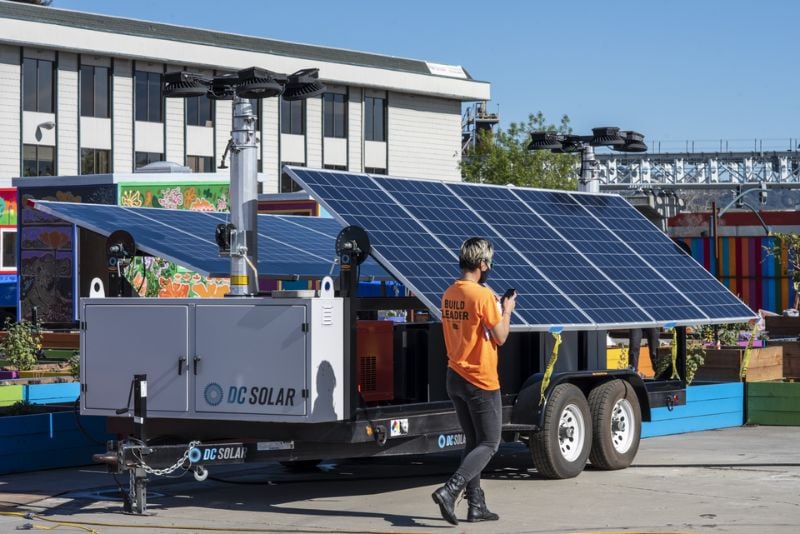
Mobile PV system. Image used courtesy of Wikimedia Commons
Temporary military camps can also use PV microgrids with storage batteries.