Facebook
 Google
 GitHub
 Linkedin
‘Peel-and-Stick’ Solar Panels Provide Power Anywhere
These flexible solar panels adhere to surfaces and are lighter and more durable than traditional panels.
Solar farms and rooftop solar arrays almost always use rigid, rectangular solar panels, which are limited by their design. These panels need mounting brackets and other hardware for installation and positioning. The glass-encased panels seem sturdy but can be damaged by hail or extreme weather.
Flexible and thin-film solar panels offer an alternative, especially for rooftops. They are lightweight and require minimal hardware for installation. However, concerns about efficiency and longevity have hampered their growth.
Merlin Solar Technologies, a Silicon Valley startup, has redesigned the flexible solar panel to make it lighter and more durable. Its thin, peel-and-stick panels can be installed nearly everywhere, including buildings, homes, recreational vehicles, boats, and drones.
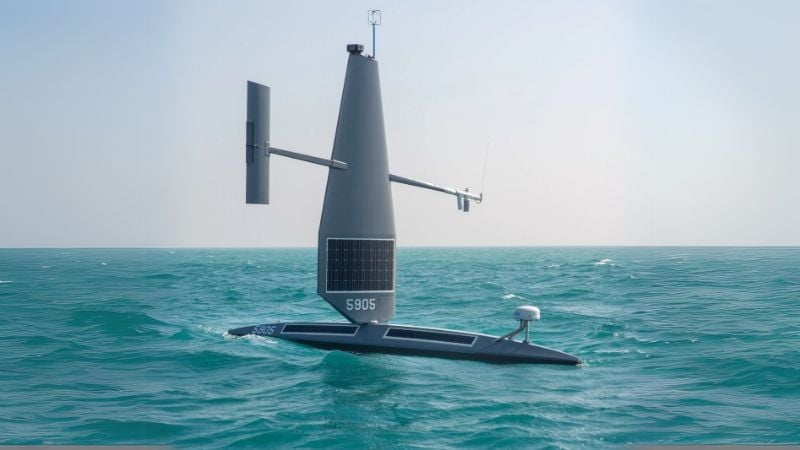
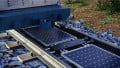
Flexible solar panels on the side of a marine vessel. Image used courtesy of Merlin Solar
Flexible vs. Conventional Solar Panel Technology
Traditional solar panels begin with rows of photovoltaic (PV) cells made from thin layers of materials, including a conductor such as monocrystalline silicon. The cells are laminated and connected with metal busbars to form a module. The module is then encased in tempered glass. Multiple modules or panels are used in a solar array to generate the desired amount of electricity.
Flexible solar panels also use PV cells, but the layers are much thinner. The conductive material often used is cadmium telluride or copper indium gallium diselenide, though interest is growing in other conductors, such as perovskite. The cells can be placed on a backing such as cloth or thin plastic to make the panels flexible. These features make flexible panels lightweight and able to conform to curved services. They also don’t need heavy installation hardware. Flexible panels have been used on curved roofs, vehicles, vertical surfaces, and outer space.
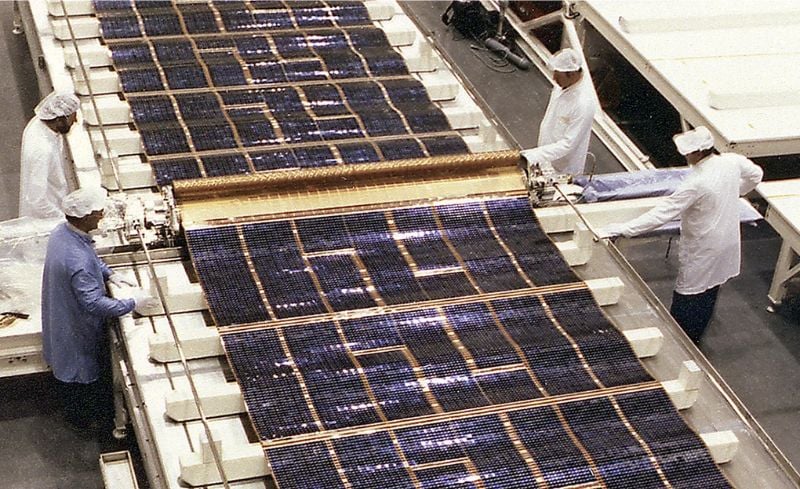
A flexible solar array for the Hubble satellite. Image used courtesy of NASA
Merlin Solar Technology
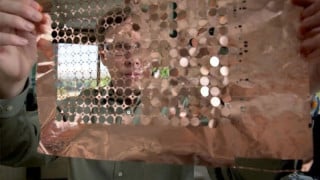
Merlin Solar has invented a way to connect thin solar cells with metal grids that act as intra- and inter-cell connections. This patented technology provides more than 2,100 redundant connections to improve efficiency. The 180 spring interconnects reduce metal fatigue, connection failures, and cell micro-cracking. Each panel uses 20 vertical and 70 lateral flexible busbars. The back mesh adds strength.
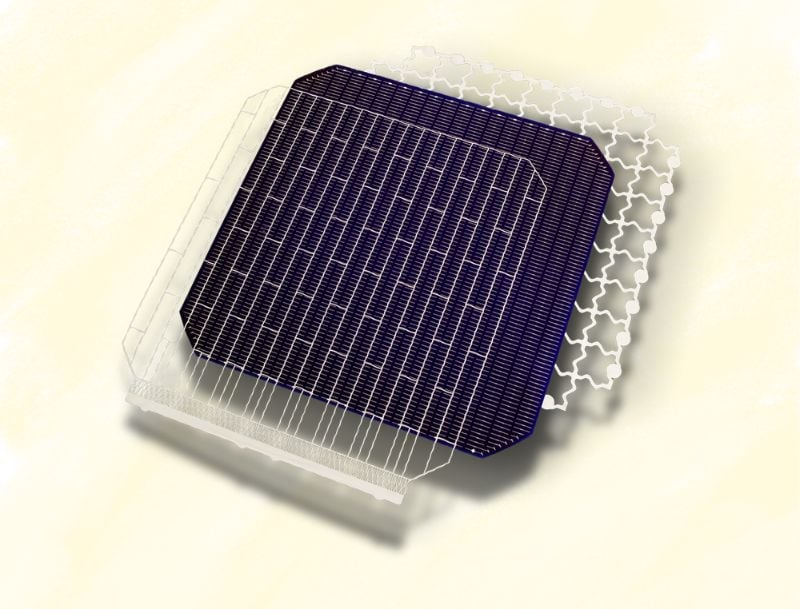
Merlin’s patented solar cell. Image used courtesy of Merlin Solar
Merlin Solar claims its panels are 80% lighter than traditional glass panels and produce 20% more energy in real-world situations. They include bypass diodes that enhance their efficiency in shade. The panels are also 50 times more durable and flexible than conventional panels.
Panels are backed with an adhesive that allows peel-and-stick installation. The easy placement and flexibility enable Merlin Solar Panels to fit niche uses where traditional panels won’t work, such as recreational vehicles and boats.
The company also recommends its panels for mobile and emergencies. Since they are lightweight and can be folded, they are simple to transport and set up in harsh conditions. They can provide off-grid power for needed electronics or equipment.
Flexible Solar Future
Flexible solar panels could be more widely used soon. Merlin Solar has raised $31 billion in new Series B funding to expand production to meet a growing demand. Other companies are also producing flexible solar panels commercially.
At the same time, research continues to increase the efficiency and longevity of thin and flexible solar panels. Scientists are studying alternative conducting materials, cell layers, and other factors affecting light absorption, stability, and weather resistance.