Facebook
 Google
 GitHub
 Linkedin
Solar in a Box: Bidirectional Generator Boosts Backup Power
The PowerStream box could transform the standard power outlets into solar power inlets for bidirectional flow.
Solar generators are a more environmentally friendly option for providing emergency backup residential power than conventional diesel generators. However, challenges like optimizing energy flow and ensuring seamless bidirectional power integration into standard outlets have created barriers for those looking to integrate solar generators into their homes.
EcoFlow has introduced the PowerStream box to optimize the year-round utility of its proprietary solar generators and could offer a solution to solar generator challenges.
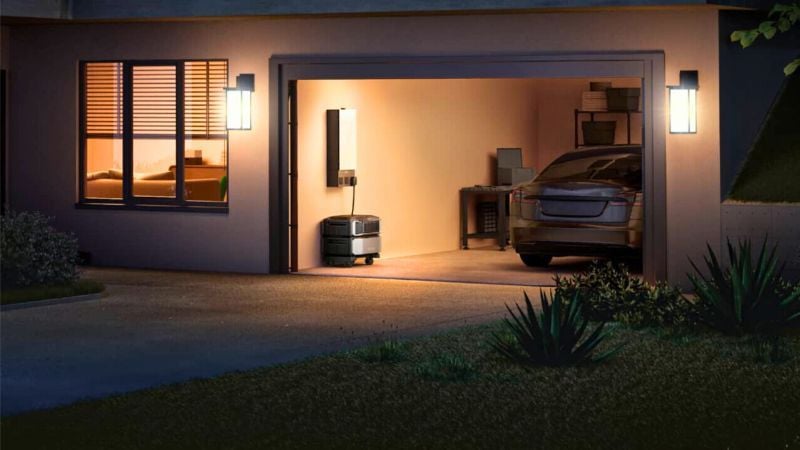
PowerStream box. Image used courtesy of EcoFlow
What Are Solar Generators?
Solar generators utilize sunlight to generate and store energy. The process starts with solar panels converting sunlight into DC, which then goes through an inverter to create usable AC power. Simultaneously, a charge controller directs surplus DC power to batteries, acting as energy reservoirs for times of high demand or low supply.
Solar generators’ existing limitations arise from the need for efficient energy flow management, which entails maximizing solar energy capture, minimizing conversion losses, and optimizing battery charge/discharge cycles. The need for bidirectional power integration also necessitates specialized inverters and charge controllers to enable energy flow between solar panels, battery banks (if installed) and the grid. Moreover, overcoming regulatory hurdles involves addressing permitting, zoning, and interconnection requirements imposed by authorities and utilities.
Maximizing Solar Potential
EcoFlow's latest innovation, the PowerStream box, addresses the challenge of maximizing solar generators’ utility as a home backup source.
Described as a balcony solar system, PowerStream is marketed as a plug-and-play solution anyone can instal. It features three exclusive ports: an MC4 solar panel connection, a battery connection, and an AC output for standard wall socket insertion. The system revolves around a microinverter, channeling solar energy back into the home through a standard wall jack. Meanwhile, surplus solar energy can be redirected into the solar generator's large battery for future use.
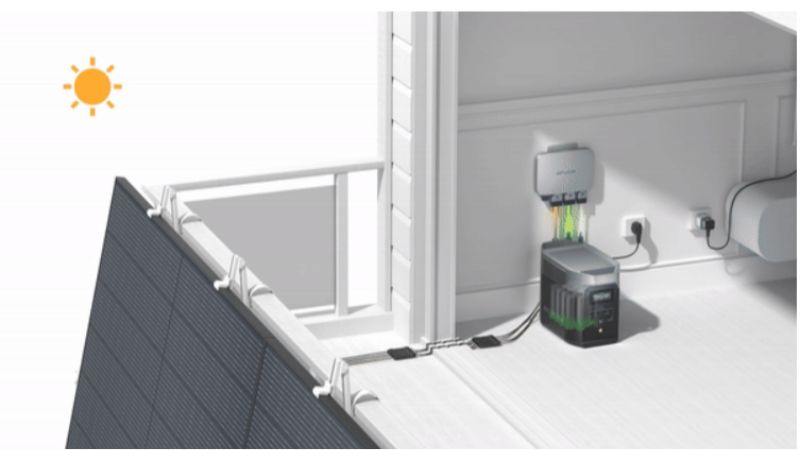
Balcony-mounted solar panels with PowerStream microinverter. Image used courtesy of EcoFlow
EcoFlow offers the PowerStream with a waterproof battery for a neat outdoor setup. The PowerStream and the 2 kWh battery are IP54 rated and heated for operation in temperatures as low as -20°C (-4°F). After installing all components, users can leverage the associated app to choose between prioritizing power delivery from the PowerStream to home circuitry or battery storage. Limited to a maximum of 800 W (600 W in Germany) and drawing less than 3.5 A, the PowerStream does not strain 16 A home circuits in Europe.
Certain PowerStream setups may also profit from EcoFlow smart plugs on power-intensive appliances like the TV, washer, dryer, dishwasher, refrigerator, and boiler to balance the load. These inform the PowerStream of increased power demands beyond the base load, prompting it to adjust accordingly.
A Sustainable Future
For safety purposes, the PowerStream automatically shuts off in a power outage to prevent electricity from entering the wires. It resumes operation only when grid power returns. With grid certification in over ten countries, covering 70% of Europe, it complies with local energy regulations. So far, EcoFlow's PowerStream is only available in Europe.