Facebook
 Google
 GitHub
 Linkedin
A Maintenance Guide for PV System Safety and Efficiency
The article outlines maintenance procedures for photovoltaic systems, including inverters, charge controllers, PV arrays, and battery banks.
Regular maintenance ensures the efficient operation and longevity of photovoltaic (PV) systems. This includes checking inverters, charge controllers, PV arrays, and battery banks on a scheduled basis. By conducting routine maintenance tasks like inspecting for faults, cleaning components, and verifying system measurements, users can maximize PV system performance and reliability. This proactive approach to maintenance helps prevent issues, ensures safety, and ultimately extends the lifespan of the PV system, contributing to its overall effectiveness in generating renewable energy.
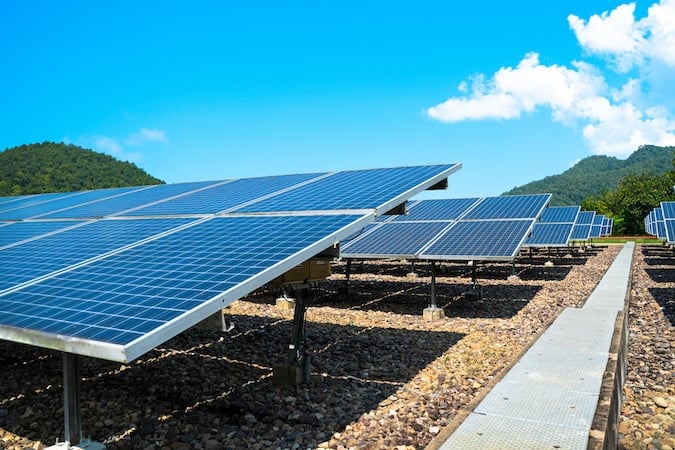
Image used courtesy of Adobe Stock
PV systems actually require very little maintenance once they are up and running. However, administering a good maintenance program will ensure safe and efficient system operation. Table 1 shows a suggested maintenance schedule.
Table 1. A suggested maintenance schedule for a PV system.
|
Maintenance Schedule |
|||
|
How Often |
Item to Check |
What to Check For |
What to Do |
|
Daily |
Inverter(s) |
Check for any faults shown on the display or indicated by LEDs. |
Use the owner’s manual to determine what the fault is and what needs to be done to fix it. |
|
|
Charge controller(s) |
Check for any faults shown on the display or indicated by LEDs. |
Use the owner’s manual to determine what the fault is and what needs to be done to fix it. |
|
Monthly |
System metering |
Check the system output data. |
Record the meter readings. |
|
|
PV array |
Check for heavy soiling from leaves, bird droppings, and air pollution. |
Clean the array with water and a mild soap. Use a sponge or other type of soft cleaning tool. Don’t use brushes or other items that could scratch the module’s surface. |
|
|
|
Check that all modules are properly fastened in place. |
Secure any loose modules. |
|
|
|
Check that the mounting rack, if used, is securely fastened to the structure. |
Secure any loose parts of a rack system. |
|
Every six months |
PV combiner box |
Check the enclosure to see whether damaging amounts of moisture are entering. |
Clean the enclosure and apply new weather stripping or replace the enclosure. |
|
|
|
Check the enclosure for insects. |
Clean the insects out of the enclosure. |
|
|
|
Check fuses or circuit breakers. |
Replace blown fuses or reset tripped circuit breakers. |
|
|
Surge arrestors (DC and AC side) |
Check for whether the surge arresters are working.
Note: Also check after each thunderstorm. |
Replace defective surge arrestors. |
|
|
Wiring |
Check for charred spots, broken insulation, and other insulation damage. |
Fix or replace any defective wiring. |
|
Every three to four years |
System measurements |
Repeat the sequence of measurements used at the initial commissioning of the PV system. |
This should be done only by a trained PV system installation professional, preferably the one who initially installed the system. |
|
|
Equipment such as controllers and inverters located outdoors |
Check the enclosures to see whether damaging amounts of moisture are entering. |
Clean the enclosure and apply new weather stripping or replace the enclosure. |
PV system maintenance is recommended annually, although more frequent checks may be beneficial. Annual maintenance should include comprehensive inspections of mechanical and electrical connections, source circuit voltages and currents, battery electrolytes (if applicable), and the programming of charge controllers and inverters.
Because there are fewer system components, grid-tie PV systems require less maintenance than stand-alone PV systems. Hybrid systems also typically require more routine maintenance than a grid-tie PV system. It is always a good idea to follow the suggested maintenance procedures outlined in the manufacturer’s installation guides.
PV Arrays and Modules
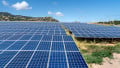
PV arrays need little maintenance. Because soiling can occur over time, the modules may need to be cleaned. Use water and a mild detergent to clean PV modules. Don’t use solvents or strong detergents that could damage the module’s surface. The junction boxes on modules should be checked periodically to ensure they are still weatherproof. Also, check for shading caused by new growth and, if necessary, trim tree branches or other vegetation to eliminate the shading. Always check with the building owner before doing any trimming.
Battery Banks
When examining batteries, it's crucial to use eye and face protection, rubber gloves, and a rubber apron. Additionally, keep water and baking soda (for lead-acid batteries) nearby to neutralize any possible acid spills.
When maintaining batteries, the first thing to do is to check their charge state. Use a hydrometer with liquid electrolyte non-sealed lead-acid batteries. A hydrometer is employed to assess the specific gravity of the electrolyte within battery cells. The caps of the cells are removed, and the electrolyte is drawn into the hydrometer for measurement. This device includes a float that floats higher with higher specific gravity and lower with lower specific gravity. A significant discrepancy in specific gravity among cells indicates a faulty cell. If the specific gravity remains unchanged despite a standard charging period followed by filling the cell with distilled water and applying an equalizing charge, the cell or battery should be replaced.
In addition to checking the specific gravity of battery cells, it's important to check the battery voltages and currents. Use a multimeter to measure voltage. Operate the system loads for several minutes to stabilize the battery voltage. Disconnect the battery and load from the PV array before taking voltage readings. Don’t measure voltage when the batteries are being charged or discharged. The voltages of batteries connected in series should be the same within a few tenths of a volt, while the currents of batteries connected in parallel should be the same within approximately 5% during charging and discharging. If these criteria are not met, all battery connections should be inspected. Additionally, the lengths of battery cables should be verified to prevent uneven charging and discharging caused by varying cable lengths.
Nicad and sealed liquid electrolyte (VRLA) batteries require the least annual maintenance. Check terminal connections, cases, venting, and wiring every six months. Vented liquid lead-acid batteries require the most maintenance. A higher amount of gassing involves an addition of distilled water. When continually undercharged, these batteries are prone to acid stratification at the bottom of a cell. De-stratification can occur with a slight overcharge. Reduced maintenance can come from recombinator or catalytic converter battery vent caps that capture hydrogen gas and recombine it with oxygen to form water. The water is automatically returned to the electrolyte.
Charge Controllers and Inverters
Maintaining an inverter or a charge controller is relatively simple. Most manufacturers list a maintenance procedure in the installation manual for their products. Some suggested maintenance procedures are discussed in the following two paragraphs.
It is suggested that each month, or more often as needed, you should inspect the intake air duct and cooling fan for accumulation of dirt and debris. An accumulation of dirt and debris in the duct and cooling fan decreases their ability to transfer heat away from the heat sinks commonly found on inverters and charge controllers. Remove and clean the air duct and cooling fan if debris is present. Also, clean dust and debris from the heat-sink fins so that they will work more efficiently.
At six-month intervals (more often if needed), inspect the enclosure door seals. If damaged, replace them with an equivalent foam gasket. Inspect the condition of all wiring and connections inside the units. Inspect for damage resulting from high temperatures. Additionally, terminations and connections should be examined for indications of corrosion. Ensure all mechanical connections are adequately tightened, and verify that conduction surfaces are clean and corrosion-free. Over time, mechanical electrical connections may loosen, primarily due to thermal cycling during regular operation. As these connections loosen, the impedance at the connection increases, potentially resulting in fire and damage to components. Also, inspect for any accumulated dirt and debris within the inverter or charge controller enclosure and carefully vacuum out any present dust or debris.
Takeaways
The meticulous maintenance of photovoltaic systems is vital for continued performance and reliability. Following recommended maintenance schedules and procedures for inverters, charge controllers, PV arrays, and battery banks, ensures efficient system operation over time. Regular maintenance helps identify and address issues promptly, mitigating potential downtime and optimizing energy production. Furthermore, proper maintenance enhances safety, extends the lifespan of PV systems, and ultimately contributes to the widespread adoption and effectiveness of renewable energy solutions in powering diverse applications in commercial and industrial facilities.