Facebook
 Google
 GitHub
 Linkedin
Help Wanted: The Next Generation of Skilled Energy Workers
Energy jobs are growing and advancing, but the workforce is aging out. How can energy and electronics companies help?
The energy sector is hurting for qualified employees. Jobs are growing quickly, but many experienced workers are nearing retirement. Other established employees are struggling to learn new technologies or make the shift to renewable energy jobs. At the same time, younger job-seekers may not see the potential in the energy field or may lack the needed technical skills.
To fill the gaps, several companies and organizations have initiated outreach or partnerships with universities and technical schools. The programs could prepare more young people to consider a career in electrical engineering or technician.
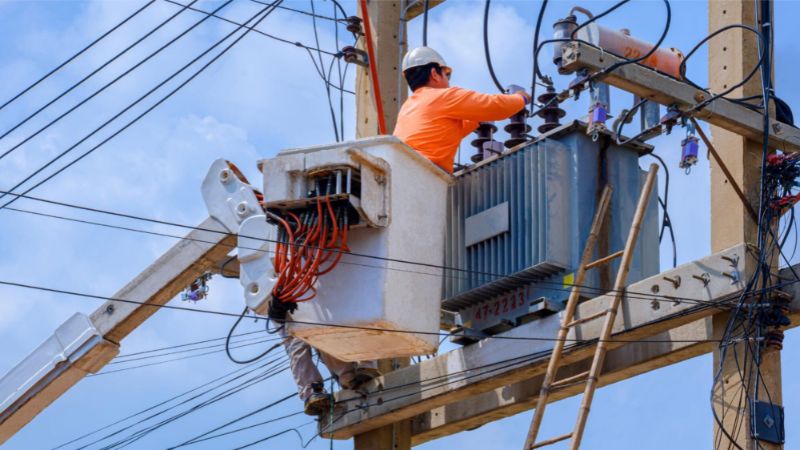
Technician repairing transmission lines. Image used courtesy of Adobe Stock
Opportunities in Energy
Worldwide, the energy industry is growing faster than many other fields. According to the International Energy Agency’s latest report, employment in energy rose by 3.8% compared to the economy’s average of 2.2%. Jobs were added in both renewable and fossil fuel sectors.
In the U.S., jobs also grew at twice the average rate. Employment in clean energy grew the fastest (4.9%), according to the Department of Energy. The DOE tracked employment in power generation, fuels, energy efficiency, transmission and distribution, and motor vehicles. Manufacturing and construction jobs in energy are also flourishing, with 800 new facilities added since 2021.
In Scotland, the SELECT electrical contractors’ association is sounding the alarm about the worker shortage. Managing Director Alan Wilson said older workers are retiring at a faster rate than they can be replaced. The transition to renewable energy deepens the concern.
“As fossil fuels run out, changes to government policy mean you can’t install gas products or must change to an electric vehicle, but how are we going to actually maintain that?” Wilson stated in an outreach video. “If we don’t get the skilled workforce we need, how are we going to make sure there are enough people around to install these products?
Wilson emphasized the importance of training in electrical installation work and upskilling workers as new technologies are required.
Where Are the Jobs?
Energy careers are expanding and diversifying. Brian Dula, president of the Electrification and Automation business at Siemens, discussed the opportunities in an interview with Siemens USA CEO Barbara Humpton.
“People with super high-tech backgrounds and masters and PhDs in certain technical fields are very important in certain areas of our business,” Dula said. “There’s other places in the business where you just need to have the right passion, communication skills, organizational skills, and project management abilities.”
Some well-paying energy jobs require only a high school diploma or specialized training.
Table 1. Energy jobs, average pay, and education requirements.
| Job Title | Median Salary | Education Required |
| Electrical and Electronics Installers and Repairers | $67,200 annually or $32.32 an hour | Community college, technical school, or certifications |
| Wind Turbine Technicians | $61,770 annually or $29.70 an hour | Associate degree or technical school |
| Electrical Powerline Installers and Repairers | $85,420 annually or $41.07 an hour | High school diploma |
| Power Plant Operators | $100,890 annually or $48.50 an hour | High school diploma |
| Electrical and Electronic Technicians | $72,800 annually or $35 an hour | Associate degree |
| Nuclear Technicians | $101,740 annually or $48.92 an hour | Associate degree |
| Electrical and Electronic Engineers | $109,010 annually or $52.41 an hour | Bachelor degree |
| Nuclear Engineers | $125,460 annually or $60.32 an hour | Bachelor degree |
Source: Bureau of Labor Statistics
Community colleges and technical colleges frequently offer associate degree or certification programs. Many energy industry companies, such as Siemens, also offer programs or are working with educational institutions to train the next generation of technicians.
Training Programs in Energy
The University of North Carolina Greensboro has opened the BRIGHT Institute, which focuses on battery research and next-gen energy harvesting. The workforce training program can prepare students for careers in energy. The Institute also partners with industry, national laboratories, government entities, and nonprofits.
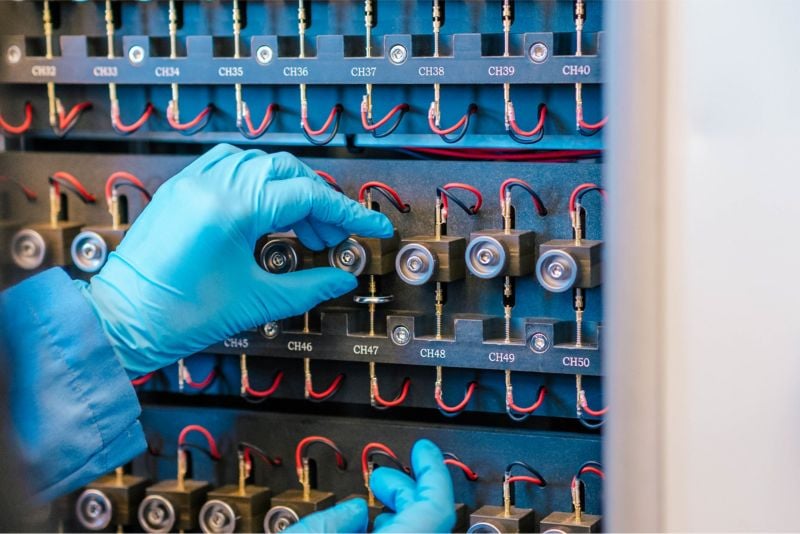
Battery research. Image used courtesy of University of North Carolina Greensboro
Siemens Power Academy offers onsite, online, or blended learning along with hands-on training courses.
“We have short courses offered where you can take one topic at a time,” Dula told Humpton. “Or you can make a multiweek commitment and work on a longer-term learning plan. So, we have courses for a novice who wants some exposure to a topic, and we have in-depth courses for the person who may want to become an expert … in the field.”
Siemens also collaborates with local colleges, such as North Carolina State University and Wake Tech Community College, for technical apprenticeship programs.