Facebook
 Google
 GitHub
 Linkedin
Test Equipment for the Next Generation of Power Semiconductors
Modern power semiconductors demand advanced test equipment. As devices optimize for higher voltages and lower losses, precise, robust testing is essential for reliable, safe qualification.
This article is published by EEPower as part of an exclusive digital content partnership with Bodo’s Power Systems.
Article co-authored by Saxogy CEO Konrad Domes.
For more than 20 years, Saxogy Power Electronics, based in Chemnitz, Germany, has been developing customized solutions in the fields of safety test benches and electronics for power electronic applications.
Stimulated by market-driven innovations in high-power semiconductor technology, the development of the first electrical generators began two years ago. These generators enable comprehensive characterization of gate properties, blocking capability, and on-state performance of power semiconductor devices using modern and robust measurement technology. A wide range of generators is available for installation in 19-inch systems, as shown in Figure 1.
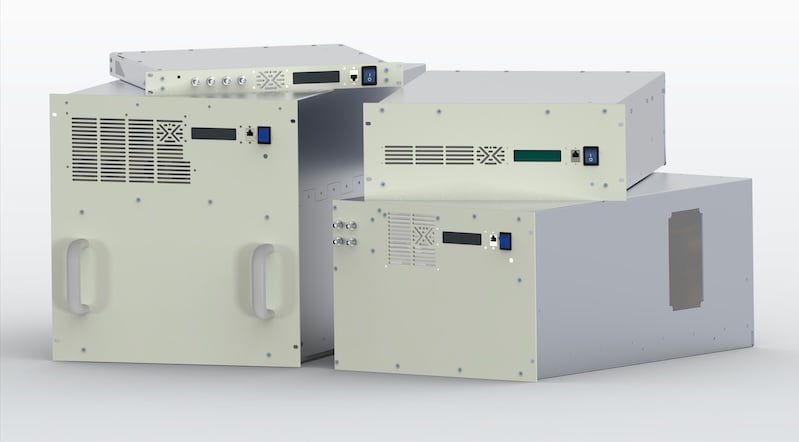
Figure 1. Saxogy's electrical generators for semiconductor testing. Image used courtesy of Bodo’s Power Systems [PDF]
The generators are designed for use both in production environments and development laboratories. They include application-specific safety and measurement features, allowing all test-relevant data to be integrated into higher-level data management and control systems.
Measuring Gate Characteristics
To evaluate electrical parameters related to the gate structure, Saxogy offers two different generator systems, differentiated by whether voltage-controlled or current-controlled semiconductors are being tested.
For voltage-controlled devices, the Static Gate Unit (SGU) is typically used. This 1-U rack-mounted system is focused on the highest measurement precision, particularly for currents down to the picoampere range. The SGU combines precision analog sources with highly sensitive measurement technology to determine threshold voltages, gate leakage currents, and to apply adjustable gate stress pulses up to 80 V to the gate oxide.
The measurement system for the strongly temperature-dependent threshold voltage provides a resolution of 1 mV over a measurement range up to 16 V. For gate leakage current measurements at voltages up to 80 V, currents in the lowest measurement range down to 200 nA can be resolved with a resolution of 200 pA. Measurement accuracy is better than 1 % of the measured value.
For current-controlled devices, the Static Trigger Unit (STU) is used to characterize the triggering behavior of thyristors. A variable gate current source of up to 3 A is available, with adjustable current slope, as this parameter directly influences the turn-on behavior of thyristors.
The STU determines the latching current and holding current of modern thyristors and supplies load currents of up to 10 A. In addition, trigger current and trigger voltage can be measured precisely, and the minimum required anode-cathode voltage VZAK for triggering the thyristor can be determined. Time-optimized measurement methods are applied to reliably obtain high-quality data within defined production cycle times.
Semiconductor Forward Characterization
When characterizing modern power semiconductors in the forward direction, the on-state voltage drop under applied load current is a key parameter determining conduction losses. This requires both a high-current source and a precise voltage measurement system to reliably capture the strongly temperature-dependent forward voltage.
The Static Forward Unit (SFU) employs a switched current source capable of delivering pulsed currents from 50 A up to 5000 A. The forward voltage at the device under test is measured repeatedly with a resolution of 1,6 mV. Measurement accuracy for both current and voltage is better than 1% of the measured value.
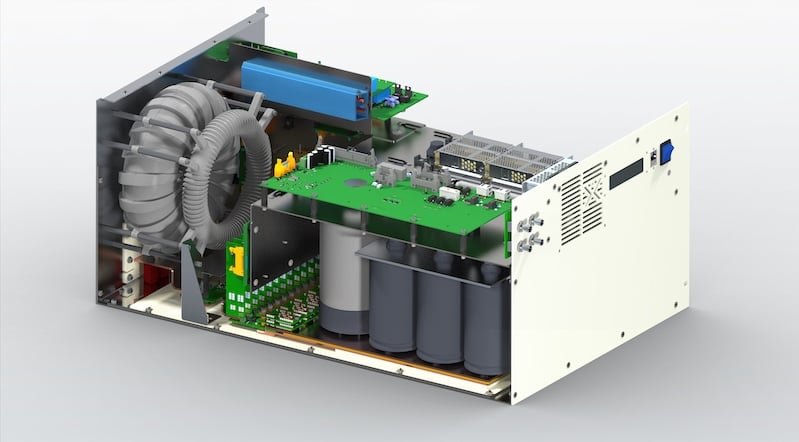
Figure 2. Saxogy´s Static Forward Generator. Image used courtesy of Bodo’s Power Systems [PDF]
The current waveform can be configured as trapezoidal or sinusoidal. The system operates from a single-phase mains supply and uses a capacitor-fed output stage, enabling pulse durations of up to 10 ms. Figure 2 shows a cross-section of the SFU.
The SFU also includes integrated gate drive functionality, allowing testing of voltage-, current-, or light-triggered devices. Gate voltages of up to 25 V and gate currents up to 5 A can be applied.
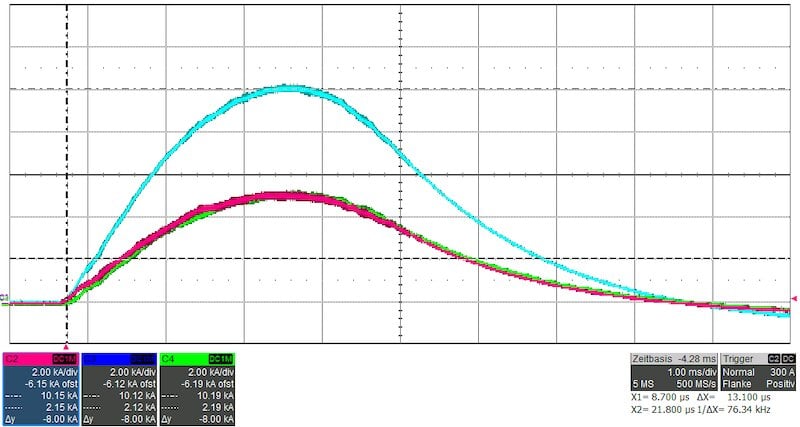
Figure 3. 10 kA current pulse by two SFU in parallel. Image used courtesy of Bodo’s Power Systems [PDF]
For higher current requirements, multiple SFU systems can be synchronized and connected in parallel, currently enabling load currents of up to 10,000 A using two units as in Figure 3.
Reverse Blocking Tests
Validation of a device’s blocking capability represents one of the final test steps in semiconductor production. For this purpose, a current-limited high-voltage source is required to safely limit fault currents and protect both the device and test equipment in case of breakdown.
Saxogy offers two generator types for blocking tests, both capable of generating blocking voltages up to 10 kV and providing an integrated gate voltage source from 0 to –20 V.
The Static Reverse Unit (SRU) generates trapezoidal voltage pulses up to 10,000 V and measures the blocking current with a resolution of 10 μA in the most sensitive range. The maximum allowable current can be limited to up to 300 mA, while pulse durations can be set between 200 ms and 10,000 ms.
The AC Reverse Unit (ACRU) is designed to test the blocking behavior of power semiconductors mainly used in grid-related applications. Therefore, a high-voltage source is used to generate 50 Hz sinusoidal half-waves up to 10 kVp and accurately measure the resulting blocking currents. Rising and falling voltage pulse sequences of sinusoidal half-waves can be generated, enabling the recording of characteristic curves for blocking voltage versus blocking current.
The minimum adjustable blocking voltage starts at 500 V with an accuracy better than 2% of the measured value. Over the full range from 500 V to 10 kV, voltage measurement accuracy is better than 0.5%. Current limiting can be set between 100 μA and 2 A with an accuracy better than 1% of the set value, while blocking current measurement accuracy is better than 0.5% across the range from 10 μA to 2 A.
A further feature of the ACRU is an integrated low-voltage source enabling biasing of devices under test up to 40 V. This is particularly useful for precharging the output capacity of the semiconductor, which is strongly voltage dependent and could be quite high at low voltage.
The high-voltage outputs of the blocking generators are earth-referenced and therefore potentially hazardous. For this reason, the voltage generators are equipped with a specially designed disconnector unit. This approach enables the reliable detection of a disconnected high-voltage pole by verifying a redundant safety signal that is fed back into a programmable logic controller.
dv/dt Generator for Thyristor Testing
An additional high-voltage generator is the dv/dt generator, designed for testing thyristors to characterize their triggering or non-triggering behavior under adjustable voltage slew rates. Critical dv/dt, for example, caused by dynamic transients at the device terminals, can lead to unintended turn-on of the thyristor structure.
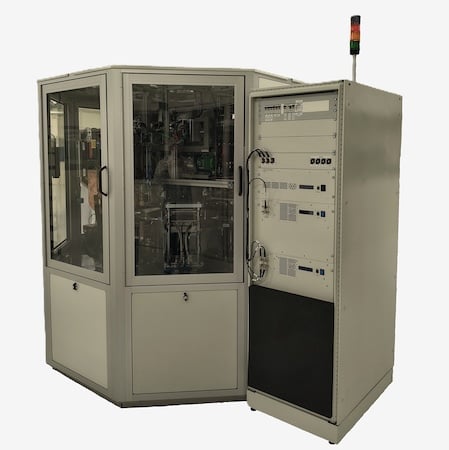
Figure 4. Fully integrated SAXOGY testbench for semiconductor in a production line. Image used courtesy of Bodo’s Power Systems [PDF]
The dv/dt generator determines the critical voltage slew rate by generating voltage amplitudes from 500 V -10 kV with customizable rise times. Typically, voltage slopes for this kind of test start at 50 V/μs up to 10 kV/μs. In the event of triggering the thyristor, the generator limits the current to 10 A and terminates the test automatically.
Development of All-in-One Test Systems
In addition to its portfolio of electrical generators, Saxogy supports the integration of test equipment into existing production lines and existing systems. Furthermore, fully customized test systems are developed in close cooperation with customers, as shown in Figure 4.
Years of experience in electronics development and test engineering enable Saxogy to act as a competent partner in the application and testing of power semiconductor devices. This expertise includes semi- and fully automated handling of devices under test, as well as precise temperature control and reliable contacting of components with contact forces of up to 150 kN, all implemented with maximum safety.
This article originally appeared in Bodo’s Power Systems [PDF] magazine.