Facebook
 Google
 GitHub
 Linkedin
Good News and Bad for Energy Engineers in 2025
The energy landscape is changing in 2025. Here’s what you need to know.
How will the energy landscape change in 2025? While no one can predict the future, growing trends and challenges can offer insights into where energy engineers and power system designers are succeeding and what challenges may remain.
EEPower spoke with David Wilson, CEO of Energy Exemplar, which provides modeling platforms to energy developers for energy planning. Wilson said the coming years will be promising for renewables like solar and wind, but energy professionals must find ways to cope with increasing demand and grid strain.
“It’s going to be a really challenging time for the energy industry as we get this long-anticipated perfect storm of the energy transition, aging infrastructure, and then a couple of new surprises like the data set demand all thrown into the mix,” Wilson said.
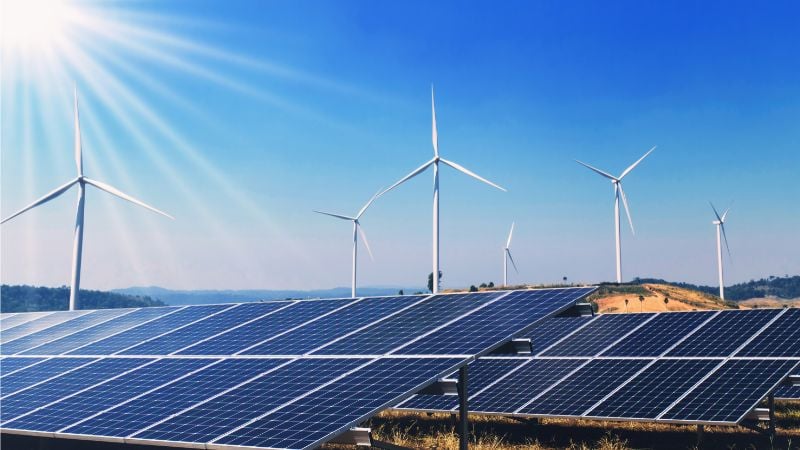
Grid-connected renewable energy. Image used courtesy of Adobe Stock
Renewable Energy’s Dominance
Solar, wind, and other renewables will continue to dominate energy developments in the future, according to Wilson. However, costs are dropping, especially for battery energy storage systems, which have become essential adjuncts to renewable energy systems.
“For most projects around the world, the cheapest form of energy will be some form of renewable backed up with storage,” he said. “This will be true regardless of incentives or rules.”
While large renewable projects like solar and wind farms will continue, Wilson expects an upsurge in small-scale renewables like rooftop solar and microgrids. However, he cautioned that local regulations and expectations play an important role. He used the Australian state of South Australia as an example. Renewable sources generate about 70% of electricity, with 100% achieved by 2027.
Stored energy is a major factor in renewable energy’s success because it can ensure consistent and reliable power when wind or solar generation fluctuates. Wilson said energy storage costs dropped about 20% in 2024.
“Multiple factors have led to that, perhaps a little bit of overbuild of the supply chain in China,” Wilson remarked. “But regardless, that low cost means new projects—wind and solar backed by batteries—will continue to get cheaper in the near future, which is pretty amazing.”
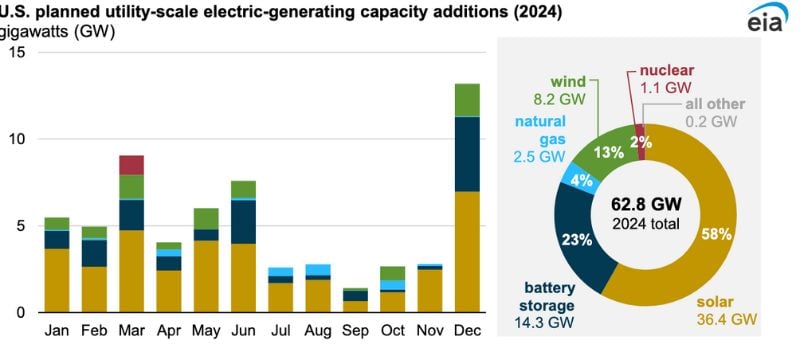
Renewable energy generation. Image used courtesy of Energy Information Administration
As renewable energy surges, fossil fuel plants are fading.
“Fossil fuels are being retired, particularly coal, and replaced by wind, solar, and storage,” Wilson explained. “Natural gas is also playing a role, particularly in North America, which has a very large supply of quite cost-effective natural gas that continues to see some new build. But most of the new assets being built at a global level are renewable.”
Distributed Energy Sources Grow in Importance
Renewable projects at the hyperlocal level contributed to grid reliability in 2024. Distributed energy resources are projected to multiply in the coming years. During peak demand periods, power grids can depend on EV chargers, rooftop solar, and building-based batteries.
The effects can be significant. During a heatwave in California last July, a virtual power plant program accessed residential Tesla Powerwall devices, which supplied about 100 MW for two consecutive days. The extra energy eased the strain caused by air conditioners.
EVs with bidirectional charging capabilities could dwarf the effects of home batteries. Wilson said the typical battery installation is about 10 to 20 kWh, whereas EVs are in the 75 to 100 kWh range.
“So a car’s five to ten times bigger than your average home battery today,” he explained. “That’s an incredibly large amount of energy that’s being stored, and it has the potential to help manage the grid as higher and higher percentages of intermittent resources—solar, wind, etc.—come into the grid.”
The Data Center Dilemma
Data centers, especially those used for artificial intelligence, are the fastest-growing cause of new energy demand. A data center consumes 10 to 50 times more energy per square foot than an average office building. These centers use about 4% of all U.S. energy generation, an amount expected to more than double by 2023.
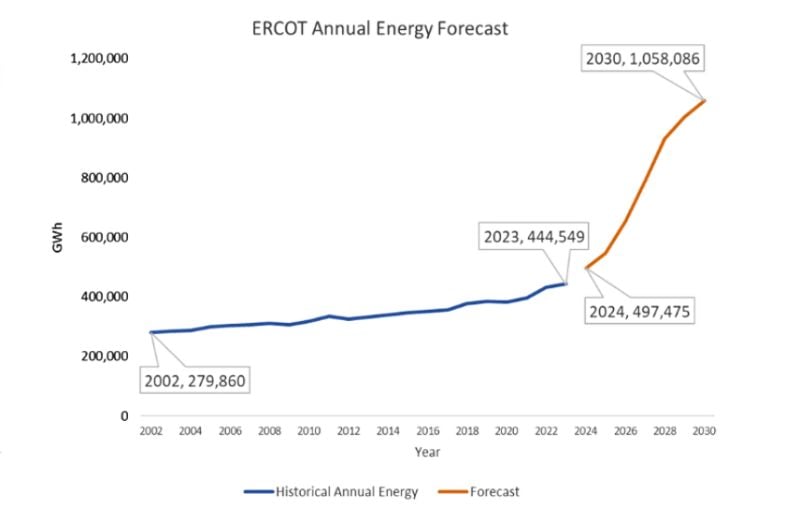
Projected energy demand in Texas. Image used courtesy of ERCOT
The effects are felt most greatly on the local level. The East Coast, particularly Virginia, has hosted the most data centers in North America. However, Texas may soon surpass it. Wilson said the rapid growth was seven times faster than expected, surprising planners.
Wilson said Texas is an extreme example, but data centers are being concentrated in certain geographical locations worldwide, such as London and Saudi Arabia. This results in localized grid congestion.
“The challenge becomes, how do you find sites that have sufficient transfer capacity enough, with space left on the grid to smooth the energy to run the data center?” he said.
Cryptocurrency and hydrogen production are also growing sources of energy demand in Texas, according to the Electric Reliability Council of Texas (ERCOT).
Roadblocks to Growth and Interim Solutions
Renewable energy and other generation sources are increasing, but grid connections can take years due to aging and insufficient infrastructure. Building more transmission infrastructure is expensive and can take up to a decade, Wilson said.
Meanwhile, energy planners are increasing grid capacity and efficiency by using dynamic line rating and grid analytics. Wilson said planning tools such as digital twins can help grid managers get the most out of their existing assets.
“You can run scenarios or take the model and see what happens in the future,” he explained. Planners can test different combinations of loads and power projects to see what would happen in the grid. “They can actually ask questions, given that understanding of the grid, like where’s the optimal place to put a data center, or what are the options that are out there?”
Although complexity is increasing, many people are working with “really good tools and techniques to navigate all of this,” he concluded.