Facebook
 Google
 GitHub
 Linkedin
Demand for Solar PV Recycling Rises As Parts Head to Landfills
As solar adoption continues to rise and discarded parts hit landfills, cumulative solar panel waste presents a dual challenge and opportunity.
The U.S. generates about 4% of its electricity from millions of solar photovoltaic (PV) installations across homes, residential buildings, businesses, and utility-scale facilities. As solar adoption is slated to grow substantially in the coming years, the demand for recycling and end-of-life services will naturally follow.
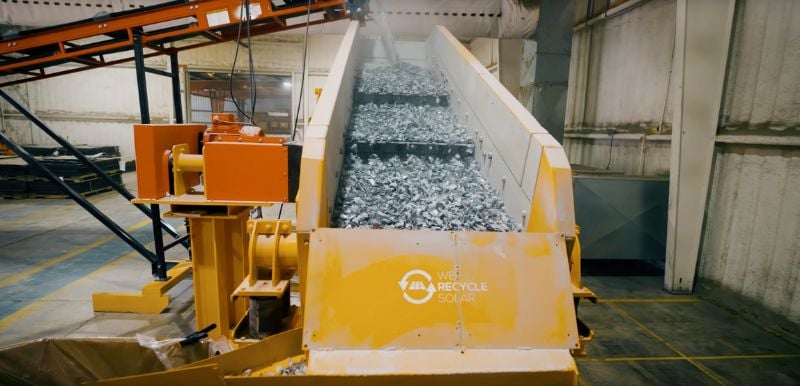
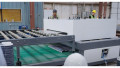
Pieces of solar panel materials are processed at We Recycle Solar’s utility-scale facility in Arizona. Image used courtesy of We Recycle Solar
With older generations of solar panels already wearing out, consumers and companies are opting to replace components early. Discarded solar panels often end up in landfills, spurring a growing market of recycling facilities that shred parts into tiny pieces and separate heavy metals and other materials to reuse in future solar systems. Diverting materials from landfills is a key goal since solar panels contain hazardous materials, such as arsenic, lead, and cadmium.
The U.S. Department of Energy (DOE) reported last year that about 75% of America’s total installed PV capacity was deployed in the last five years, and end-of-life volumes for PV modules could reach up to 12% of annual municipal electronic waste by 2050.
Meanwhile, according to the Energy Information Administration, America’s electric power sector has tripled its solar PV capacity since 2017, reaching 74 gigawatts (GW) at the end of 2022. The agency estimates another 63 GW will be added by late 2024.
As solar uptake exceeds the availability of resources for end-of-life or decommissioned PV panels, existing electronics recyclers are adding more capacity to meet a high-demand market.
Solar Panel Recycling: Trend Snapshot
The U.S. is the second-largest market behind China in annual and cumulative PV installations, with PV eating a 46% share of new electric generation capacity added to the grid in 2022 alone, up from 4% in 2010. The National Renewable Energy Laboratory reports that 17 GW alternating current (GWac) of PV was installed in 2022, bringing the nation’s cumulative total to a whopping 110.1 GWac.
Based on historical data, the International Energy Agency (IEA) estimates that global decommissioned solar PV capacity will reach 7 GW by 2030 and may exceed 200 GW by 2040. With that trajectory, managing the end-of-life flow of solar PV equipment will be crucial.

Expected flows of decommissioned solar capacity from 2020 to 2050. Image used courtesy of IEA (page 97)
About 80% of the weight of solar panels is aluminum and glass, which are generally easy to recycle, though the latter is difficult to sort when broken. Recovery is more challenging for the remaining materials, spurring new demand for advanced recycling processes and technologies.
PV modules typically last about 25 to 35 years, but some end-of-life modules and components are already flooding the U.S. waste stream because of weather damage, defects, or installation issues.
Part of why PV modules end up in landfills is tied to the economics of end-of-life handling: Waste generators recycle PV modules at about $15 to $45 per module, while the landfill fee is only $1 to $5 per module, according to the DOE.
America’s Solar PV Recycling Facilities
The U.S.’s end-of-life processing capacity is growing to meet increased demand in the circular economy. Twenty-three locations are listed on the DOE’s nationwide map of solar component recycling facilities. The Solar Energy Industries Association, which has over 1,000 member companies, established a network of recycling and refurbishment providers in 2016. Eight end-of-life management partners are mentioned on its website, but the organization seeks more across the U.S.
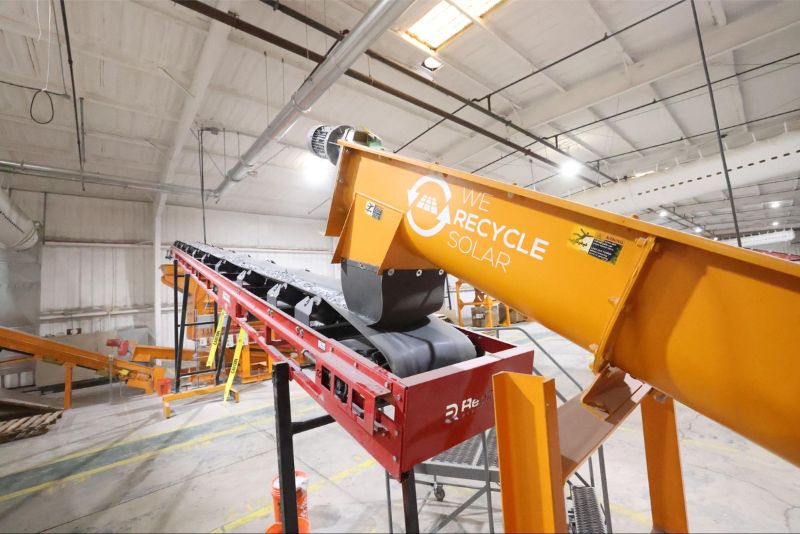
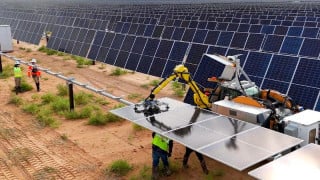
We Recycle Solar’s utility-scale recycling plant in Arizona. Image used courtesy of We Recycle Solar
One of those partners is We Recycle Solar, which owns one of the country’s largest PV recycling plants. The company recently expanded its utility-scale facility in Yuma, Arizona, to handle the rising demand for its solar panel removal, decommissioning, recycling, and processing services. IWe Recycle Solar CEO Adam Saghei said the expansion boosted the company’s processing speed and volume capacity to meet about 25% of U.S. recycling needs.
With new machinery and enhanced processing technology, the facility can process 7,500 modules (or 345,000 pounds) in just one day. It also plans to quadruple its annual capacity to 522 million pounds by 2028, up from 69 million pounds per year today.
We Recycle Solar has recycled or remarketed 500,000 solar panels, preventing 23 million pounds of hazardous waste from hitting landfills. It has processed 495 tons of aluminum, 10,400 tons of glass, and 147 tons of copper.
Video used courtesy of We Recycle Solar
One of the largest PV module and battery recycling companies in the country is Electronics Recyclers International (ERI), which has nine facilities nationwide that can recycle PV modules (mono or polycrystalline, shingle-type, and others), inverters or microinverters, and racking equipment or trackers. According to its 2022 ESG and Data Security Report, ERI reused or recycled 120 million pounds of electronics in 2022 alone and set a record for the amount of commodities it recycled, with 116 million pounds reintroduced into the economy. While the share of solar components in these totals wasn’t disclosed, the company did list several materials that derive from solar panels, including 49.2 million pounds of metals such as aluminum, copper, and steel, plus another 11 million pounds of glass.
Other providers include Interco, which receives old solar panels by rail or truck, recycles cells according to type, and returns about 90% of reusable materials. The company processes 250,000 scrap solar panels annually at its central facility in Illinois, and its services are used by utilities, solar panel producers, and roofing providers.
Some solar manufacturers run in-house recycling programs, supporting a closed-loop supply chain. One of the industry’s largest players, Arizona-based First Solar, boasts that its modules are designed to maximize end-of-life processing, recovering 90% of materials. This year, the company expects to have up to 500 megawatts of recycling capacity in the U.S.