Facebook
 Google
 GitHub
 Linkedin
Tapping DER Solar+Storage To Meet Peak Demand
Rocky Mountain Power retrofits storage batteries for solar users in Utah.
After success with its virtual power plant (VPP) program, Utah utility Rocky Mountain Power is eying residential solar owners without backup batteries installed. The utility partnered with VPP provider sonnen and solar installer ES Solar to create Go Back, a fresh model for its Wattsmart VPP program.
How storage batteries connect to the grid. Video used courtesy of Rocky Mountain Power
ES Solar has sold 18 MWh of its retrofit energy storage system through the program. Every month, the company installs 200 to 500 batteries across Utah, with Rocky Mountain Power customers accounting for over three-quarters of its sales this year. Meanwhile, Rocky Mountain Power benefits by tapping customers’ battery storage devices to manage peak loads. These distributed energy resources (DER) are a valuable tool to help utilities manage volatility from intermittent solar assets.
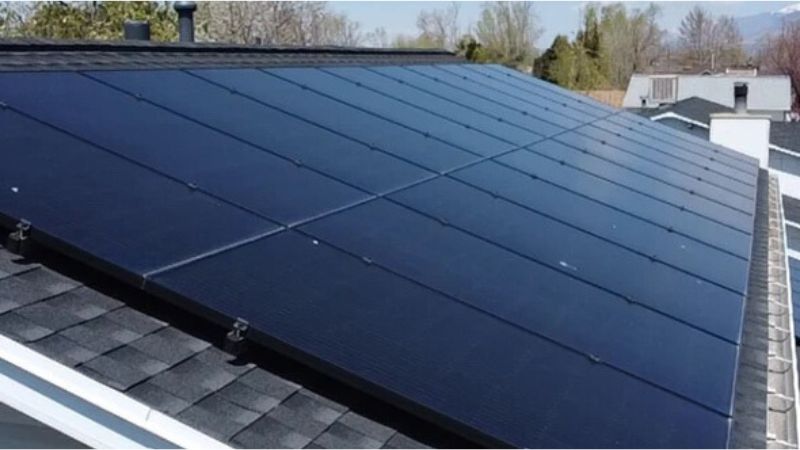
ES Solar’s rooftop solar panels. Image used courtesy of ES Solar
How Virtual Power Plant Works
Wattsmart has grown to more than 40 MWh of capacity since launching in December 2020, attracting thousands of participants.
The program provides an upfront incentive ($600 per kW) for solar owners interested in adding a grid-connected battery. They also get an annual bill credit for participating in the VPP. Solar applicants enrolling after 2021 could qualify for $400 per kW to install new solar and a new battery. ES Solar reports a 95% battery attachment rate among new solar customers, with over 90% opting to enroll in the Wattsmart VPP.
Wattsmart aggregates all participating batteries to form a large-scale asset supplying energy when needed most. This helps Rocky Mountain Power balance supply and demand during heatwaves and other emergencies. Batteries can also be tapped for daily peak loads by using excess solar energy to charge the batteries during the day, then calling upon that supply later when demand is high after sunset.
Sonnen’s VPP software links local residential and commercial DER networks to a single plant, deploying stored energy on demand. The company arrived early to the VPP scene in 2018, partnering with Rocky Mountain Power and a local real estate developer to build an all-electric apartment building, Soleil Lofts, centered on a grid-connected VPP. That project was a blueprint for Rocky Mountain Power’s later DER expansions.
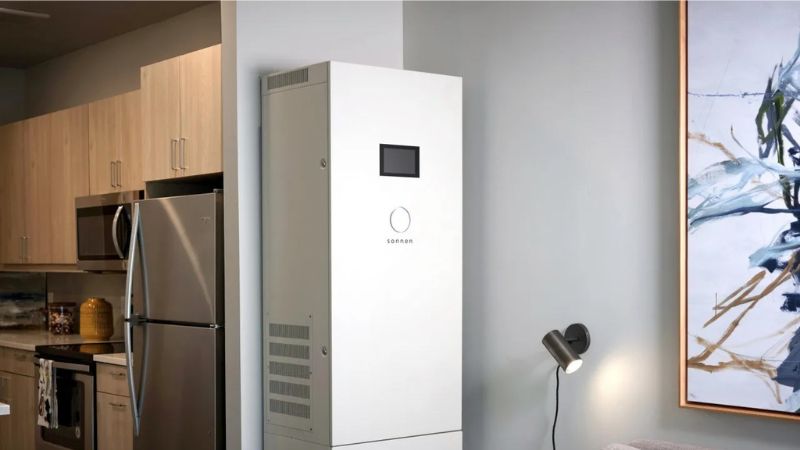
Sonnen’s residential battery unit. Image used courtesy of sonnen
Rocky Mountain Power has 80,000 solar customers without smart grid-interactive batteries. ES Solar plans to retrofit 40% of Utah’s residential solar arrays with sonnen’s VPP batteries in the next five years, covering 32,000 homes.
Value of VPPs
Rocky Mountain Power claims it’s the nation’s only vertically integrated utility with a behind-the-meter battery VPP that doesn’t use DER management system software. Instead, the utility’s own battery grid management system allows it to control batteries for grid operations, removing common grid integration issues that often arise in standalone rooftop solar installations.
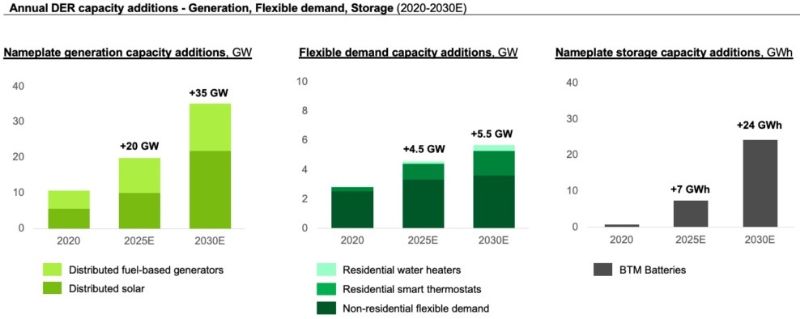
Annual DER capacity additions in the U.S. Image used courtesy of the Department of Energy
VPPs are increasingly popular, with the U.S. Department of Energy counting 30 to 60 GW of deployments nationwide today. These programs could be tapped to manage an anticipated 60 GW increase in coincident peak demand on the U.S. power grid by 2030. Tripling today’s VPPs could supply 10-20% of this need.
PacifiCorp, Rocky Mountain Power’s parent company, stated it has saved 1.1 GW of capacity through demand response programs. The company also owns Pacific Power, a utility covering parts of Oregon, California, and Washington.