Facebook
 Google
 GitHub
 Linkedin
Can Lakes Become Giant Hydrogen Batteries?
Storing hydrogen underwater resolves many challenges of above-ground storage.
As countries accelerate their shift toward renewable energy, developing effective hydrogen storage solutions has taken on new urgency. With hydrogen production anticipated to grow substantially over the next decade, storage remains a pivotal challenge.
The Deep Purple underwater hydrogen storage project in Norway. Video used courtesy of TechnipFMC
Conventional storage techniques—such as compression, liquefaction, and chemical carriers—are often costly and inefficient at scale. Against this backdrop, researchers are exploring innovative approaches, including using lakes and reservoirs for hydrogen storage.
This unconventional storage solution has sparked interest due to its potential scalability and reduced need for extensive new infrastructure. Storing hydrogen in lakes and reservoirs—especially within high-density polyethylene (HDPE) pipes submerged underwater—may provide a practical, efficient alternative to traditional storage methods.
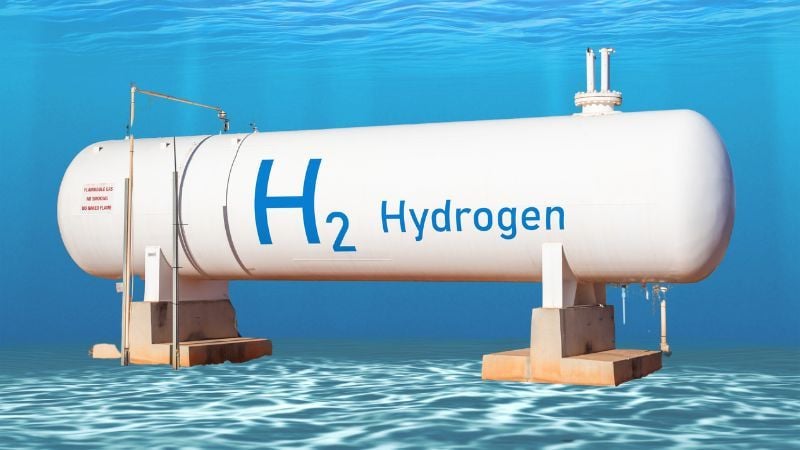
How can hydrogen be stored safely and efficiently underwater? Image created courtesy of Canva
Why Store Hydrogen in Lakes and Reservoirs?
Underwater hydrogen storage leverages the natural hydrostatic pressure exerted by water bodies. HDPE pipes are commonly used in water management systems for their resilience and ability to withstand significant pressure.
In hydrogen storage, these pipes could be placed at the bottom of lakes and reservoirs to capitalize on the existing infrastructure, reducing costs and environmental impact. This approach could also alleviate the need for vast above-ground storage facilities, which require significant land and pose potential safety risks in densely populated or environmentally sensitive areas.
Lakes and reservoirs near industrial zones or cities are especially advantageous for this type of storage, as they can facilitate direct access to hydrogen production and distribution channels. Maintaining hydrogen under pressure helps optimize storage efficiency, and the water column helps stabilize the gas.
Advantages of Underwater Hydrogen Storage
Using lakes and reservoirs for hydrogen storage has several advantages.
First, it provides natural pressure regulation due to the weight of the water column, potentially minimizing the need for additional energy input. Traditional hydrogen storage methods often require extra energy to maintain the gas at optimal pressures. Storing it underwater utilizes the inherent hydrostatic pressure, reducing the overall energy demand for storage operations.
Secondly, this method offers significant scalability. Large-scale storage has considerable potential, with lakes and reservoirs covering an estimated five million square kilometers globally. Regions with abundant water resources but limited land availability for above-ground facilities can particularly benefit from this approach.

Potential sites for underwater hydrogen storage. Image used courtesy of Hunt et al.
Solar energy, for instance, requires batteries to store excess daytime energy for nighttime use. These batteries act as a backup, similar to a generator, which can be expensive and limited in capacity. Underwater hydrogen storage, however, provides a versatile solution, allowing energy to be stored more sustainably and on a larger scale without relying solely on battery technology.
Many lakes and reservoirs are already equipped with HDPE piping—which can be modified for hydrogen storage—minimizing the need for additional infrastructure investment.
Potential Risks and Environmental Impact of Storing Hydrogen Underwater
Despite these advantages, underwater hydrogen storage presents potential environmental risks. While hydrogen is water-insoluble and non-toxic, its interaction with the environment could disrupt the pH balance and oxygen levels, affecting local flora and fauna.
Moreover, large HDPE pipes on lake beds may disturb natural habitats. Aquatic plants, fish, and other wildlife could experience alterations to their environments, potentially reducing biodiversity.
Extensive environmental assessments are essential to mitigate these risks. These evaluations should focus on hydrogen leakage rates, water quality impacts, and strategies to minimize ecosystem disturbances.
Underwater Hydrogen Storage: Technological and Economic Considerations
Technological advancements are crucial to underwater hydrogen storage’s feasibility. While HDPE pipes are cost-effective and resilient, they have limitations related to hydrogen permeability over extended periods.
Researchers are investigating enhanced materials and coatings to further reduce hydrogen diffusion, improving the long-term viability of these pipes. Advances in material science could make this storage solution more economically feasible on a larger scale.
From an economic standpoint, underwater hydrogen storage may prove more affordable than traditional above-ground facilities.
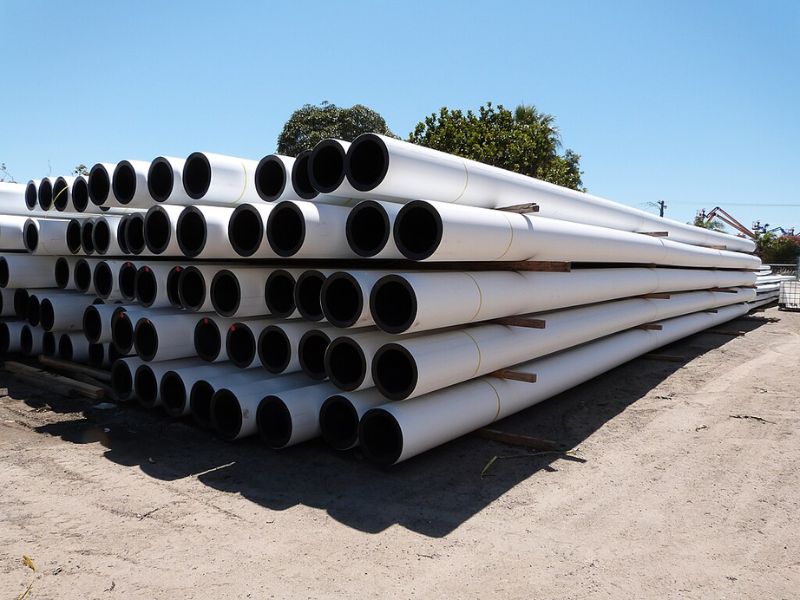
HDPE pipes. Image used courtesy of Wikimedia Commons
Conventional hydrogen tanks, often built from high-strength steel, require substantial investment to withstand the pressures of liquefied or compressed hydrogen. In contrast, submerged HDPE pipes are relatively inexpensive and durable enough to handle gaseous hydrogen under the natural pressures of a lake or reservoir.
Further Prospects and Ongoing Research for Underwater Hydrogen Storage
Underwater hydrogen storage is still in its experimental stages, with researchers working to address its technical and environmental challenges. Current studies are focused on the long-term impact of hydrogen on water chemistry and aquatic ecosystems.
Understanding these factors is crucial for establishing regulatory frameworks and safety guidelines for hydrogen storage in lakes and reservoirs.
Further research into hydrogen-compatible materials is also essential. Innovations in pipe coatings and composite materials could enhance the durability and safety of hydrogen storage systems, making them more competitive with conventional storage methods. These advancements will be necessary to scale up this solution and integrate it into a larger hydrogen economy.
Storing Hydrogen Underwater: An Emerging Solution With Potential
Storing hydrogen in lakes and reservoirs is a promising yet complex solution to one of the hydrogen economy's most pressing challenges.
Using existing water infrastructure and natural hydrostatic pressure, this approach could offer an efficient, cost-effective alternative to traditional storage methods. However, ensuring sustainability and practicality requires addressing environmental considerations and technological constraints.
If these challenges can be overcome, underwater hydrogen storage may be crucial in global decarbonization efforts. As research progresses and technology matures, lakes and reservoirs could become central to hydrogen storage, transforming our approach to renewable energy infrastructure.