Facebook
 Google
 GitHub
 Linkedin
Can Fishing Boats Become Hydropower Producers?
Alaskan-based startup Sitkana has created small-scale hydropower installations for coastal regions or fishing vessels.
Many clean energy resources are captured by large-scale installations, such as a sprawling collection of wind turbines in a desert landscape or rows upon rows of solar panels soaking up the sun. But, smaller-scale equipment and installations that can capture clean energy resources without needing open space and new infrastructure have great potential.
Testing an ocean energy device. Video used courtesy of Sitkana
Sitkana, an Alaska-based startup, envisions installing small hydropower installations on fishing boats and other maritime vessels to capture energy from the ocean’s constant currents and tides. This perpetual water flow is an untapped potential energy resource, and Sitkana’s propellers can easily be installed on boats to create small-scale hydropower installations.
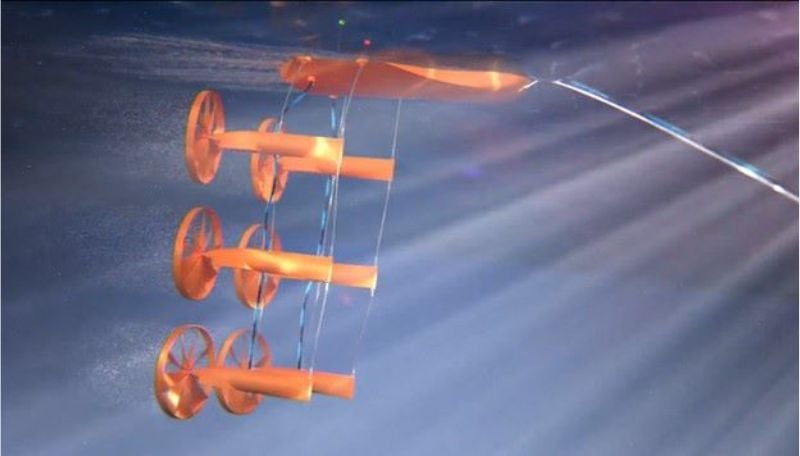
Sitkana’s illustration of their Orca installation. Image used courtesy of Sitkana
Seasonal Challenges and Renewal Energy Fluctuations
Alaska faces seasonal fluctuations in energy supply and demand due to its extreme weather conditions and geographical characteristics. During the summer, electricity demand surges due to air conditioning and cooling systems.
Conversely, the energy supply, particularly from renewable sources, tends to decrease in the summer. Alaska's renewable energy primarily comes from hydropower and wind power. Hydroelectric power, which makes up a significant portion of Alaska's renewable energy, relies on snowmelt and river flow, which are abundant in the spring but diminish as the summer progresses and water levels decrease.
Wind power generation also faces challenges during the summer, as wind patterns can be less favorable than in winter when high winds are more common. Additionally, solar energy, while increasing, is less reliable in Alaska due to the state’s latitude. Summer brings extended daylight, but the overall solar potential is still lower than in temperate regions.
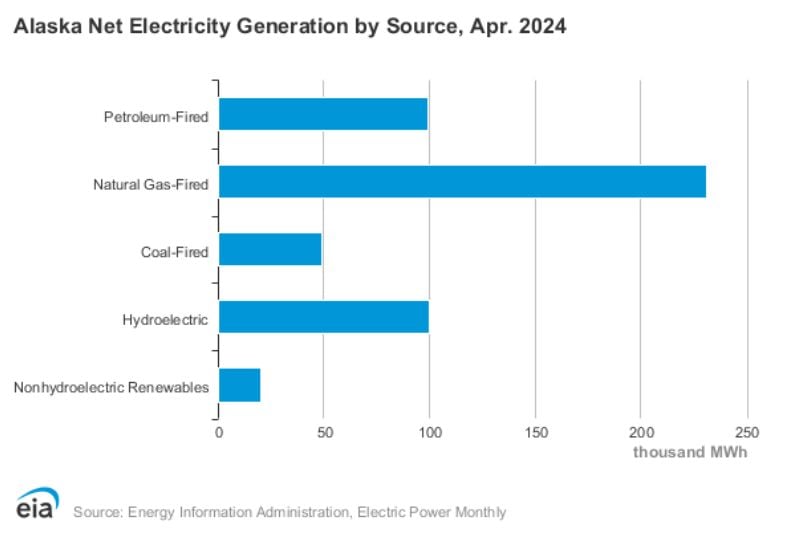
Alaska’s energy use by source. Image used courtesy of Energy Information Administration
These seasonal supply and demand fluctuations necessitate robust energy storage and grid management solutions to ensure a stable energy supply throughout the year. Diversifying energy sources is critical for Alaska to meet its energy needs. While some geographic quirks might be particular to this region, the world will need inventive clean energy ideas to supplement the core foundation set by conventional hydropower, wind farms, and solar panels.
Capturing Tidal Energy With Small-Scale Hydropower
Sitkana’s small-scale hydropower propeller and turbine is an innovative clean energy installation for coastal regions with ocean access. Sitkana is partnering with Sandia National Laboratories to develop and deploy its unique hydropower system. The project was one of seven recipients of a $7.4 million Department of Energy grant.
One Sitkana model, the Chinook, is a 6 x 3-foot, 100-pound propeller designed to be dropped into a tidal current in the ocean and can be deployed from smaller boats. Sitkana has also scaled up this idea to the Orca, which operates using a 12-foot platform with up to six propellers dropped underneath it, maximizing the system’s ability to capture the current.
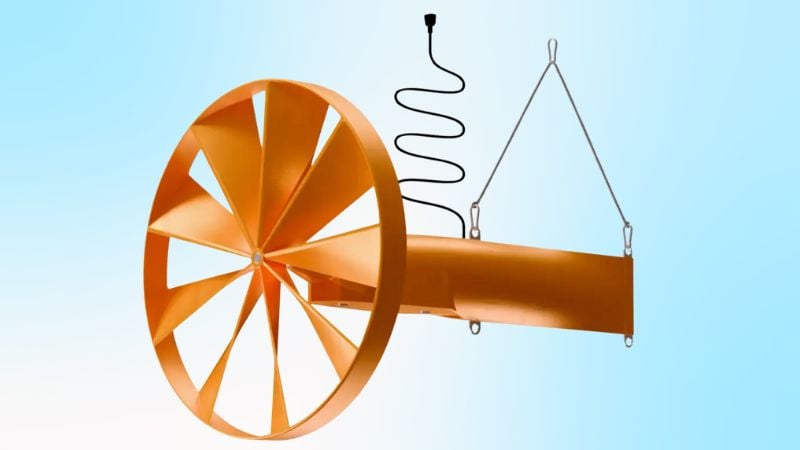
The Chinook’s underwater propeller. Image used courtesy of Sitkana
This small-scale hydropower tech can help offset the Alaskan summer lull in hydropower productivity and save money for individual boat owners and fishing professionals.
Sitkana creates free, open-source software to analyze regional currents and power potential. The software can help individuals scout locations for maximum power production.
This unique approach to capturing the maritime power buried in tidal currents and constant ocean flow can offset natural fluctuations created by conventional large-scale clean energy infrastructure. Sitkana is helping pave the path forward, turning seemingly small energy sources into clean energy powerhouses.