Facebook
 Google
 GitHub
 Linkedin
The Hydrogen Hurdle: Overcoming Challenges for Clean Backup Power
This article explores the challenges facing hydrogen technology development and the most sustainable way to approach diesel backup power.
Backup power is vital to mission-critical industries like data centers, health care, utilities, telecommunications, and public safety. The longstanding practice of using diesel generators for backup power has come under the microscope, with questions about how it can be more environmentally friendly.
One exciting prospect for solving the sustainable backup power puzzle is hydrogen. With all the positive talk about hydrogen solutions, it can be tempting to think that market-ready hydrogen technology is around the corner for mission-critical applications and diesel generators will soon be a thing of the past. The truth is more complicated.
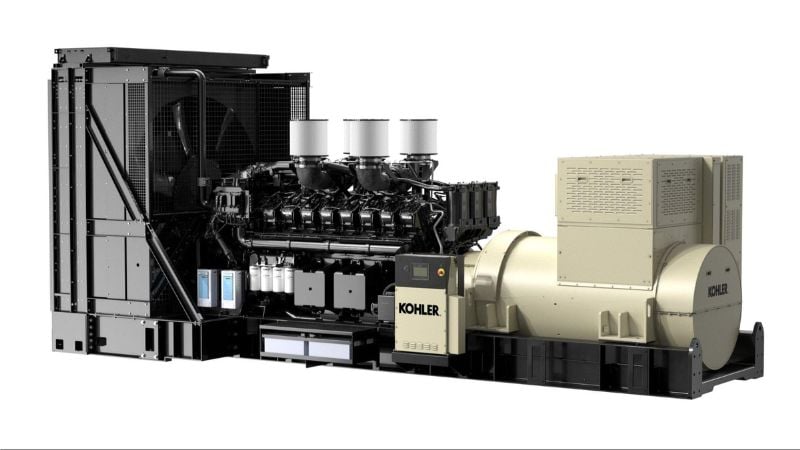
Kohler KD Series Diesel Generator
While hydrogen solutions for backup power may be the destination, there are several paths to get there and hurdles on the way. There’s also the question of what to do with diesel-centered backup power solutions while we get there.
Gaining Ground With Hydrogen Innovations
As a fuel source, hydrogen is promising. After all, it’s clean and abundant and carries a lot of energy. It’s time as a transformational power source, though, is still being developed. By all accounts, production and application processes are still in their infancy. Diesel generators represent the measuring stick, as they are the proven choice for several different reasons:
- Compact design
- Easy load steps
- Long run times
- On-site fuel storage
- Quick start time
These five elements must be considered when assessing hydrogen-based backup power technology. In this context, let’s examine the difficulties facing hydrogen as a viable backup power option and how these obstacles can be most effectively overcome in the coming years.
Pure hydrogen doesn’t naturally exist and must be extracted from a variety of compounds and elements (everything from methane to coal to natural gas and even wood). The bad news: Of the many ways of extracting hydrogen, all are difficult and expensive. What’s worse, from a sustainability perspective, the most challenging news is that the best available production processes for extracting hydrogen are primarily dependent on fossil fuels.
Hydrogen profiles are named after colors that represent the different methods involved in extracting the fuel (and can be ranked by their relative carbon footprint) to distinguish the methods. To be a truly low-carbon option, backup power solutions should focus on hydrogen from water through electrolysis using a renewable source such as wind. This approach, called green hydrogen, represents the lowest carbon option. So, to truly minimize their carbon footprint, backup power researchers and designers don’t just need to make advancements toward efficiency (and cost-effectiveness) by which hydrogen can be produced and distributed, but they must also do so by specifically focussing on green hydrogen extraction methods—representing a minimal greenhouse gas (GHG) footprint for both the inputs and the outputs of hydrogen fuel use.
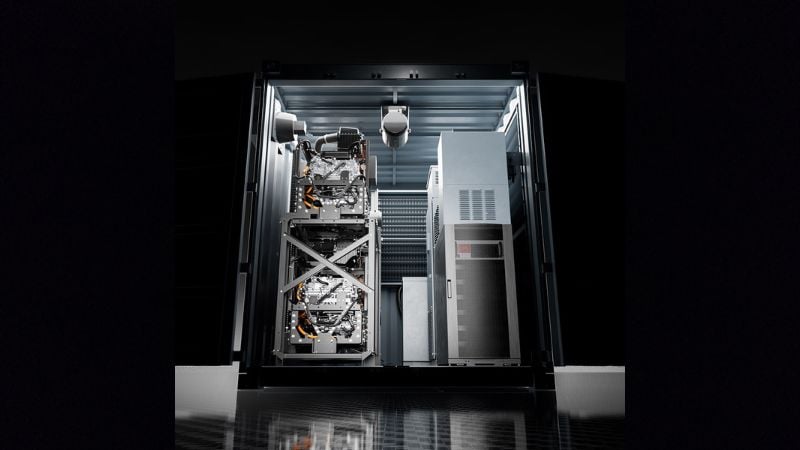
Kohler Fuel Cell
Once a low-carbon hydrogen fuel source has been implemented, the next hurdle for hydrogen adoption is determining what technology will convert the fuel into electricity. Currently, the most common answer is a combustion engine, with solutions already available and becoming more common every year. The reason: Combustion engines are a commonly understood, proven technology, so introducing a new, better fuel source presents itself as a logical next step with minimal risk. There are, however, trade-offs with hydrogen fuel engine design, such as delayed start times and lower load acceptance. These are not ideal trade-offs for a resilient backup power solution. As hydrogen engines continue to develop, improvements toward an effective technology may present themselves, but for now, it’s worth considering an emerging option.
Fuel Cells: Solid Polymer Electrolyte Membrane vs. Solid Oxide
The alternative is a fuel cell (FC), which generates electricity through an electrochemical reaction instead of combustion. From a sustainability standpoint, fuel cells are attractive since they eliminate gaseous emissions, producing only heat and water as byproducts. There are two main fuel cells: Solid Polymer Electrolyte Membrane (PEM) and Solid Oxide (SO). There are some distinct differences in how these two fuel cell technologies perform, which will determine the best application fit.
To help draw the comparison to generators, we can look at PEMFCs and SOFCs in the context of standby generators versus continuous generators. A standby generator features a faster start time and can accept larger changes in load, making it ideal for an emergency standby application. By contrast, a continuous generator is optimized for fuel efficiency but has a slow start time and a limitation on the load it can accept in a load step. For this reason, continuous generators are typically found in Combined Heat and Power applications, where they run for more than 8,000 hours each year. In contrast, standby generators run for 10-50 hours per year.
As hydrogen fuel cell comparisons go, the PEMFC performs similarly to a standby diesel generator. It has a much faster start time than the SOFC (a PEM fuel cell’s start time is usually less than one minute, compared to a range of several minutes to several hours for an SOFC). A PEMFC can also respond to load steps quickly, providing a good transient reaction to large changes in load. So, for backup power, PEMFC technology can offer the performance of a standby generator with the added benefit of zero emissions and economic advantage for several hundred to a few thousand hours of operation each year.
The downside of the PEMFC is its size. To obtain the same power output, a PEMFC solution is much larger than a traditional generator. For sites that are already space-constrained, a hydrogen fuel cell can prove challenging as a replacement for a diesel generator. As fuel cell technology continues to develop, it is reasonable to expect that the size will reduce, and this is the direction hydrogen research needs to pursue to serve the backup power market in the greenest possible future.
Key Developments Needed
So, the path ahead is clear. If hydrogen is to serve as a major solution to cleaner backup power, there must be meaningful development in several key areas:
- Production infrastructure for green hydrogen through water electrolysis
- Producing green hydrogen using electricity from renewable resources
- Smaller, more compact Solid Polymer Electrolyte Membrane Fuel Cell technology
Even from the most optimistic viewpoints, these developments remain years away. That leaves the quest for sustainable backup power in a tricky middle ground. On one hand, we must invest time and energy into new advancements to make pioneering approaches more practical and affordable. On the other hand, we must also consider how we can improve currently available strategies to make them more sustainable in the meantime. The industry is currently in a stagnant transition period, and to push it into an actively productive space, it is imperative to focus on improving current methods while simultaneously innovating new solutions. To address this transition period challenge, let’s look at three ways that new approaches to diesel generators for backup power can make a green impact today.
Moving Hydrogen Production Forward
One method of propelling the situation forward is through generator after-treatment systems. In essence, the term after-treatment system refers to equipment that can be applied to a generator’s exhaust system to reduce pollutant emissions. Types of after treatments include diesel particulate filters (DPF), selective catalytic reduction (SCR) units, or diesel oxidation catalysts (DOC), which can be used alone or in combination with each other. This type of technology has increased greatly in efficacy in recent years. Studies show the right after-treatment systems can cut emissions by as much as 94%.
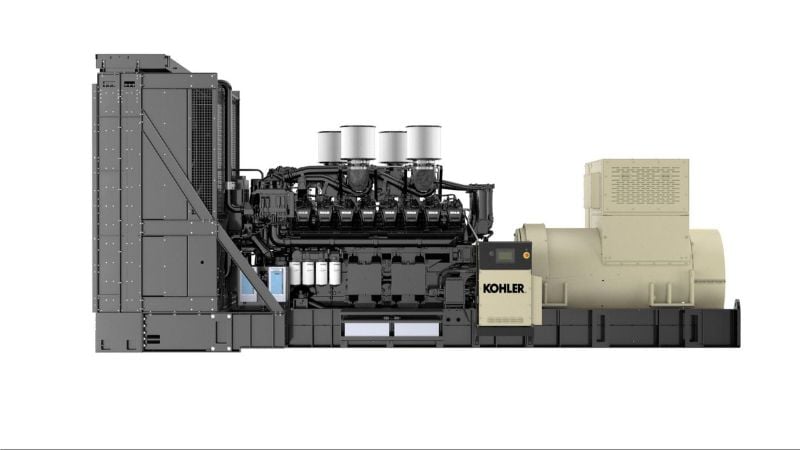
Kohler KD Series Diesel Generator
Another productive approach is cutting fuel use and emissions through more sustainable maintenance programs for backup generators. A typical testing schedule for a backup power application consists of running the generator under at least a 30% load for 30-60 minutes per month. Generator advancements, however, have created a better way. Now, with the right generator tests can be run on no load at all, for a fuel savings of 44% and an emissions reduction of 40%. The option to test as little as once every four months is available, diminishing fuel use by an impressive 71% and emissions by 69%—all with no impact on performance.
While hydrogen as a fuel matures as a source for change, other fuel alternatives are more market-ready. For instance, hydrotreated vegetable oil (HVO) presents a sustainable generator fuel option compatible with many existing generators already employed by facilities like data centers, water treatment plants, and hospitals. HVO, also known as renewable diesel, provides a 90% reduction in carbon emissions when used as a direct substitute for fossil diesel. In most diesel generators, HVO is a one-to-one replacement, requiring no new generator technology.
A Marathon and a Sprint
The transition to sustainable backup power solutions is a multi-faceted journey requiring immediate action and long-term innovation. While hydrogen technology presents a promising future with its potential for clean and abundant energy, the current focus must also include improving existing systems to bridge the gap.
As hydrogen technologies continue to be developed and refined, these interim measures will help ensure backup power solutions are as green and efficient as possible, paving the way for a more sustainable future.
All images used courtesy of Kohler