Facebook
 Google
 GitHub
 Linkedin
7 Edible Solutions to Energy Tech Issues
From coffee to wine, food products became battery materials, catalysts, and other tech components this year.
As scientists develop better-performing and sustainable power technologies, no raw materials are off the table. This year, that included food.
Food products are abundant and natural, and they often provide the chemical properties that researchers are seeking. Here’s a look back at the edible substances researchers used in batteries and other tech.
Booze for Batteries?
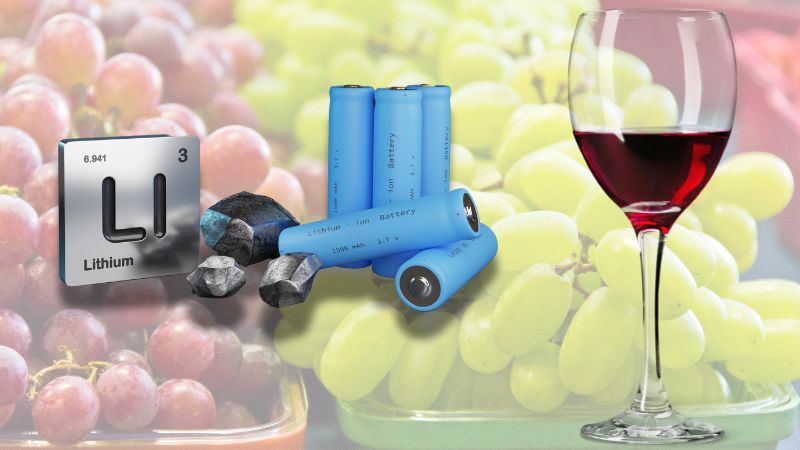
Are wine and fruit the sources for the next battery material? Adapted from images used courtesy of Canva
Australian researchers used acids from wine and grape extracts to construct electrodes in a prototype for a pouch cell battery. The battery could store more energy than a similar cell using graphite electrodes. The prototype was small, but scientists hope to scale it up for use in electric vehicles. Check it out: Boozey Battery: Can Wine Solve the Graphite Problem?
Smell the Coffee, Feel the Buzz

Sodium-ion batteries made with coffee grounds improved energy storage. Image used courtesy of Adobe Stock and Pexels
Research requires long hours in the lab, and some scientists are trying the nearest substance at hand—coffee. In one study, scientists researching sodium-ion batteries used coffee grounds and a doping agent to apply to hard carbon anodes. After fine-tuning, the battery showed improved storage capacity. Here’s the full story: Are Coffee Grounds the Answer to Lithium Constraints?

Can discarded soda cans, caffeine, and seawater make hydrogen? Image adapted from images used courtesy of Canva and Unsplash
Producing hydrogen often uses fossil fuels, negating the environmental advantages. At MIT, researchers sought a more sustainable method. They discovered a way to reduce carbon emissions using aluminum from recycled cans and seawater. Their secret ingredient was caffeine found in coffee grounds, which accelerated the reaction. In case you missed it: Hydrogen Buzz: Soda Cans, Saltwater, and Coffee
A Clucking Good Idea
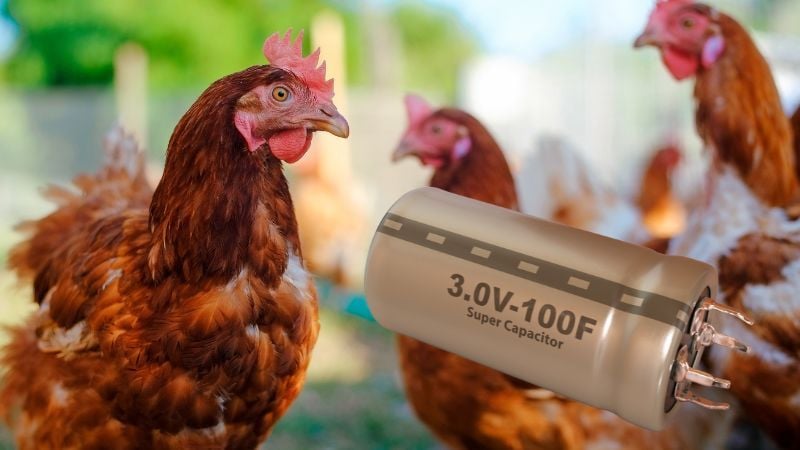
Will chicken fat make a better supercapacitor? Image adapted from Canva and Adobe Stock
Engineers this year turned to chicken coops for materials to replace rare metals in electronics.
Chicken fat was the solution for researchers searching for a carbon-based electrode. After rendering the fat into oil, they created carbon-based nanostructures that enhance energy density in supercapacitors. Learn more about their process: From Cobalts to Schmaltz: Chicken Fat for Supercapacitor Electrodes

Typical lithium-ion battery used in electric vehicles. Image used courtesy of the Renault Group
Another research team used chicken eggshells to replace graphite in lithium-ion battery electrodes. They created calcium carbonate by treating and baking the eggshells. The resulting material was more conductive than graphite. Read more: Can Chicken Eggshells Replace Graphite in Li-Ion Battery Electrodes?
A Salty (If Not Crunchy) Solution
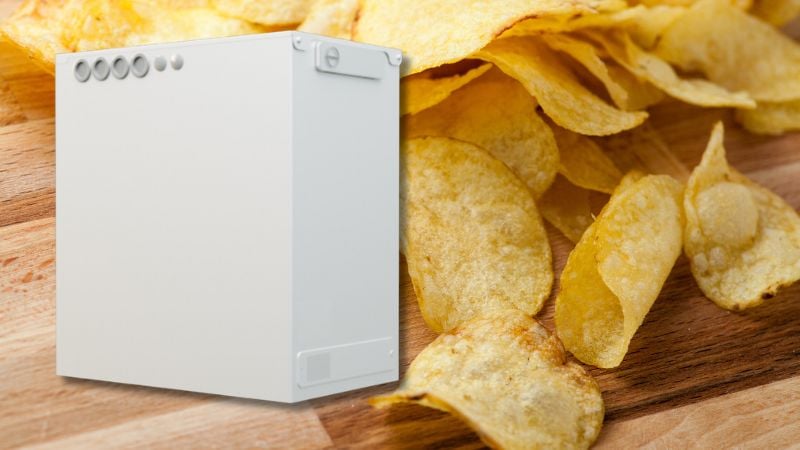
How can an ingredient of potato chips improve battery storage? Adapted from images used courtesy of Canva and Sunamp
While most energy storage systems use lithium-ion batteries, many companies are developing alternative systems. Sunamp took its inspiration from salt-and-vinegar potato chips. The company developed a thermal battery using the chemical that brings the heat to chips and hand warmers. Find out how it improves battery storage: Thermal Batteries Take the Heat from Salt and Vinegar Chips
Fusion With a Dab of Mayo
Could mayonnaise assist with the nuclear fusion process? Adapted from images used courtesy of Wikimedia Commons and Adobe Stock
Testing nuclear fusion takes time and resources, but models and simulations can provide valuable information without risking investments. Scientists at Lehigh University discovered that mayonnaise was the perfect ingredient for their machine for testing internal confinement fusion. The condiment strikes a balance between liquid and solid, which the researchers needed when simulating plasma conditions. Learn more here: (Cold Cut) Fusion with Mayor? Condiment Creates Nuclear Stability
Windy Gummies

Gummy bears made from wind turbines? Image used courtesy of Pixabay
Gummy bears may be an unusual solution for closing the recycling loop, but it’s possible. In researching products that could be made from recycled turbine blades, scientists at Michigan State University recovered food-grade potassium lactate and used it to make gummy bears. You can read more here: Scientists Create Gummy Bears From Wind Turbines
Food for Energy
As 2024 winds up, more edible research is likely on the horizon as scientists reach for renewable, cost-effective solutions to improve energy efficiency.