Facebook
 Google
 GitHub
 Linkedin
Battery Tech Leads the Charge for EV Improvements
Advancements aim to improve electric vehicle battery technology, electrical architecture, and software.
As governments and consumers increasingly prioritize energy-efficient transportation, electric vehicle automakers face the challenge of scaling production while meeting performance, cost, and safety demands.
Honda, Rivian, Stellantis, Volkswagen, GM, and LG Energy Solution are meeting these challenges with rapid innovation in EV batteries, production facilities, and strategic partnerships.
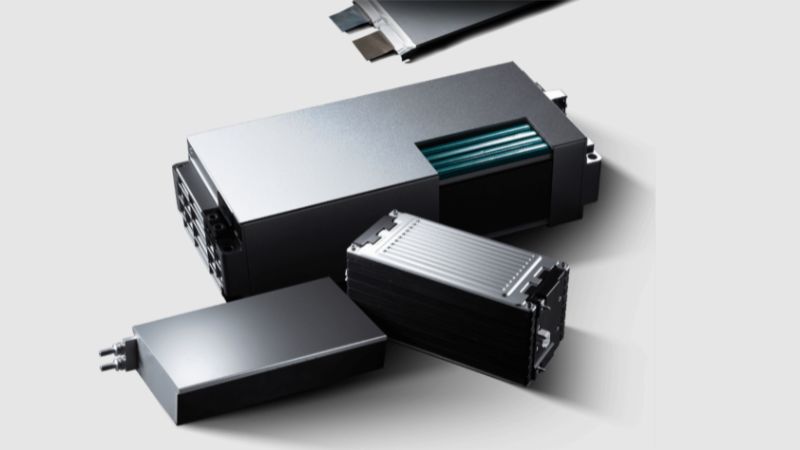
Electric vehicle batteries. Image used courtesy of LG Energy Solution
Honda’s All-Solid-State Batteries
Although popular in EVs, liquid lithium-ion batteries are prone to safety hazards such as thermal runaway and combustion. To overcome this, all-solid-state batteries are becoming the new normal in EVs.
Honda has unveiled a demonstration production line for all-solid-state batteries in Sakura City, Tochigi Prefecture, Japan. Honda claims its all-solid-state batteries feature high energy density, excellent heat resistance, and enhanced safety due to the absence of liquid electrolytes. The manufacturing process involves a demonstration line covering approximately 27,400 m², employing advanced roll-pressing techniques to increase the density of solid electrolyte layers and improve interfacial contact between electrodes and electrolytes.
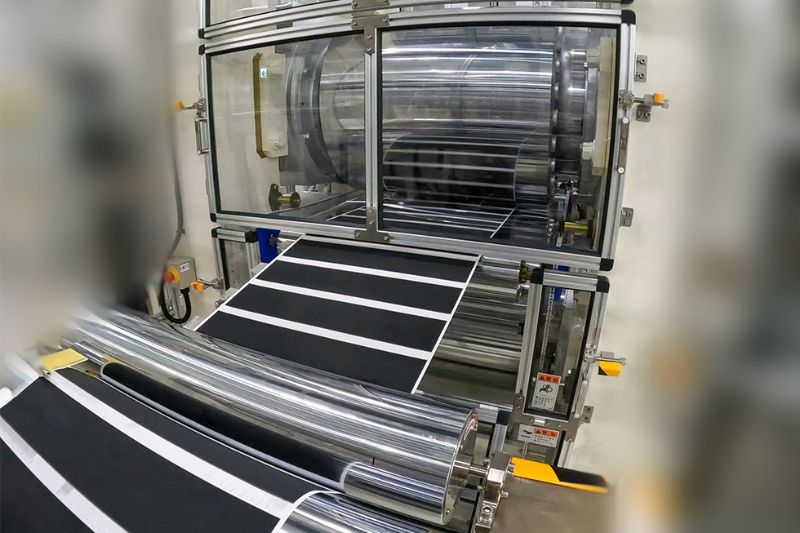
Honda’s roll-pressing process. Image used courtesy of Honda
This process enhances productivity by allowing continuous pressing, reducing production time per cell. Assembly steps, including electrode bonding and cell formation, are consolidated to streamline production and lower costs. The line also integrates energy-efficient control technologies to minimize environmental requirements, such as maintaining low dew points.
Honda plans to finalize battery cell specifications during technical validation of its mass production prototype, targeting implementation in new EVs by late 2020s.
EV Battery Plant by Stellantis and Samsung
To address the growing need for EV infrastructure and reduce reliance on foreign battery sources, Stellantis, in partnership with Samsung SDI, is constructing two EV battery plants in Kokomo, Indiana.
These facilities, supported by a $7.54 billion U.S. government loan, will collectively produce battery cells and modules that can power 670,000 vehicles annually. The project will span a significant architectural scale, creating 2,800 jobs and bolstering North America’s EV manufacturing capacity.
These efforts are a part of Stellantis’ Dare Forward plan, which aims to achieve a 100% battery electric vehicle sales mix for passenger cars in Europe and 50% for passenger cars and light-duty trucks in the U.S. by 2030. The company is securing around 400 GWh of battery capacity to support these ambitious targets.
Rivian Volkswagen Partnership
Rivian and Volkswagen have entered a $5.8 billion joint venture to develop next-generation software-defined vehicles (SDV) and advanced electrical architectures. The project will use Rivian's existing zonal electrical and software technology stack to support Rivian’s R2 platform launch by 2026 and Volkswagen’s SDV models as early as 2027.
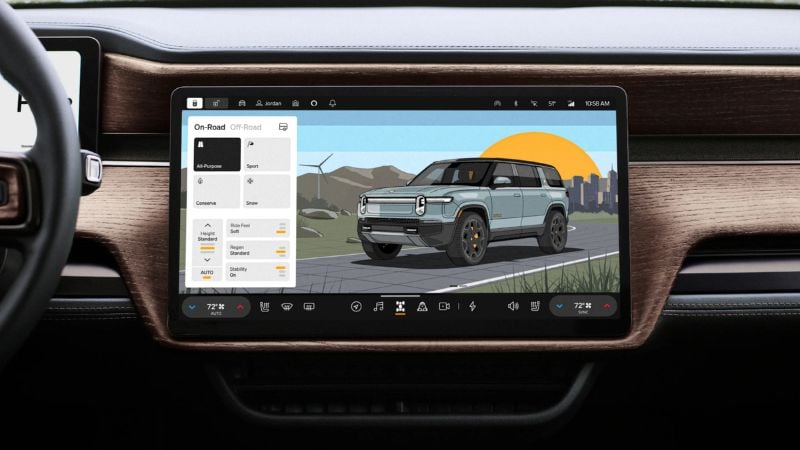
SDV concept. Image used courtesy of Rivian
The venture leverages Rivian’s electrical and software systems expertise alongside Volkswagen’s large-scale vehicle platform capabilities to reduce development costs and accelerate market readiness. Initial outcomes include a drivable demonstrator vehicle retrofitted with Rivian’s hardware within 12 weeks.
Volkswagen has committed an initial $1 billion in convertible notes and an additional $1.3 billion for intellectual property licensing and equity. Future investments of up to $3.5 billion will depend on achieving technical and operational milestones.
General Motors Partners With LG Energy Solution
General Motors will sell its stake in a nearly completed EV battery factory to LG Energy Solution. The 2.8 million-square-foot facility, which has received approximately $1 billion in GM investment, is designed to employ 1,700 workers upon full operation.
The companies are also extending their battery partnership to develop prismatic cells. Prismatic cells, characterized by their flat, rectangular design and rigid enclosure, provide space-efficient packaging within battery modules, reducing EV weight and cost while simplifying manufacturing processes. These cells are expected to complement GM's existing pouch cell production at its Ultium Cells plants in Warren, Ohio, and Spring Hill, Tennessee.
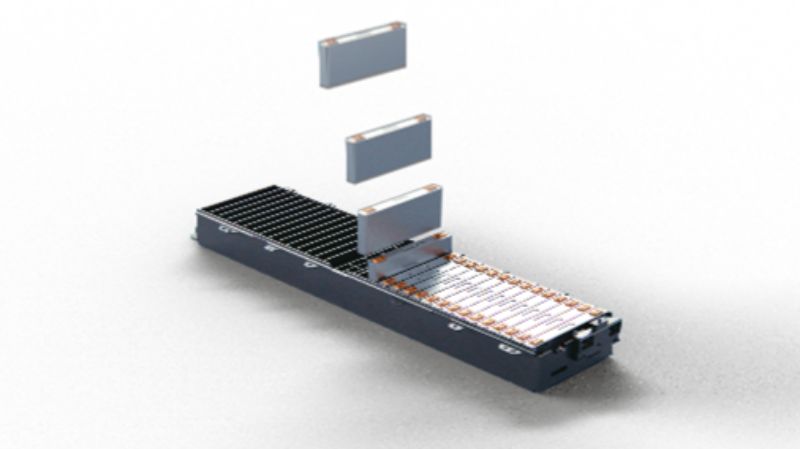
Prismatic battery cells. Image used courtesy of GM
The prismatic cells will power GM’s EV lineup, including the Chevrolet Silverado EV, Cadillac LYRIQ, and GMC Hummer EV.
Future Implications
The shifting dynamics within the EV industry highlight the necessity of collaborative ventures and adaptable strategies to meet market challenges. As automakers refine manufacturing techniques and battery innovations, these efforts will likely influence global supply chains and accelerate the transition to sustainable transportation. The interplay between advanced materials, modular designs, and cost-effective production promises broader EV adoption and sets the stage for further disruptive advancements in mobility solutions.