Facebook
 Google
 GitHub
 Linkedin
Danfoss, Emerson, Phoenix Contact and More Unite for Clean Energy
A six-company alliance combines expertise to scale up U.K. renewable energy development.
The Clean Energy Systems Partner Alliance (CESPA) has launched to strengthen the U.K.’s clean energy manufacturing landscape. The initiative brings together six industry players—Phoenix Contact, Emerson, Danfoss, Glacier Energy, VoltServe, and PP Control & Automation—to provide a single-source solution for renewable energy developers.
CESPA member Danfoss explains smart grid energy storage. Video used courtesy of Danfoss Drives
CESPA aims to accelerate domestic wind, solar, hydrogen, and battery storage manufacturing throughout the U.K. Members bring experience in electrical and civil engineering, system design, automation, connection technology, and power electronics.
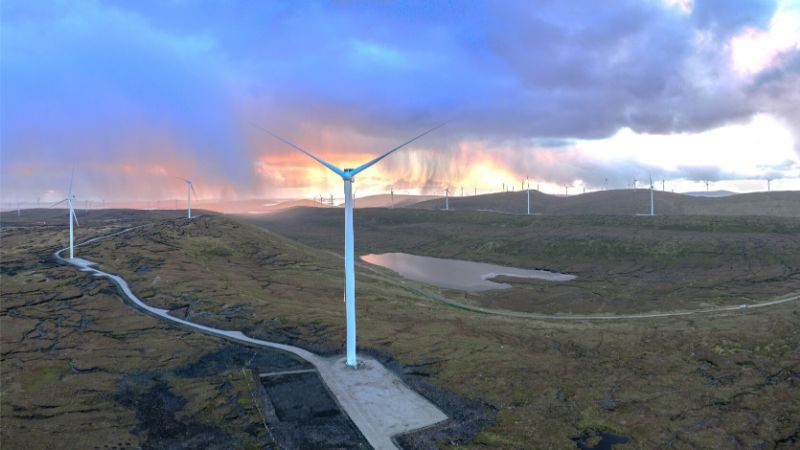
The 443 MW Viking Wind Farm in the Shetland Islands was one of the largest wind projects to come online last year in the U.K. Image used courtesy of Viking Energy
U.K. Clean Energy Development
CESPA cited the U.K. clean energy market’s £23 billion value (about $28.5 billion U.S.), which is expected to double in the next nine years.
Renewables like wind, solar, and hydropower generated 37% of the nation’s electricity last year, surpassing fossil fuels for the first time. According to Ember data, wind produced the largest share among low-carbon resources (29%), with newly installed onshore wind capacity driving recent growth. The U.K.’s onshore wind project pipeline continues to expand with a 4.2 GW year-over-year increase (as of September 2024), according to RenewableUK’s latest EnergyPulse report.
CESPA’s goal is to ensure U.K. companies capture a significant share of the market’s growth, starting with key introductions/ The organization will connect equipment manufacturers, connection providers, and other specialists with companies developing energy storage, wind, solar, hydrogen, and grid modernization projects.
From Control Automation to Hydrogen Vessels to Grid Connection
Each CESPA member will contribute specific expertise from their respective domain. Denmark-based Danfoss, for example, focuses on renewable power conversion with solar inverters, wind converters, and high-capacity battery energy storage systems, among other products.
The organization also includes engineering service providers like PP Control & Automation, which offers control systems, electrical and mechanical assemblies, components integration, and cabling and interconnectivity solutions. VoltServe will also lend its expertise in high-voltage design, integration, and grid connection for networks up to 132 kV.
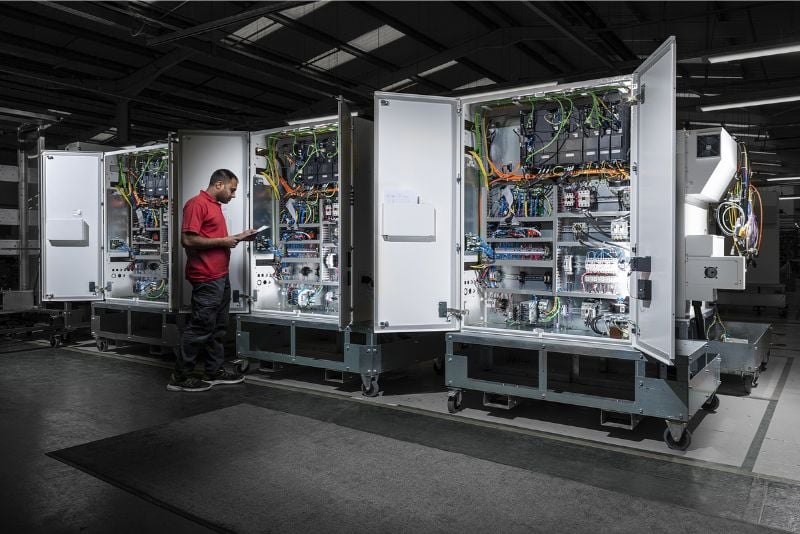
PP Control & Automation, a U.K. company providing electrical assembly and integration solutions, is one of six partners establishing CESPA. Image used courtesy of PP Control & Automation
Emerson will contribute its experience in control systems, automation, and performance optimization software, particularly in hydrogen, wind, solar, standalone energy storage, and hybrid technologies. The U.S.-based company is a leader in wind automation products, designing controls for more than 350 turbine models and supplying communication drivers for another 750. Emerson’s energy management software also optimizes hydrogen electrolyzer operations and battery storage systems.
Glacier Energy specializes in hydrogen, energy storage, wind, and carbon capture, utilization, and storage (CCUS). The Scotland-based company manufactures pressure vessels and heat exchangers for hydrogen storage and CCUS applications, offering additional services for wind turbine inspections and non-destructive testing. Glacier has previously worked on several renewable energy projects, from developing a hydrogen cooler for a containerized electrolyzer kit to supplying heat exchangers for Cheesecake Energy’s compressed air and thermal storage system.
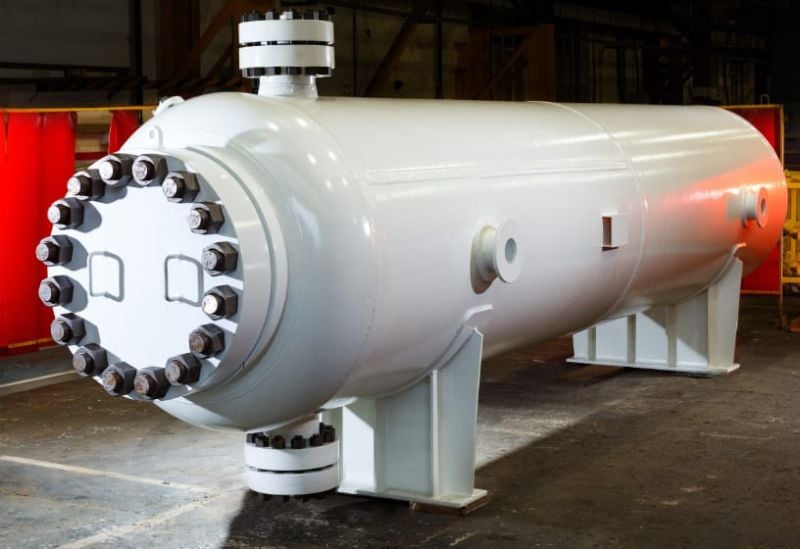
Glacier Energy’s hydrogen pressure vessel. Image used courtesy of Glacier Energy
German equipment manufacturer Phoenix Contact develops current and voltage measuring devices for energy management, surge protection, and uninterruptible power supplies for transmission and distribution equipment, DC power integration services, wind farm connectors, solar inverters and DC/DC converters, and various battery storage components like terminal blocks and electrical housing. The company has also expanded into the power-to-X space with solutions for hydrogen service stations, electrolyzers, fuel cells, and CCUS monitoring.
CESPA is exploring opportunities to expand its network, including partnerships with training providers for clean energy skills development.