Facebook
 Google
 GitHub
 Linkedin
Costco Builds Off-Grid Microgrid for Warehouse Operations
Costco’s latest move represents a growing trend of commercial and industrial microgrid development.
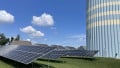
Costco Wholesale is installing an off-grid microgrid to power a tire center at its warehouse in Norwalk, Connecticut. The modular battery and solar system, engineered and installed by Washington-based Trinity Energy, is designed to deliver up to 2 MWh per day without being tied to the grid.
By choosing an off-grid design, Costco avoids interconnection delays and upgrade costs that often stall commercial electrification projects, while gaining a reliable on-site power supply.
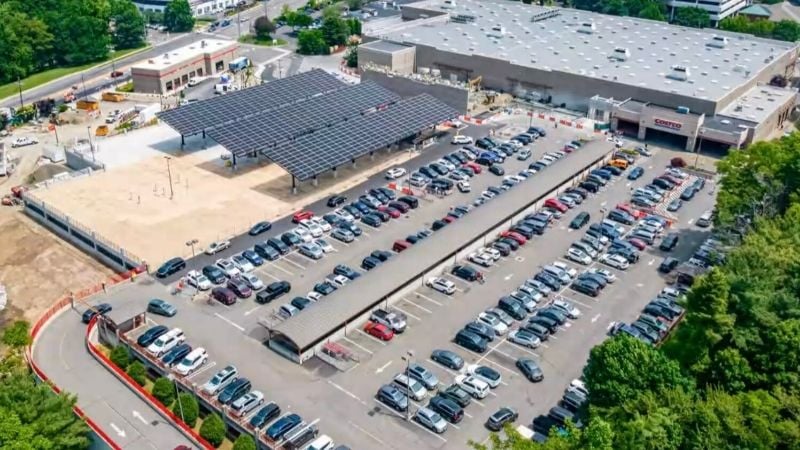
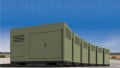
Costco's Norwalk, Connecticut warehouse. Image used courtesy of Trinity Energy
Costco’s Microgrid and Sustainability
Trinity Energy's microgrid systems are flexible due to their modular architecture and scalable as off-grid infrastructure for sites like fleet depots, multi-family properties, and hospitality buildings. The company's installations often integrate solar generation, battery storage, energy distribution systems, and inverters.
Trinity's target market shares similar energy challenges. Fuel stations, fleet depots, and stand-alone warehouses face rising electric loads, tight sites, and uncertain interconnections. For commercial users like Costco, microgrids can serve as energy assets for their operations, with a relatively small footprint compared to large solar farms.
Costco’s microgrid in Connecticut is part of its larger sustainability efforts. The retail giant already has more than 123 on-site solar systems worldwide, and it installed its first off-grid solar and battery system last year. The company states it is exploring microgrids for fuel station operations where possible.
Costco deployed its first U.S. fleet of off-grid infrastructure at a distribution center in California last year, as part of its plan to convert depot yard trucks from diesel to alternative fuel models by 2035, while also expanding its on-site solar operations.
Commercial and Industrial Microgrids on the Rise
Costco’s microgrid installation comes as commercial and industrial facilities require on-site power for high-demand, time-sensitive uses. Nowhere is that trend more visible than in the data center sector, where AI compute growth is outpacing what utilities can connect. Several recent projects reinforce this demand.
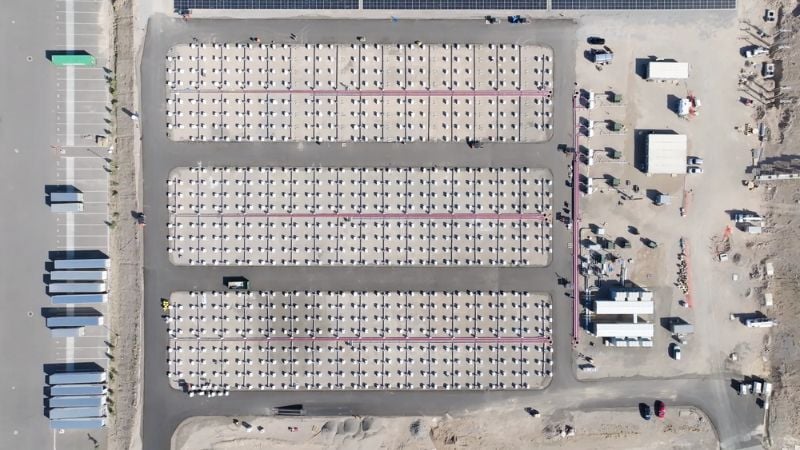
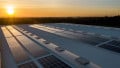
Battery units at Redwood Materials' Nevada campus. Image used courtesy of Redwood Materials
Redwood Materials and Crusoe recently unveiled a 12-MW/63-MWh off-grid microgrid at Redwood’s Nevada campus that powers Crusoe’s modular "Crusoe Spark" AI data center units. The companies describe it as the largest microgrid in North America and the largest second-life battery system in the world, pairing on-site solar with storage built from repurposed EV battery packs to deliver a quickly deployable power supply for data centers.
This is a key need for Crusoe since it's involved with building the infrastructure and energy solutions for a 1.2 GW data center hub in Abilene, Texas, in the Stargate project for OpenAI. Additionally, Crusoe's existing pipeline includes another 10 GW of projects in development.
Gas-fueled microgrids are also attracting data center customers. Vantage Data Centers partnered with VoltaGrid to deploy over 1 GW of on-site, natural gas-fueled microgrid capacity across Vantage's data centers in North America. VoltaGrid's platform can be installed in months and operate with 100% hydrogen- or renewable natural gas-based fuel sources.

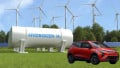
HNO International's HyGrid hydrogen microgrid solution. Image used courtesy of HNO International
Hydrogen microgrids are also joining the mix. HNO International plans to deploy its first two “HyGrid” projects near Houston this fall, each designed to provide 4 MW of continuous off-grid power on under 0.2 acres—significantly less than land-intensive solar farms at the same output. HyGrid's system combines solar units with an electrolyzer (PEM or solid oxide), hydrogen storage tanks (for short- and long-term use), and a fuel-cell stack from 5 kW to over 500 kW. Hybrid battery integrations are also offered as add-ons.