Facebook
 Google
 GitHub
 Linkedin
Briefs: Companies Ramp Up Transformers, Semiconductors, and Lithium
Infineon, Eaton, Navitas, Nexperia, Tata Electronics, Siemens, and Rock Tech Lithium are advancing essentials in power technology.
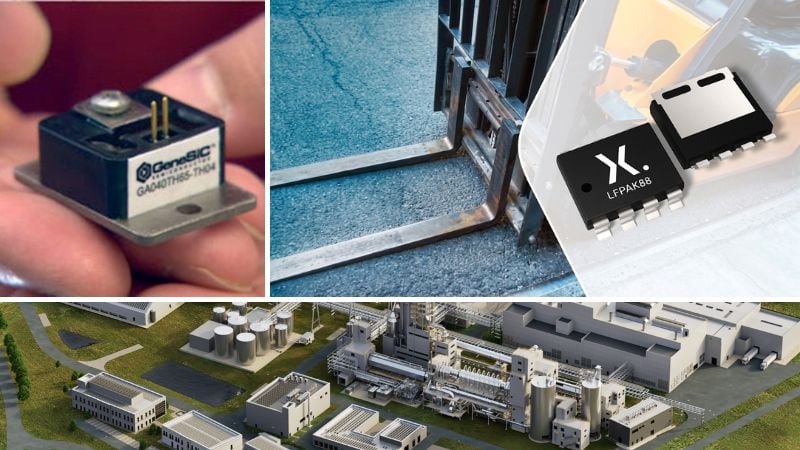
Power electronics relies on continual innovation and upgrades of materials and components. Infineon Technologies and Eaton have partnered to develop silicon carbide transformers for 800 VDC AI data centers. Navitas is also working with SiC, as it establishes a supply of power semiconductors for the U.S. Army. Meanwhile, Nexperia and Tata are teaming up to manufacture semiconductors for automotive and industrial use.
Finally, Siemens Canada will develop a physics-based digital twin for Rock Tech Lithium’s Red Rock lithium converter, planned for Ontario.
![]() Transformers, semiconductors, and lithium
Transformers, semiconductors, and lithium
Infineon and Eaton Team Up To Advance SiC Tech in Solid-State Transformers
Infineon Technologies and Eaton have partnered to advance solid-state transformer technology using silicon carbide power devices in 800 VDC power architectures in AI data centers.
The collaboration aims to improve energy-conversion efficiency, increase power density, and boost system reliability for solid-state transformer platforms connecting power grids to artificial intelligence infrastructure. Integrating SiC components can improve high-voltage conversion performance while lowering energy losses across data facility infrastructure.
Higher power density allows facility operators to minimize physical footprint requirements while handling substantial compute loads. Enhanced operational reliability reduces the risk of unexpected downtime during peak processing operations.
Eaton and Infineon will also evaluate future platform concepts utilizing 2.3 kV and 3.3 kV SiC power modules. Higher voltage ratings aim to support modern grid applications, elevated operational reliability, and renewable power integration.
Navitas To Provide SiC Power Semiconductors for U.S. Army
Navitas has received a U.S. Army Research Laboratory grant to develop next-generation 10 kV SiC power components to establish a domestic source of ultra-high-voltage devices that enhance grid stability.
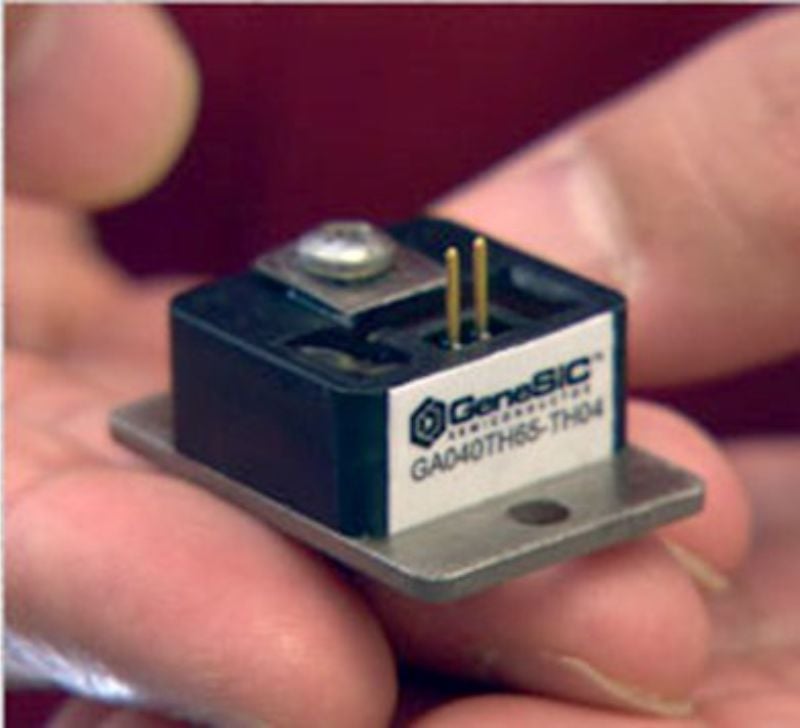
Navitas previously collaborated with the Army and Sandia National Laboratory on this ultra-high-voltage SiC thyristor. Image used courtesy of Sandia National Laboratories
The program centers on insulated-gate bipolar transistors alongside complementary PiN diode technologies. Project milestones require design, fabrication, and testing validation within a secure onshore manufacturing supply chain. The goal is to increase energy density and improve system performance across military and industrial electrification platforms.
The initiative expands the company's existing GeneSiC portfolio beyond its current 650 V to 6.5 kV operational range. Previous ultra-high-voltage milestones include 6.5 kV thyristors in 2010, 10 to 15 kV PiN diodes in 2012, and commercial 6.5 kV MOSFETs in 2021.
Nexperia and Tata Electronics Partner in Semiconductor Technology and Manufacturing
Nexperia and Tata Electronics have formed a strategic partnership to strengthen supply chains of essential power components in automotive, industrial, and consumer markets. The effort will focus on semiconductor manufacturing, assembly, and packaging.
First, the project will focus on producing Nexperia's power MOSFET portfolio at Tata's 300 mm wafer fabrication plant in Dholera, Gujarat. Back-end operations will handle assembly and testing of discrete devices at a separate Tata packaging facility in Jagiroad, Assam.
Tata Electronics is investing $14 billion to construct both Indian sites. The facilities broaden Nexperia's manufacturing footprint while establishing native chip production capabilities within India.
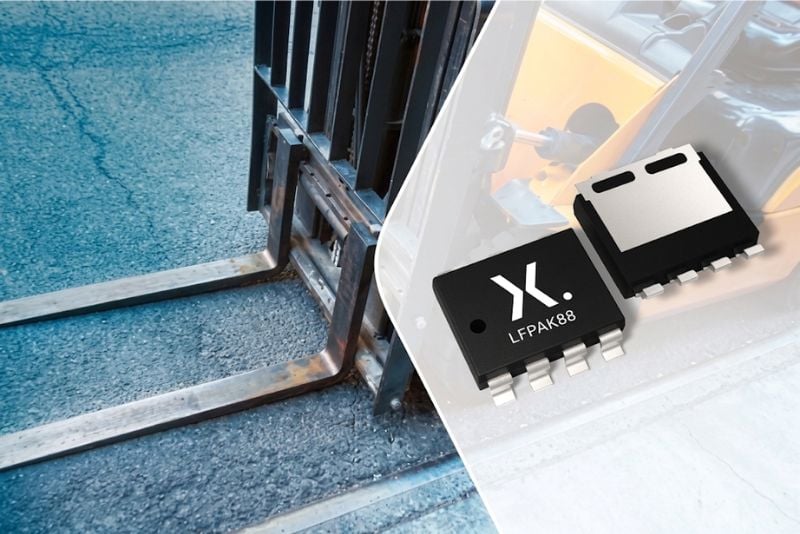
Nexperia MOSFET for industrial use. Image used courtesy of Nexperia
The companies will also collaborate on joint research and technology creation. This long-term cooperative framework expands global chip availability and secures secondary production channels for critical electronics.
Siemens Canada To Develop Digital Twin of Lithium Conversion Plant
Siemens Canada and Rock Tech Lithium will develop a physics-based digital twin for the planned Red Rock lithium converter in Ontario. The virtual process model evaluates energy flows, material streams, and plant efficiency before major capital investments occur.
Siemens Canada will supply technical expertise regarding automation architecture, instrumentation, and process control systems. These engineering services support Rock Tech's ongoing Definitive Feasibility Study, which began in late June and concludes by mid-December.
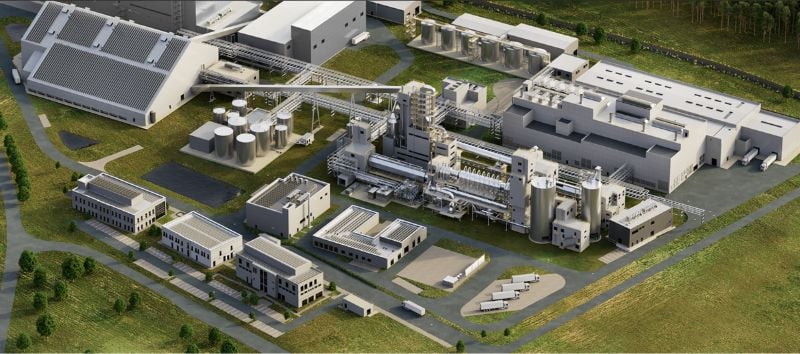
Rock Tech’s existing converter plant in Germany. Image used courtesy of Rock Tech
The Ontario facility is planned to produce 32,000 metric tons per year of lithium carbonate equivalent. This domestic refining platform complements an existing 24,000 metric tons per year lithium hydroxide monohydrate converter under development in Guben, Germany.
Feedstock sources include mineral supplies from the wholly owned Georgia Lake property alongside integrated recycled battery materials. The digital simulation framework helps test process design choices, operational reliability, and facility emissions across the entire project lifecycle.