Facebook
 Google
 GitHub
 Linkedin
Dirty Mines: Transforming Lithium Extraction
Researchers have developed a method to extract lithium using carbon nitride membranes that mimic natural ion channels.
Electric vehicles cut down on fossil fuel use, but manufacturing challenges persist, especially for batteries. Lithium-ion batteries (Li-ions) rely on materials that can be difficult to secure without some negative environmental impact. Cobalt and lithium mining often require large-scale open-pit mining, which can result in significant land degradation. This process can strip vegetation from the land, disrupt ecosystems, and lead to soil erosion. Mining can also cause water shortages in regions prone to drought, and the waste materials created through mining can be toxic and harm both soil and groundwater.
How is lithium extracted? Here’s one method. Video used courtesy of ExxonMobil
Engineers are improving battery performance and the technology needed to extract, harvest, and collect battery materials. Lithium extraction is fraught with challenges, but a new method using a carbon nitride membrane can more efficiently separate lithium ions from magnesium ions, thus increasing the extraction process’ sustainability, which is crucial because of increased EV demand.
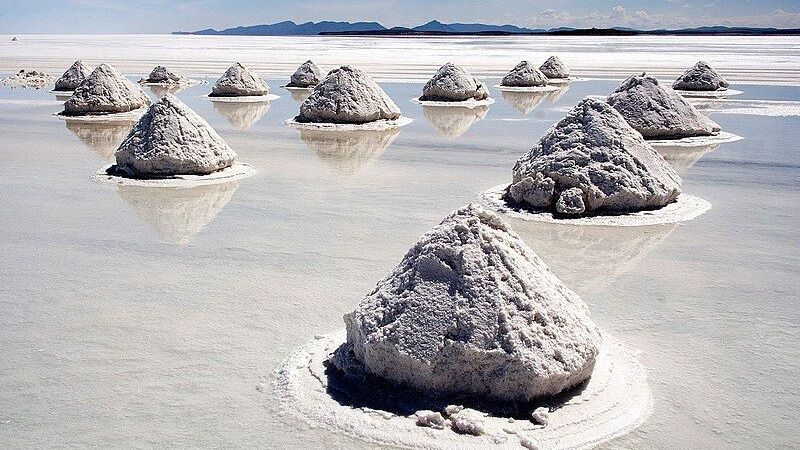
Salt mounds at a lithium extraction site. Image used courtesy of Wikimedia Commons
Skyrocketing Lithium Demand and Harvesting Challenges
As the EV market explodes worldwide, so does the demand for lithium. Lithium might be Earth's 25th most abundant element, but securing it is complicated—accessibility is not always guaranteed by sheer abundance. Approximately 88 million tons of lithium exist, but only 25% is viable for mining. Mines are logistically complex and can take years to set up, adding another obstacle to securing this battery material.
Lithium extraction is also difficult, and the source material’s chemical composition can affect the extraction process’s efficiency. Complex ores containing other metals or impurities require more advanced and costly chemical processes to separate lithium. For example, extracting lithium from spodumene involves roasting the ore at high temperatures and subsequent leaching, which is both energy—and capital-intensive. Achieving high purity levels suitable for battery production often requires multiple processing stages, each with potential yield losses.
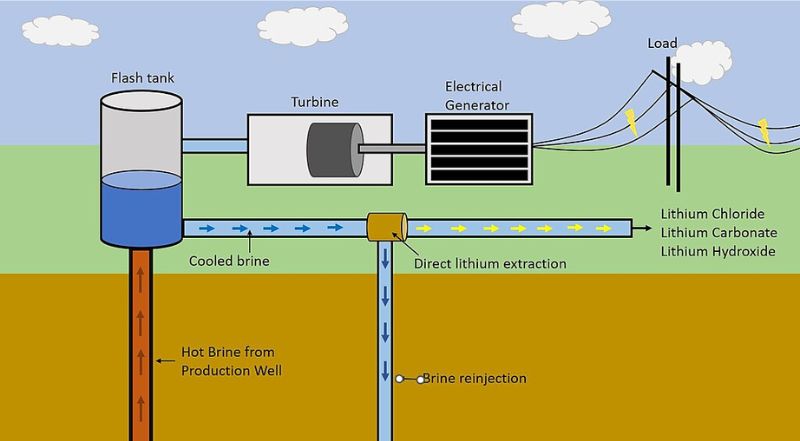
Lithium extraction from geothermal brine. Image used courtesy of Wikimedia Commons
The energy consumption of lithium extraction processes is also a major hurdle. Hard rock mining involves significant energy for crushing, heating, and chemical treatment. Such energy consumption demands more efficient and innovative processes that can circumvent the inefficiency that drives up costs and harms the environment.
Transforming lithium from a raw material into the form used in batteries can ultimately create significant greenhouse gas emissions, reduce water supply, and create toxic waste. Every ton of lithium mined adds 15 tons of carbon dioxide to the air. However, new extraction methods can boost performance and reduce negative environmental impact.
Crystalline Membrane Design Mimics Natural Systems
One widely used method of lithium extraction is brine extraction, which involves pumping lithium-rich brine from underground reservoirs to the surface. The brine is then left to evaporate in large ponds, allowing lithium carbonate to crystallize.
The research team at Qingdao Institute of Bioenergy and Bioprocess Technology has pioneered a membrane that can dramatically outperform traditional membranes in efficiency and sustainability.
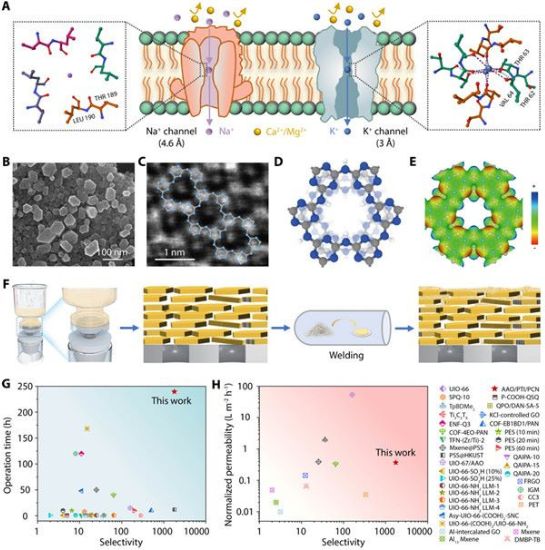
Crystalline carbon nitride membrane diagram and data. Image used courtesy of Qingdao Institute
This crystalline carbon nitride membrane takes its cues from nature, which has evolved ion channels to separate different ions efficiently. The membrane can reach a selectivity ratio of 1,708 to extract highly dilute lithium ions (0.002 M) from concentrated magnesium ions (1.0 M). Because natural lithium sources often contain significant amounts of magnesium, this membrane’s ability to efficiently discriminate between the two will help improve the lithium extraction process efficiency and mitigate adverse environmental effects.
The membrane’s advantage is its structure, which creates pore uniformity and a sufficiently narrow pore size. This helps separate the magnesium from the larger magnesium ions from the lithium.
Every innovation matters when it comes to the renewable energy transition. Improvements in materials, design, and material extraction all provide critical advancements that make technology sustainable for the long term rather than merely exciting for the short-term novelty of the innovation.