Facebook
 Google
 GitHub
 Linkedin
A Three-Phase GaN QFN Module for High Power-Density Motor Drives
The EPC91132 evaluation board is a 3-phase BLDC motor drive inverter board featuring the EPC33110 module, which integrates three monolithic gallium nitride (GaN) half-bridges.
Article co-authored by EPC's Simone Scano.
This article is published by EEPower as part of an exclusive digital content partnership with Bodo’s Power Systems.
Gallium nitride (GaN) power devices are enabling a new generation of high-efficiency, high-power-density motor drive systems, allowing motor drive inverters to operate at higher switching frequencies. As a result, motor inverters based on GaN technology can achieve switching frequencies well above 100 kHz while reducing both conduction and switching losses.
These characteristics enable smaller passive components, improved efficiency, and more compact system designs. These characteristics are particularly important when dealing with miniature motors, such as those mounted in small and medium-sized drones and in the arms of a humanoid robot. These motors have very low inductance (tens of μH) and resistance (hundreds of mΩ), and the higher switching frequency of GaN devices enables higher-bandwidth motor control and better dynamic performance and efficiency.
With the increasing demand for miniaturization, the monolithic integration of the inverter’s essential function within a GaN integrated circuit has become a stringent requirement. While the integration poses a significant challenge for semiconductor manufacturers, it allows designers to simplify their layouts and their application boards.

Image used courtesy of Pixabay
EPC91132 Description
The EPC91132 reference design board is a complete platform tailored for humanoid robot joints and small drone applications. The board can operate with a wide DC input voltage range of 10 V to 60 V, accommodating various power sources typical in robotics and drones.
EPC91132, shown in Figure 1a, is equipped with all the features and functions of a complete motor drive inverter, including a microcontroller, regulated off-line power supplies, DC voltage sensing, on-board magnetic encoder for rotor shaft position and speed control, and current sensor ICs with embedded overcurrent fault signal triggered at 30 A.
The inverter is controlled by the on-board microcontroller, which can be programmed via a dedicated connector and operated in real time via an RS-485 port.
The EPC91132 outline has been designed with the breakout board concept to fit two different motors. With the external PCB ring, the EPC91132 can be mounted in a Lingkong MG8008E-i9 motor for a humanoid joint motor, as can be depicted in Figure 2a [2]; removing the external PCB ring, the entire inverter fits on a small board with a 23 mm diameter and can be mounted in the drone motors made by Vertiq 23-06 220KV and 23-06 2200KV (Figure 2b) [3].
EPC33110 Three-Phase GaN Module Description
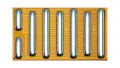
The pulsating heart of the EPC91132 is the EPC33110 module from Efficient Power Conversion. The EPC33110 is a three-phase module in gallium nitride (GaN) technology and represents the latest innovative solution in power electronics for motor drive applications (Figure 1b). GaN monolithic integrated circuit technology enables the EPC33110 to deliver exceptional performance in a compact form factor.
Efficient Power Conversion GaN IC technology enables the integration of logic functions and gate drivers on the same substrate as the power FETs, thanks to the lateral conduction of the power devices, thereby enabling the realization of monolithic power half-bridge chips.
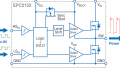
The EPC33110 implements the co-packaging of three halfbridges, keeping the excellent electrical and thermal performance of GaN devices, while optimizing the overall size of the inverter [4]. Each half bridge integrates gate drivers, bootstrap circuits, and level shifters. The EPC33110 simplifies system design by eliminating the need for discrete gate drivers and transistor components.
Embedding the critical power components within a 6x6.5 mm2 module allows designers to use only a minimal set of external components. Co-packaging three integrated half-bridge ICs enhances power density and delivers good thermal performance thanks to the excellent top-side cooling provided by the exposed dies.
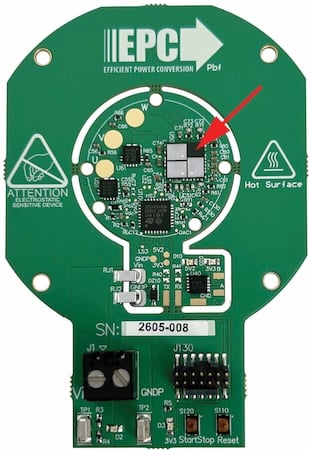
(a)
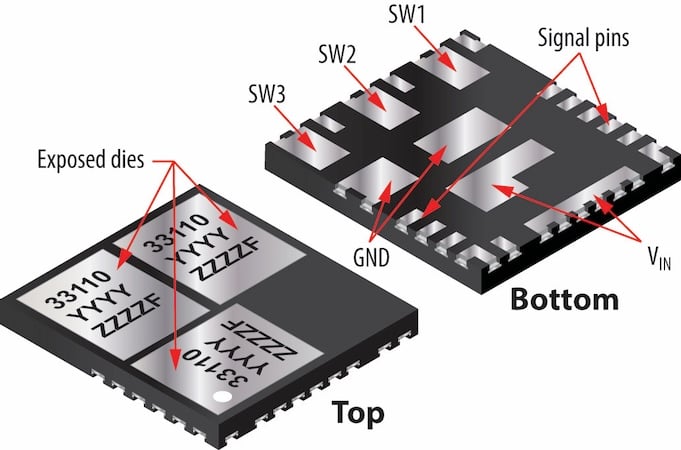
(b)
Figure 1. a) Overview of EPC91132 board – three-phase inverter for drones and humanoid motor joints; b) Top and bottom view of EPC33110 module. Image used courtesy of Bodo’s Power Systems [PDF]
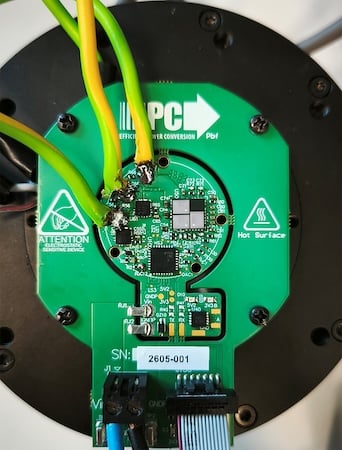
(a)
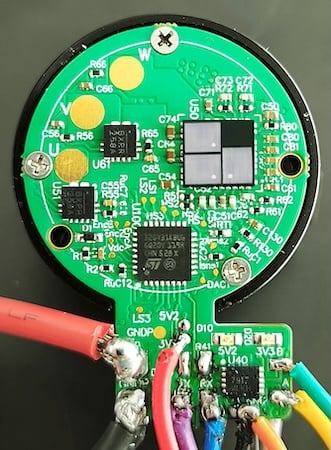
(b)
Figure 2. a) EPC91132 with outer PCB ring mounted in a humanoid joint motor; b) EPC91132 mounted in a drone motor. Image used courtesy of Bodo’s Power Systems [PDF]
EPC33110 Performance in EPC91132 Mounted in a Humanoid Joint Motor
EPC33110 performance was tested in a humanoid joint motor application at 48 V input voltage, with load conditions up to 11 ARMS continuous phase on a dynamometric bench. Operating at 60, 80, and 100 kHz PWM with 20 ns dead time, the board delivered a continuous phase current of 11 ARMS, with a temperature increase of 70°C. The measures were conducted with and without the motor cover case on top of the EPC91132. The motor case served as a heat sink, and there was no forced-air cooling.
Figure 3 shows the increase in the EPC33110 temperature vs. the ambient temperature and the phase rms current, which can be continuously delivered to the motor. Each point on the graph was measured once thermal equilibrium was reached, after approximately 10 minutes. During these measurements, the motor speed was 100 RPM.
For the motor used in the tests, which had a torque-per-ampere constant of 2 Nm/ARMS, the 22 Nm maximum load corresponded to 11 ARMS current in each leg of the inverter.
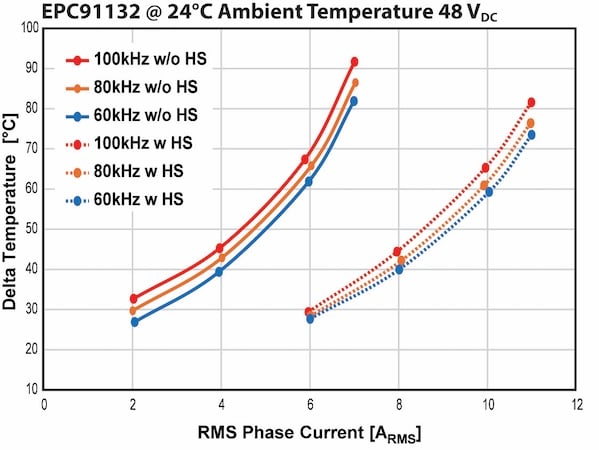
Figure 3. Output current capabilities of EPC33110 operated at 100 kHz PWM in a humanoid robot joint. Image used courtesy of Bodo’s Power Systems [PDF]
DcBus = 48 V, PWM frequency = 60, 80, 100 kHz. Without (left) and with (right) the motor case as heatsink for the module
The temperature measurements were taken by attaching a thermocouple to the top of the EPC33110 module in both cases, with and without the motor cover serving as a heatsink. The temperature was also recorded using a thermal camera, and, for measurements with the motor cover, a square hole was engraved to enable internal temperature monitoring.
While in the case of humanoid robot joints, natural convection cooling is the only option, in drone applications, the propellers generate strong airflow, providing thrust and effective cooling for the entire system, thereby increasing the inverter’s current capability.
EPC33110 Performance in EPC91132 Mounted in a Drone Motor
EPC33110 performance was also evaluated in a drone application, using the Vertiq 23-06 220KV motor equipped with a 12-inch underactuated propeller. The tests were performed from 1000 rpm to 3400 rpm, which is the maximum achievable speed of this motor under these load conditions at 24 V input voltage.
For each speed, the device temperature was measured by attaching a thermocouple to the top of the EPC33110 module and waiting approximately 10 minutes until thermal equilibrium was reached. The average input power required at each speed was measured (Figure 4), and the propeller torque was estimated at each speed (Figure 5).
The drone motor was driven at a switching frequency of 100 kHz with a 20 ns dead time. The maximum temperature increase of the device was about 4°C (with an ambient temperature of 26°C).
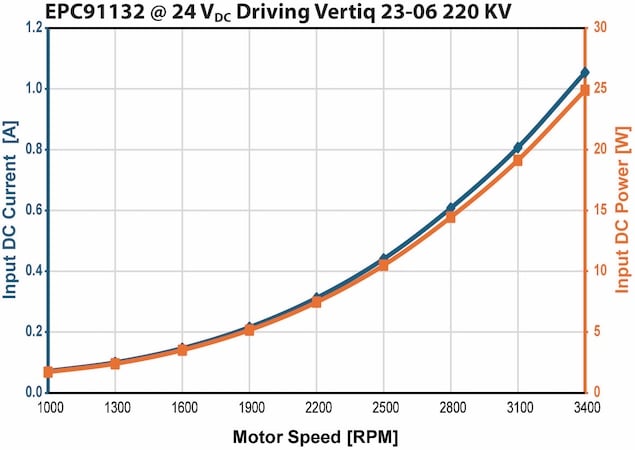
Figure 4. Input DC current and power required by the motor to sustain the torque generated by the propeller vs. motor speed. Image used courtesy of Bodo’s Power Systems [PDF]
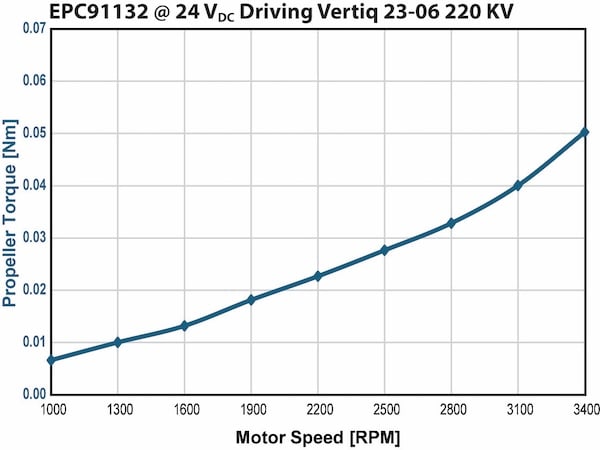
Figure 5. Propeller torque vs. motor speed. Image used courtesy of Bodo’s Power Systems [PDF]
Conclusion
The EPC91132 is a 23 mm small-motor-drive inverter reference design for humanoid wrists and hands, as well as drones. The heart of the EPC91132 is the EPC33110 GaN module based on Efficient Power Conversion GaN monolithic integrated circuit technology.
The EPC33110 is a compact three-phase module in a 6x6.5 mm QFN package that integrates three GaN half-bridges with built-in gate drivers, bootstrap circuits, and level shifters, optimized for motor control. A single 5 V power supply can power the module to operate up to 80 V with a typical on-resistance of 11.7 mΩ, supporting 3.3 V or 5 V logic inputs.
The EPC33110 is designed to drive three-phase permanent-magnet motors commonly used in drones and humanoid robots. The EPC91132 reference board supports these applications with a wide 10–60 V input range and includes complete motor drive features.
Thanks to top-side cooling optimized by the exposed dies, EPC33110 can deliver up to 11 ARMS continuously per phase, as verified in steady-state tests on a humanoid joint motor mounted on a dynamometer bench.
Reference
[1] “GaN Power Devices for Efficient Power Conversion”, Fourth Edition – by Alex Lidow, Michael de Rooij, John Glaser, Alejandro Pozo Arribas, Shengke Zhang, Marco Palma, David Reusch, Johan Strydom.
[2] LKMTECH, MG8008-i9v3 (2026, May 1), http://en.lkmotor.cn/ ProDetail.aspx?ProId=265
[3] Vertiq, 23-06 G1 Module (2026, May 1), https://www.vertiq.co/23-06-g1
[4] Three-Phase Module Based on Monolithic GaN Half-Bridge ICs, in Bodo’s Power Systems, December 2025, pages 24-26, by Federico Unnia, Marco Palma.
This article originally appeared in Bodo’s Power Systems [PDF] magazine.