Facebook
 Google
 GitHub
 Linkedin
Omron Relay: Higher Power in a Smaller Package
The high-power PCB relay offers up to 51% space savings over comparable 480 VAC 55 A relays.
High-voltage applications, such as electric vehicle charging stations and solar power inverters, require robust and durable components that can handle substantial electrical loads within limited space. Traditional relays, while effective, often struggle with size constraints and energy efficiency when adapted to modern energy infrastructures.
Omron Electronics has introduced its G6QG high-power PCB relay to offer compact design and high-capacity switching.
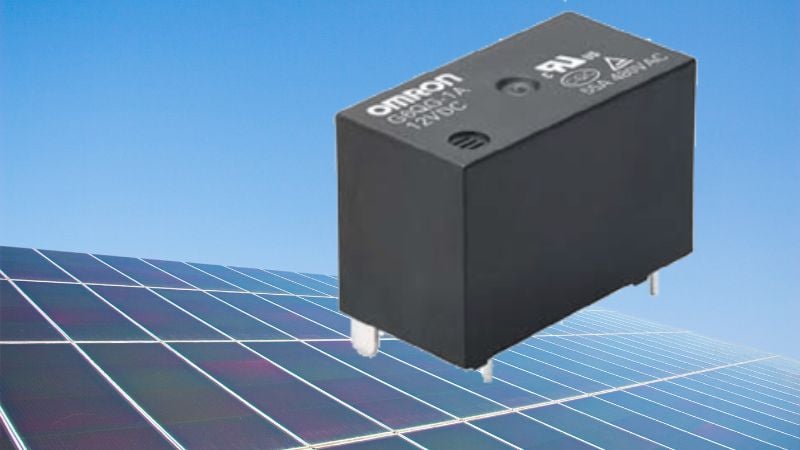
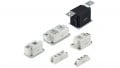
G6QC high-power PCB relay. Image used courtesy of Omron
Power Management with Relays
On the highest level, relays serve as the “on-off” gatekeepers for controlling high-power circuits. Protecting delicate electronics from overloads, a relay links low-power control signals with high-power loads.
Electromechanical relays use an electromagnet, a movable contact, switching points, and a spring. The electromagnet is a coiled copper wire wrapped around a metal core, with the coil ends connected to the relay's pins. When current flows through the coil, the magnetic field attracts the movable contact, opening or closing the switching points to control an electrical circuit. When the current is removed, the spring returns the contact to its original position. Unfortunately, standard relays struggle with durability under heavy loads in applications requiring high-capacity switching, such as photovoltaic inverters and EV chargers.
A key parameter in electrical relays is their electrical insulation. Electrical isolation refers to the physical and electrical separation between the relay's control circuit and its load circuit such that high-voltage currents in the load circuit do not affect the low-voltage control side. Insufficient insulation can lead to arcing and equipment failure.
Another desirable feature in modern relays is the ability to control and switch large electrical currents and voltages without damage or performance loss. Often coming at a tradeoff with physical size, this capability requires robust contacts and sufficient insulation.
Omron’s Power Relay
Omron Electronics has unveiled its G6QG, a PCB-mounted high-power relay in a compact package.
Weighing only 18 grams, this relay occupies just 488 mm² of PCB space, which Omron claims is a 51% reduction in the mounting area compared to traditional 480 VAC, 55 A relays. Specifically, the profile of this relay is 33% lower and 50% lighter than comparable models, allowing integration into smaller, lighter, and more versatile designs.
Built for high-capacity switching, the G6QG combines substantial contact durability with an optimized power-to-weight ratio. The relay features a large 2 mm contact gap that enhances insulation and complies with the Solar Power Generation Standard IEC62109. As an additional means of safeguarding against electrical faults, the relay family boasts a high withstand voltage of 10 kV between coil and contact.
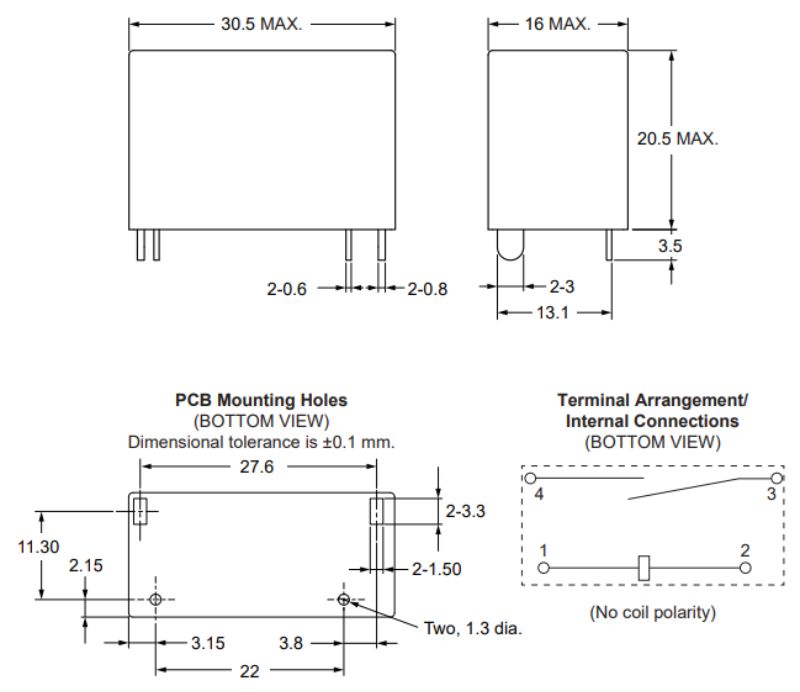
Dimensions of G6QG relay. Image used courtesy of Omron
According to the datasheet, the G6QG’s coil holding voltage operates between 35% and 50% of the rated voltage. Power consumption, meanwhile, is reduced to around 12% of the rated voltage, with an overall operating consumption of 1400 mW or 172 mW under 35% holding voltage.
To the Future
As power infrastructure grows increasingly complex and spatially constrained, compact, high-capacity solutions like Omron’s G6QG relay will be increasingly necessary for power systems.