Facebook
 Google
 GitHub
 Linkedin
OmniOn Power System Improves 5G Transmission
The system improves efficiency, reduces voltage drops, and reduces costs in 5G infrastructure.
As the telecommunications industry rapidly transitions to 5G, the demand for lower latency, faster speeds, and more robust connections is driving significant changes in network infrastructure. Operating on higher frequency bands, 5G enables faster data transmission and greater capacity but introduces technical challenges. The power requirements for 5G radios are substantially higher than their 4G predecessors, complicating upgrades to existing macro cell sites and creating infrastructure bottlenecks. Additionally, voltage drops during power transmission up cell towers can affect 5G performance, necessitating solutions to maintain consistent power.
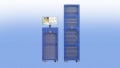
OmniOn has introduced the VoltScaler system, a technology designed to optimize power delivery for 5G remote radio heads (RRH). The product addresses the technical challenges in deploying 5G technology.
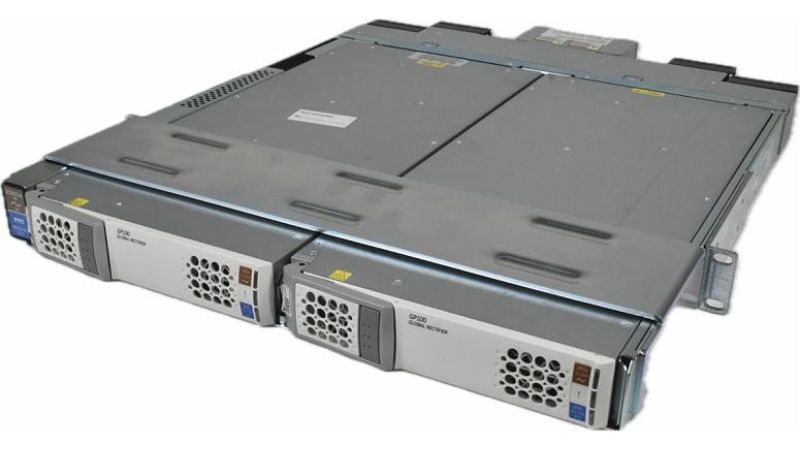
The Voltscaler system. Image used courtesy of OmniOn Power
Infrastructure Constraints of 5G
5G is the fifth-generation mobile network, succeeding the 1G, 2G, 3G, and 4G wireless standards. Compared to previous generations, 5G operates on higher, less congested frequencies, resulting in faster data transmission and greater capacity. While 5G is objectively more performant than its predecessors, this leap in communication technology comes with significant technical challenges.
One key issue is the power demand. 5G radios require about 60% more power than 4G, straining the existing infrastructure. This surge in power needs complicates the upgrade of macro cell sites, as conventional systems can no longer meet the increased energy demands of remote radio heads.
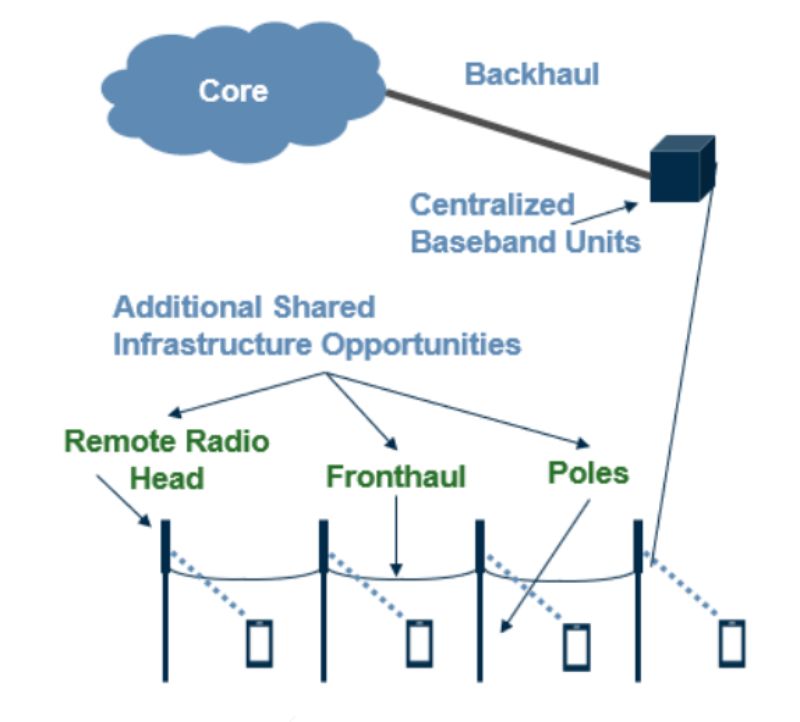
Remote radio head system. Image used courtesy of State of New York
RRHes are crucial subsystems in modern distributed base stations. These solutions, placed near antennas on cell towers, house the RF circuitry along with analog-to-digital and digital-to-analog converters and up/down converters.
The main challenge with RRHes is the voltage drop when power is transmitted up cell towers. Additionally, deploying 5G requires more dense networks, meaning more cell towers and small cells are needed to cover the same area as 4G, increasing the complexity and infrastructure cost. Moreover, while 5G offers lower latency and higher speeds, it is vulnerable to interference and has a shorter range than 4G, necessitating more precise network designs and planning.
Scaling 5G Power With Voltscaler
OmniOn’s VoltScaler system addresses 5G’s growing power demands.
VoltScaler uses DC/DC converters to boost nominal -48 VDC power to as much as -73 V, compensating for the voltage drops that occur when power is transmitted up cell towers. The system includes three converter modules, each with three independently operated 2708-W circuits, allowing the efficient powering of nine RRHes from a single 1RU platform. Each circuit has integrated protection and bypass functionality, ensuring consistent power delivery even if one circuit fails.
This design reduces the need for expensive cable upgrades and increases power conversion efficiency by up to 97%. VoltScaler's architecture also allows for efficient scaling, supports higher-powered 5G RRHes, and can extend RRH uptime by up to 35% during battery discharge.
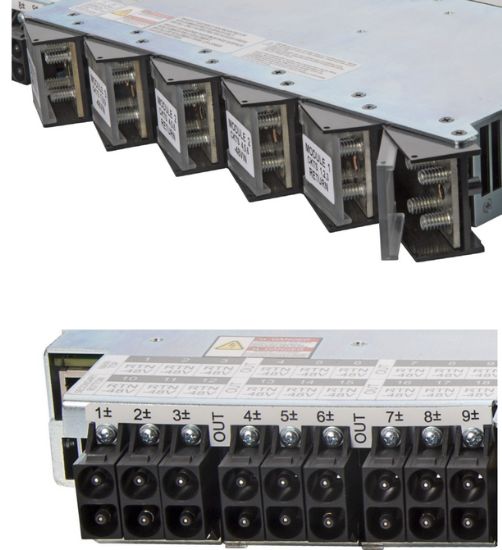
The VoltScaler’s DC input and output connections. Image used courtesy of OmniOn
The system allows for remote monitoring and control of individual circuits based on load variations. The compact size, available in 1RU and 2RU configurations, offers high power density, enabling easy integration into existing power systems.
Shaping the Future of 5G Power Management
As 5G continues to expand, solutions like OmniOn’s VoltScaler hope to optimize network efficiency and reduce infrastructure costs. By addressing the heightened power demands and mitigating voltage drops, the VoltScaler system enables sustainable network upgrades and more scalable, cost-effective, and resilient networks.