Facebook
 Google
 GitHub
 Linkedin
Wish List: What Power Pros Need To Meet Future Energy Demands
What do power industry leaders prioritize in modernizing the grid?
Modernizing grid infrastructure requires constructing wind and solar farms, replacing transmission lines, and upgrading outdated equipment. However, artificial intelligence, digitalization, and real-time data analysis may be the keys to meeting future power demands.
Three ways AI can help the power grid. Video used courtesy of NES Fircroft
Nearly all energy professionals—95%—believe that integrating AI throughout the grid is necessary to stay competitive, according to Industrial Intelligence: 2024 Industry Insights, a report issued by AVEVA, an industrial software developer. At the same time, power pros named supply chain problems and budget limitations as major obstacles in advancing grid infrastructure.
“With global power demand set to more than double by 2050, the power industry must meet this growing demand while navigating stricter environmental mandates, the ever-increasing impact of climate change, supply-chain disruptions, inflation, cybersecurity and physical security threats, and increasingly complex grids,” Ann Moore, Industry Principal of Power & Utilities at AVEVA, told EEPower.
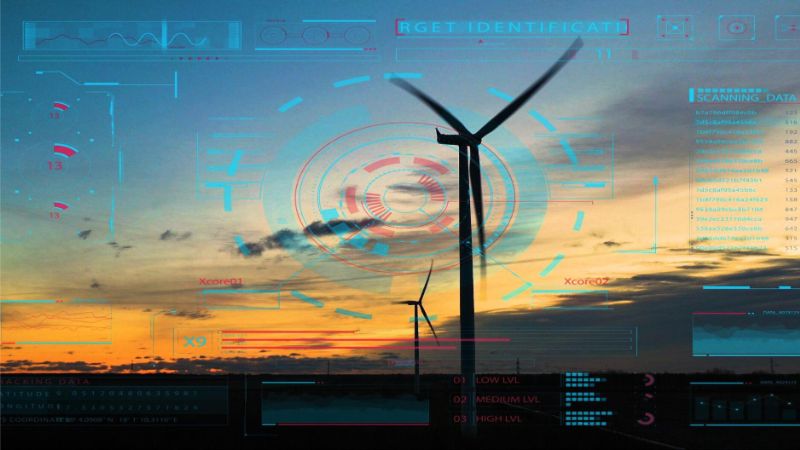
Concept of AI-enhanced renewable energy. Image used courtesy of Adobe Stock
Responding to the Changing Energy Landscape
AVEVA prepared the report based on a survey of 500 executives, including engineers, in infrastructure companies in Europe, North America, Australia, and the Middle East. Respondents indicated better data and collaboration would increase efficiency in operations and processes.
“Collaboration among utilities, academia, research organizations, and technology suppliers foster innovation, combining practical industry knowledge with cutting-edge research and technological expertise,” Moore stated.
Decarbonization goals and renewable energy are rapidly changing how energy is produced and distributed. At the same time, extreme weather conditions pose challenges to physical infrastructure. Meeting these challenges requires a two-pronged approach, according to Moore.
“Utilities will need to harden the grid through physical means (undergrounding lines) and digital means (improved situational awareness and visibility), management, and power grid reliability,” Moore said.
Seeking a Data-Driven Grid
As more renewable resources come online, traditional grid management tools are becoming insufficient. Many see AI as the answer to managing demand.
Nearly three-quarters (72%) of energy executives reported not fully integrating AI into their systems, but more than half (69%) said they planned to invest in industrial intelligence (a range of AI-enhanced tools used in industry) within the next year. Almost as many (66%) said they make decisions without having real-time information, and one-quarter of respondents stated they never have real-time information.
Manufacturers and suppliers are enhancing nearly all grid assets with AI, from power plants to transmission lines to substations. AI platforms are increasingly managing grid management. This software is essential to managing renewable energy sources and integrating distributed energy resources.
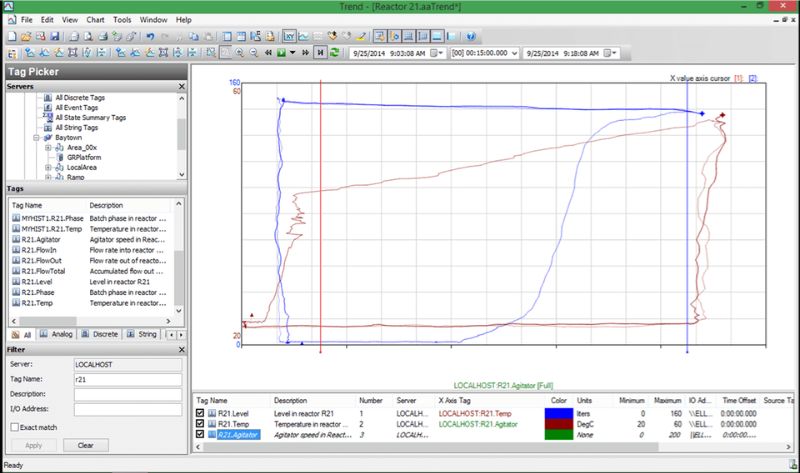
AI systems include data analytics like AVEVA’s Historial Trend OMI app. Image used courtesy of AVEVA
AI can optimize energy efficiency and provide real-time data on voltage, current, faults, and other grid functions. Some platforms can also gather and analyze data to predict weather conditions or maintenance needs. However, grid executives reported that supply chain and budget constraints hampered their modernization efforts. About 52% said supply chain issues impacted their efficiency. Many (47%) said they wanted more collaboration among suppliers, partners, and users.
The report identified several benefits of a data-driven approach:
- Increased operational efficiency (50%)
- Higher levels of innovation and customer satisfaction (46%)
- Better ability to meet challenges (41%)
“While we don’t know all the answers yet, we know that the utilities are working toward building a modern, reliable, resilient, and affordable grid,” Moore said.
Developing the Workforce for Infrastructure Improvements
The report recognizes the need for a better-trained workforce as the grid becomes increasingly digitalized. Executives (52%) stated they face talent shortages to meet their needs. The report stresses the importance of recruiting and retaining qualified workers.
About half of the respondents believed training the next-generation workforce would be challenging as the power industry transitions to renewable energy and a data-driven grid. Most survey respondents (58%) wanted to empower their workforce with technology. Naveen Kumar, AVEVA’s Chemical Segment lead, stated that more than 50% of technologies needed to achieve net zero emission have not been developed yet. He noted that digitalization can provide solutions to support the workforce transition and inspire the next generation.
According to the Johns Hopkins Whiting School of Engineering, AI applications in engineering may include data analysis, design optimization, predictive maintenance, and cybersecurity. The school is among many offering certification courses and continuing education.