Facebook
 Google
 GitHub
 Linkedin
5 New Components for Smarter, Smaller, Safer Power Systems
New components from GAIA, Infineon, Metis, ROHM, and TDK focus on improving power density, system safety, and integration across energy, automotive, and industrial applications.
Component manufacturers continue to push design limits with products that improve power density, reduce complexity, and support emerging system needs. GAIA, Infineon, Metis Engineering, ROHM, and TDK have each introduced new hardware aimed at applications that demand precision, durability, and compactness. These latest releases fit into larger trends in electrification, energy management, and system safety.
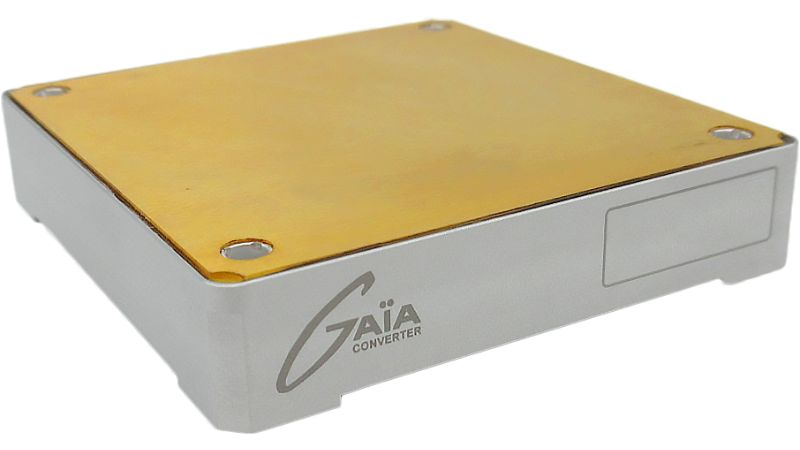
The MGDM-500/P DC-DC converter. Image used courtesy of Gaia Converter
Modular Power at Scale from Gaia
Gaia Converter’s latest release, the MGDM-500/P, redefines modular power conversion by offering a rugged, high-density DC-DC converter with an elegant parallel scaling architecture. Each compact chassis-mount module—measuring just 61x64x12.9 mm—delivers up to 500 W of isolated output power with efficiency exceeding 91%, supporting four output voltages: 12 V, 15 V, 24 V, and 28 V. The unit accepts two wide input ranges (9–40 VDC and 16–80 VDC), making it suitable for complex multi-bus systems often found in military and aerospace environments.
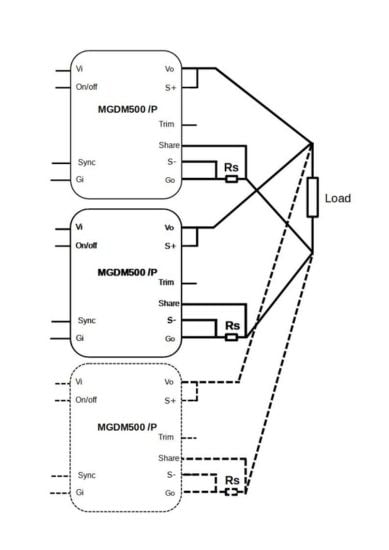
Converters in parallel. Image used courtesy of Gaia Converter
Gaia’s droop control technology ensures natural load sharing by introducing virtual resistance and adjusting each module’s output voltage slightly based on its current load. This promotes balanced power delivery with reduced complexity and enhanced fault tolerance, an essential feature in high-reliability applications. Built to meet rigorous standards such as MIL-STD-704, MIL-STD-1275, MIL-STD-461, and DO-160 and potted with a specialized thermal compound, the MGDM-500/P is engineered for extreme operating conditions.
Infineon P-Channel MOSFET for Radiation-Tolerant Lineup
Infineon has released a 60 V P-channel radiation-tolerant MOSFET designed for power systems in low earth orbit applications. This is the first P-channel device in the company’s NewSpace portfolio and complements its existing 60 V and 150 V N-channel offerings. The device is intended for high-side switching roles, where P-channel technology allows simpler gate drive design and reduces overall component count in power distribution systems.
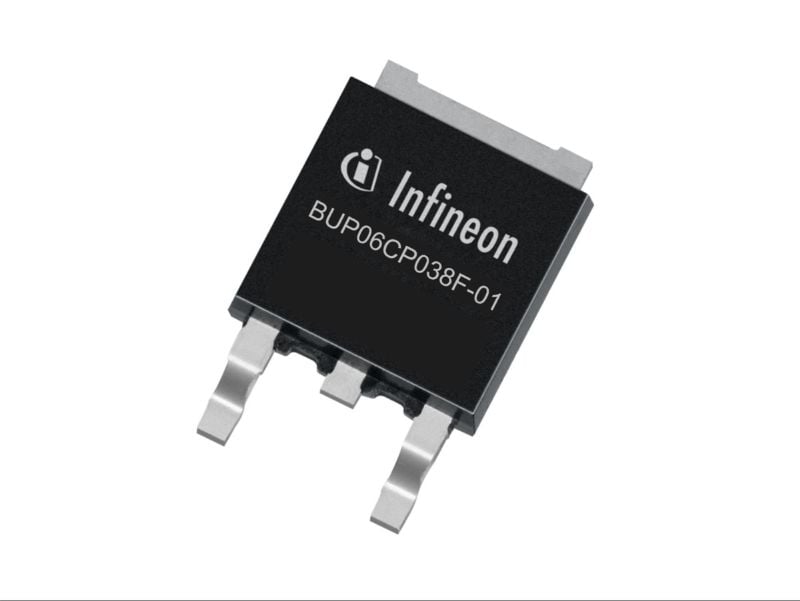
P-channel MOSFET. Image used courtesy of Infineon
Unlike traditional space-grade MOSFETs in hermetic packages, this device uses plastic encapsulation. That approach supports higher production volumes and lowers costs while also reducing weight for space-constrained systems. Qualification includes AEC-Q101 standard tests, as well as additional outgas and salt atmosphere screening. Radiation tolerance is specified at 30–50 krad (Si) TID and 46 MeV·cm²/mg LET for SEE. The device operates across a temperature range of -55°C to 175°C. This release is part of a broader NewSpace strategy that also includes N-channel MOSFETs built with Infineon’s CoolMOS superjunction technology for improved switching speed.
CAN-Based Environmental Sensors from Metis Engineering
Metis Engineering has released three configurable environmental sensors—Cell Guard, H Guard, and Air Wise—designed for safety and operational monitoring in energy storage, EVs, hydrogen infrastructure, and HVAC systems. All three devices use CAN bus communication (ISO 11898), allowing fast data exchange, standardized integration, and support for complex multi-node systems.
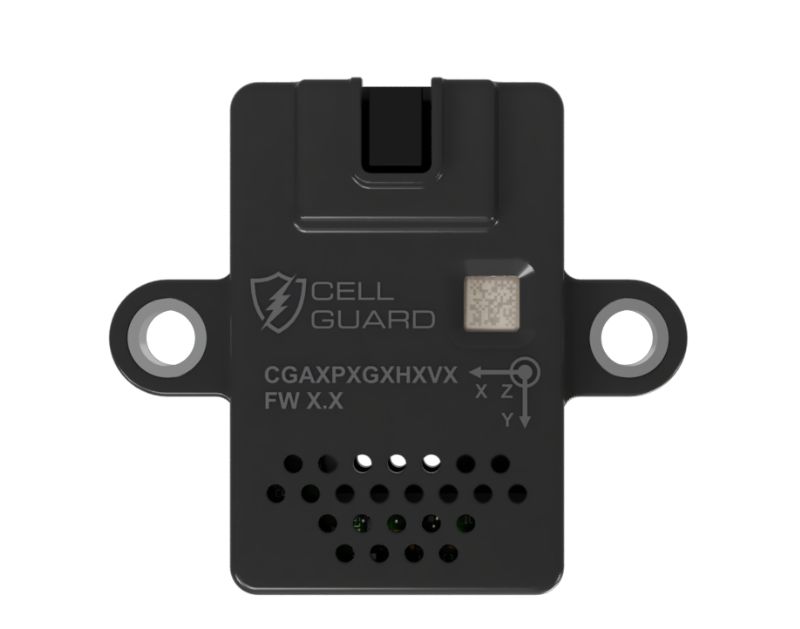
Cell Guard. Image used courtesy of Metis Engineering
Each sensor operates from -20°C to +70°C and supports programmable thresholds, silent low-power modes (7.5 mA @12 V), and modular add-ons like hydrogen sensing or accelerometers. This makes them suitable for continuous monitoring without significant system overhead. Cell Guard tracks seven environmental variables—VOCs, pressure, humidity, and mechanical shock—to detect early signs of battery degradation and thermal runaway, H Guard is a hydrogen gas detector with 10 ppm sensitivity, and Air Wise uses NDIR technology to monitor CO₂ (400–5000 ppm, ±30 ppm accuracy) and NOx emissions.
ROHM's 650 V GaN HEMT in TOLL Package
ROHM has launched the GNP2070TD-Z, a 650 V GaN HEMT in a TO-LeadLess (TOLL) package, designed to improve power density and switching efficiency in industrial and automotive systems. This second-generation GaN-on-silicon device achieves a 38% reduction in the RDS(on) × Qoss figure of merit (2.5 Ω·nC typ.), pushing performance in 1 MHz switching applications to 92% efficiency. Under hard-switching conditions at 650 V and 10 A, dynamic RDS(on) variation stays under 5%, addressing earlier concerns about GaN stability and reliability.
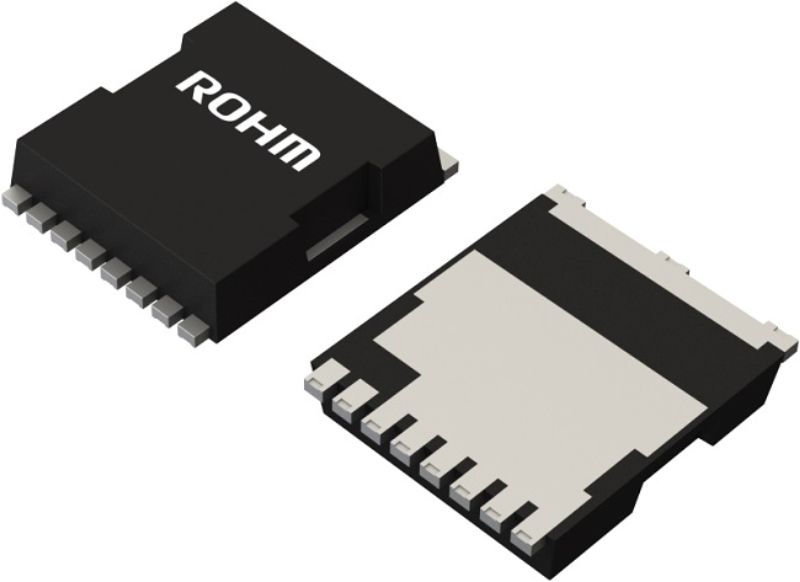
The GNP2070TD-Z. Image used courtesy of ROHM
The TOLL package offers key advantages for thermal and electrical performance. It supports 70 A continuous current with a thermal resistance of 3.2°C/W and integrates a Kelvin source to lower switching losses. Its footprint (11.7×9.9×4.5 mm) allows for 2070W/in³ power density in converter designs, outperforming earlier DFN packages. ROHM's vertically integrated design process enabled coordination between chip and package, improving conduction losses by 12% compared to other GaN solutions.
TDK EP9 Shrinks Gate Driver Transformers for 500 V Systems
TDK has released the EPCOS EP9 series, a surface-mount gate driver transformer built for 500 V systems used in automotive and industrial power applications. The new series is smaller than the earlier E10EM line, measuring just 13x11x11 mm. This compact size helps with space constraints in inverters and DC-DC converters without compromising electrical performance.
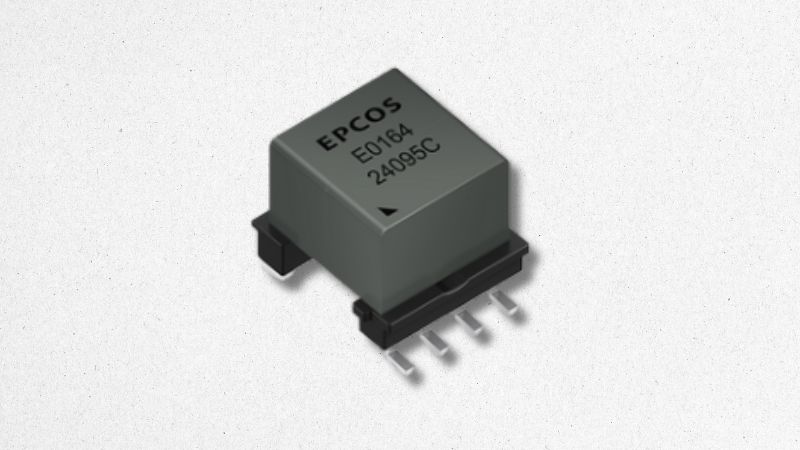
The EPCOS EP9. Image used courtesy of TDK
The EP9 series is designed for use in half-bridge and push-pull converter topologies, operating at frequencies between 100 and 400 kHz. These transformers are built on a MnZn ferrite core using L-pin SMD construction. They function across a -40°C to +150°C temperature range and are qualified to AEC-Q200 Rev. E. Creepage and clearance distances reach 5 mm, supporting insulation and safety requirements.