Facebook
 Google
 GitHub
 Linkedin
Modular, Configurable Power for Industrial Systems, Data Centers
Here's how efficient, configurable power supplies can provide sustainable, high-density power architectures in the face of increasing power demand.
This article is published by EEPower as part of an exclusive digital content partnership with Bodo’s Power Systems.
Global electricity consumption will grow by 3.5% over the next few years, driven by increased demand across all sectors, not least energy-intensive industrial applications and data centers addressing demand requiring processing capacity for artificial intelligence (AI) and machine learning (ML). At the same time, legislative, environmental, and operational cost challenges pressure designers and system architects to deliver optimized power supply and conversion technologies that support ultra-efficient and scalable power delivery in the smallest possible form factors.
Power Demands of Next-Generation Applications
Motors are a key element of many industrial systems, consuming significant electricity. In fact, estimates suggest that motor-driven systems are the largest energy consumers, at around 40% of all electricity use. Industrial applications are growing rapidly, with factories being upgraded to meet the needs of Industry 4.0, bringing in industrial Internet of Things (IIoT) with its diverse power needs.
Due to the need for a diversity of power levels, powering an industrial facility can be a challenge. Motors can require anything from a few tens of watts to multiple kilowatts. Many control systems have standard requirements to power logic levels, while sensors and other application-specific devices can require non-standard voltages, many of which may not be available from a standard power supply.
As technology in industrial applications becomes more mobile (for example, automated guided vehicles in logistics operations), there is an increasing need for power solutions with a constant current output to recharge batteries.
The data center sector also uses huge amounts of power, which supports the cloud-based services relied on by many aspects of people’s daily lives. Demands for these services are growing exponentially, especially with the staggering growth of AI and ML applications and the increased virtualization of telecommunications. A recent report estimated that data centers consumed 460 TWh in 2022 and between 650 TWh and >1,000 TWh in 2026, meaning there will be a minimum of 40% growth in consumption, with more than doubling possible.

Figure 1. Modern data centers require huge amounts of power. Image used courtesy of Adobe Stock
Many AI servers consume >100 kW, leading to some refining of the power architecture within data centers. It is becoming more common to use 48 V as the bus voltage, with 48 V standardization being driven by the Open Compute Project’s Open Rack initiative. Moving to 48 V from 12 V lowers current and the associated power losses in cables and drives down heat generation, leading to energy savings in both power supply operation, cooling, and ventilation.
Modular, Configurable Power
Power density is strongly linked to the efficiency of the power supply. If the supply is more efficient, then less waste heat is generated. This means that less space is needed for thermal mitigation measures such as fans or heatsinking. As less forced air is required to pass through the power supply unit (PSU), components can be placed closer together, reducing overall space consumption. Of course, increasing efficiency is not trivial and requires high-performance components, efficient topologies, good design practices throughout the PSU, and experience in designing for efficiency. At the same time, delivering optimized power (i.e., exactly what an application needs) ensures no more power than necessary is consumed.
All these factors drive the growth in configurable, modular power supplies.
In general, power supplies contain a front end that rectifies the AC mains and provides power factor correction (PFC) and safety isolation, followed by a second stage to produce the voltages for the loads. A modular, configurable power supply retains this electrical architecture. However, while the front end (PFC) is fixed in the chassis, each output is usually a discrete module that plugs into a backplane at the primary/secondary boundary.
Most manufacturers offer a range of output modules, many of which are adjustable. This, along with the ability to connect multiple modules in parallel or series, allows an unlimited number of output configurations to be realized with little more than a screwdriver. Modules normally contain protection features (OVP, OCP, short-circuit, etc.) and a remote sense for use with distant loads.
As the primary difference between a standard and a modular configurable PSU is mechanical (the physical split between primary and secondary), a configurable PSU is just as efficient as any similar standard PSU. In addition, the modular approach supports the concept of optimized power thanks to its flexibility. System engineers can rapidly configure a single PSU solution that delivers standard logic and non-standard voltages for more unusual system components without buying an ‘over-specified’ off-the-shelf solution.

Figure 2. NeoPower NP08 offers up to 4 kW of power in a compact eight-slot chassis. Image used courtesy of Advanced Energy and Bodo’s Power Systems [PDF]
Modular solutions are no longer limited to low- and medium-power designs. For higher power industrial and medical applications, for example, Advanced Energy recently launched the NeoPower configurable power solution that can supply up to 4 kW of power in a 2.5” high, 8-slot chasses with an input voltage range of 90 - 264 VAC.
Units are configured via a proprietary graphical user interface (GUI). Five galvanically isolated output modules are available, with fixed and adjustable output voltages up to 300 VDC. Modules can be connected in series and parallel to achieve many voltage and current options. Both voltage source and current source operation are possible.
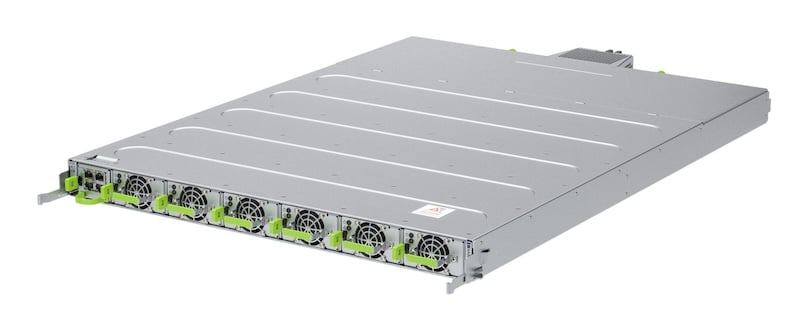
Figure 3. Advanced Energy’s 18 kW Open Rack power solution. Image used courtesy of Advanced Energy and Bodo’s Power Systems [PDF]
Modular power for the rack-mounted architectures of data centers takes a slightly different approach that is driven by standards such as the OCP’s ORv3 specification that provides a base frame for large-scale deployment of racks. Advanced Energy, for example, offers an ORv3-compliant rack power shelf in its Artesyn product line, into which six 3 kW power modules can be fitted to deliver up to 50 V/18 kW capability.
The 3 kW rectifier modules, which feature best-in-class 97.8% efficiency and accept an AC input in the range of 200 to 277 VAC, are fully OCP-compliant and hot-pluggable to support redundancy within the rack.
The 1OU rack can be used with one or two power cords giving the option for N+1 redundancy (15 kW) or N+N redundancy (9 kW) with dual cords. Input configurations can be 3P Delta 4 W, 3P Wye 5 W, and 3 x of 1P.
Connectivity, Communication and Monitoring
Finally, it is worth noting that modern PSUs are increasingly ‘connected.’ NeoPower NP08 has a communication bus that supports MODBUS RS-485 and various other protocols, such as PMBus and CANOPEN, using a dongle. NeoPower will support multiple industry-standard protocols while not adding unnecessary cost and complexity to the base model. The 3 kW Open rack has DTMF Redfish compatible Ethernet via a hot-pluggable shelf controller.
Digital communication buses allow system designers access to key PSU operating parameters such as voltage, current, and temperature. Monitoring this information for unexpected changes (such as additional power being drawn) can warn of impending failure, preventing a simple maintenance task from becoming a full-fledged breakdown.
This article originally appeared in Bodo’s Power Systems [PDF] magazine.