Facebook
 Google
 GitHub
 Linkedin
World’s Smallest Nation Goes All-In on Solar With Agrivoltaics
Vatican City has signed a deal to complete its transition to 100% solar energy while preserving local croplands through agrivoltaics.
Vatican City has accomplished something no other sovereign nation has achieved: it’s now powered entirely by renewable energy. Granted, it’s tiny—a population of about 500-800 covering only 0.19 square miles within the city walls—but its commitment to rooftop solar generation has led to Net Zero emissions in less than 20 years.
The finishing touch—an agreement with Italy to establish a solar plant outside the city walls—also preserves local agriculture. The project will employ agrivoltaics, an installation allowing concurrent use of the land for both farming and solar generation.
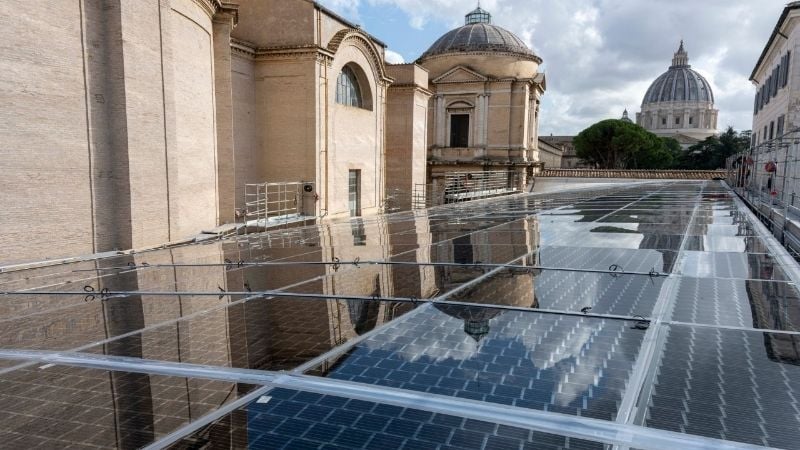
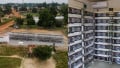
Rooftop solar in Vatican City. Image used courtesy of the Vatican Museums
New Tech Among Ancient Architecture
The Vatican’s move toward solar began in 2008, when it installed 2,400 solar panels on the Paul VI Audience Hall. Those panels generate 300,000 kWh of electricity annually. Over the next several years, the city-state added thermal arrays to the employee cafeteria and other administrative buildings.
Most of Vatican City’s buildings date back centuries, if not a millennium. Two were built in the 1st and 5th centuries C.E., and most were completed between 1500 and 1700. Officials avoided installing panels on the older buildings but chose newer structures. The Paul VI building was completed in 1971; the others with rooftop installations were built more recently.
_appears_in_the_background_.jpg)
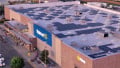
Installation of solar infrastructure atop the Paul VI building. St. Peter’s Basilica (completed in 1626) appears in the background. Image used courtesy of Vatican Museums
In 2024, Pope Francis committed to transitioning to 100% renewable energy, but the Vatican had run out of viable space for solar panels. Instead, the Holy See began looking beyond its walls. It decided on a site at Santa Maria di Galeria, just outside the City of Rome, on Vatican-owned land used for its radio transmission equipment.
In August, the Vatican finalized a bilateral treaty with Italy to create a regulatory framework for the project. The €100 million project will cover 200 hectares and will make Vatican City self-sufficient in energy production.
The agreement also includes a clause ensuring that the solar facility is built “with the greatest possible respect for the land,” meaning the Vatican will use agrivoltaics.
Harvesting Solar Energy While Preserving the Crops
Agrivoltaic technology typically involves mounting photovoltaic modules above crop rows to allow access for farm machinery and sometimes, livestock. The practice protects the soil from degradation and preserves the hydrogeological balance. The panels provide the plants with shade and protection from storms. In turn, the plants cool the panels by releasing water vapor, which improves PV efficiency.
Italy has embraced agrivoltaic development across the country, with several already in operation. The Tarquinia Solar Plant, just north of Rome, uses bifacial PV panels and generates 170 MW of power.
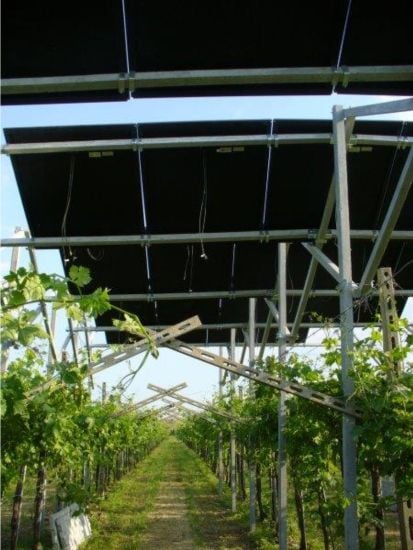
An agrivoltaic system in Italy. Image used courtesy of Wikimedia Commons
The Vatican’s Santa Maria di Galeria plant will generate 80 to 90 MW, making it one of Italy’s largest PV systems. The Vatican will use its power to support Vatican Radio’s operations and feed the excess electricity into the local grid.
The Model in Perspective
Vatican City transitioned to full renewable energy use in less than 20 years and found space for infrastructure within limited space under vulnerable conditions. While this may be inspirational, some perspective is needed.
What the Vatican created is essentially a grid-connected microgrid, and even though it powers the entire city-state, it’s far from the largest in the world. That title belongs to the Red Sea Project in Saudi Arabia, which produces 358 MW AC and 500 MW DC. It uses a record-size 1.2-1.3 GWh battery energy storage system.
Yet, the city-state’s use of agrivoltaics reflects a growing trend. According to Research and Markets, Mordor Intelligence projected the global market to grow from $11.72 billion in 2025 to $14.05 billion by 2026. By 2031, the market could reach as high as $49.44 billion.
Solar developers often face objections and approval hurdles from residents, who oppose converting farmland to solar plants. Agrivoltaics could offer a viable middle ground.