Facebook
 Google
 GitHub
 Linkedin
Energy Users Open to Solar, EVs, and TOU Management
A survey of energy customers could give utilities insights into grid management needs and long-term planning.
Energy sources are diversifying and decentralizing. Increasingly, users are creating microgrids, installing rooftop solar panels and storage batteries, and using bidirectional technology with their electric vehicles. These power sources can contribute to grid stability, especially during peak times, if grid operators can manage them effectively. However, utilities are often uncertain about when and where these user-added sources may be installed. This knowledge gap can make long-term planning difficult.
To better understand user preferences, the technology consulting firm ICF has released the ICF 2025 Energy Customer Insights Report. The report offers insights into energy users’ plans and attitudes toward electrification, load management, and energy efficiency.
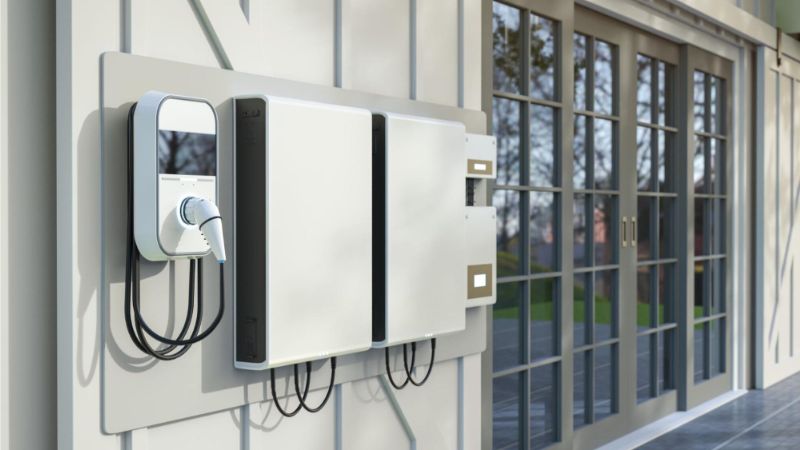
EV charger with battery storage. Image used courtesy of Adobe Stock
Solar and Storage
The ICF report indicated that about 5% of respondents stated they already owned rooftop solar installations. That number varies widely geographically, with California leading the trend. Another 30% stated they were moderately or highly likely to purchase solar panels within the next five years.
The survey results align with other findings. The Solar Energy Industries Association reported last year that 7% of homes in the U.S. have rooftop solar. The association projected that 15% would add solar by 2030.
On-site battery storage is also expected to increase by the end of the decade. The ICF found that while only 2% of respondents had battery storage, 37% were moderately or likely to purchase it soon. Of those considering solar, 69% stated they would likely purchase solar panels and battery storage together.
Most planning solar installations stated they wanted to reduce electricity bills (78%) and reliance on energy from the grid (58%). Those owning battery storage said they used it as backup during power outages (51%). Others indicated they use battery power during high-rate periods.
To charge the home batteries, 44% said they used solar panels, while 23% stated they used the power grid.
Electric Vehicles and Charging
Electric vehicles can challenge or benefit power grids. Home charging during peak times creates localized grid strain. Yet, grids can also draw energy when needed if EVs are equipped with vehicle-to-grid chargers. Understanding trends in EV ownership can assist grid operators with load management and planning future infrastructure upgrades.
Only 1% of the ICF survey respondents reported owning an EV. This number varied widely by region and demographics. That percentage is below other reports. A Gallup News analysis last year put EV ownership at 7% nationwide. In February, Edmunds reported that 7.9% of new vehicle sales were EVs.
In the ICF survey, 27% of respondents said they were likely to purchase an EV within the next five years, with about half (53%) stating they would buy a home charger at the same time.
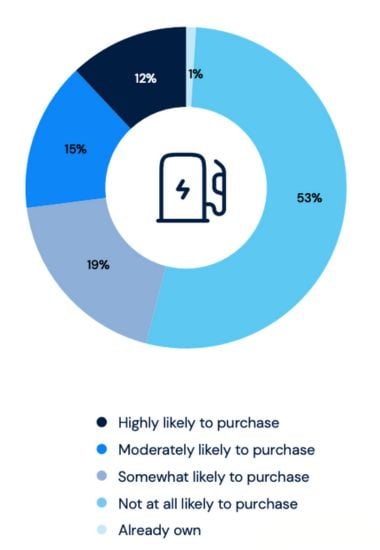
ICF survey results about EV ownership. Image used courtesy of ICF Energy Customer Insights Report
The report did not inquire about vehicle-to-grid charging or smart charging programs. Smart charging can incentivize EV drivers to schedule their charging during non-peak times.
Load Management
Most utilities have already implemented some form of time-of-use (TOU) management. More than 70% use advanced metering infrastructure (AMI), according to the Energy Information Administration. These smart meters allow users to monitor, schedule, and adjust their energy consumption to take advantage of lower rates. Utilities can analyze data from the smart meters to predict consumption patterns and manage power use through load shifting and other strategies.
The ICF report found that most users (64%) support the idea of utilities monitoring and managing their home energy use. About 58% of respondents stated they appreciate the cost savings. Other reasons include increasing energy efficiency (40%), receiving incentives (38%), and supporting grid reliability to avoid power outages (32%). Some 60% indicated they are comfortable with a third-party company managing their electricity use.
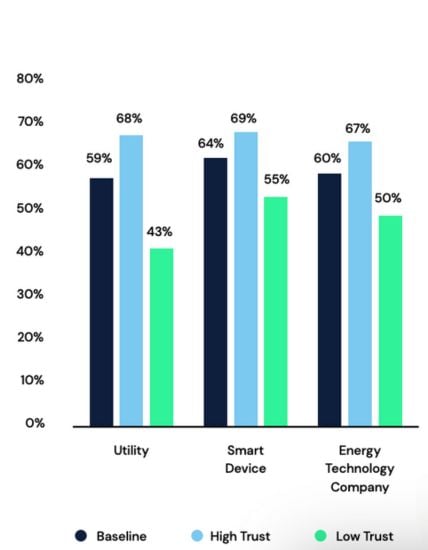
User trust in TOU strategies. Image used courtesy of ICF Energy Customer Insights Report
A small percentage (20%) said they would not allow the utilities to manage their energy use at all. Some respondents (45%) reported being moderately concerned about their privacy. They were hesitant for utilities to have their personal data or know about their energy usage habits.
Report Methodology
The ICF 2025 Energy Customer Insights Report surveyed 10,000 energy customers across the U.S. in July and August 2024. They analyzed the data according to five regional areas: Northeast, Midwest, Southeast, Southwest, and West. Respondents ranged in age from 18 to over 65 and included both homeowners and renters.
The ICF stated its main goal was to assist utility leaders and other decision-makers to better understand energy users.