Facebook
 Google
 GitHub
 Linkedin
Better Battery Management With Chip-on-Cell Technology
Dukosi’s chip-on-cell approach boosts battery performance, safety, longevity, and regulatory compliance.
As electric vehicle and energy storage industries expand, so does the demand for more efficient, safer, and longer-lasting battery systems. Battery management has become an integral aspect of this technological evolution, with engineers and researchers constantly seeking innovative ways to monitor and optimize battery performance.
Traditional battery monitoring methods face limitations in accurately tracking individual cell health, managing thermal issues, and ensuring uniform charging across large battery packs. Dukosi has developed a state-of-the-art cell monitoring system (DKCMS) that is ready for volume production.
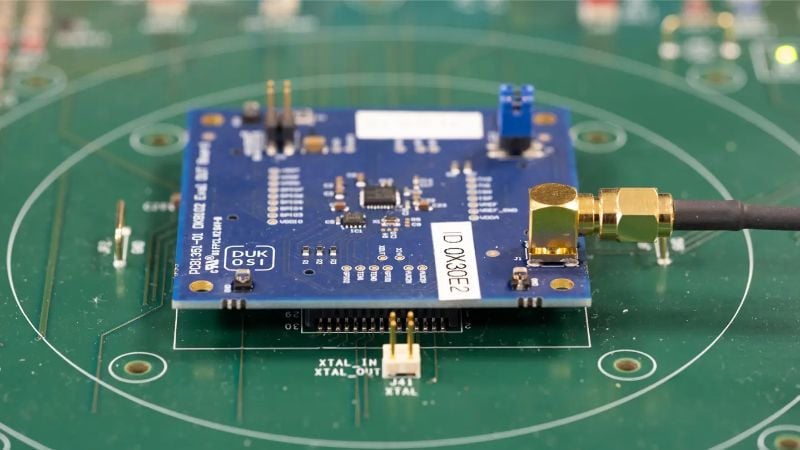
Battery management system components. Image used courtesy of Dukosi
The Battery Management System’s Role
The battery management system (BMS) is an electronic system designed to oversee and safeguard rechargeable batteries to provide optimal performance, longevity, and safety. The system continuously monitors the battery's condition and generates data reports, including metrics such as state of charge, state of health, and residual capacity.
By tracking such metrics, the BMS protects against risks like deep discharge, overcharging, overheating, and excessive current. For example, a BMS’ main function is cell balancing, in which the BMS facilitates uniform charging and discharging across all cells in a battery pack. Without cell balancing, batteries risk thermal runaway, overcharging, or deep discharging, significantly reducing their lifespan and leading to failure.
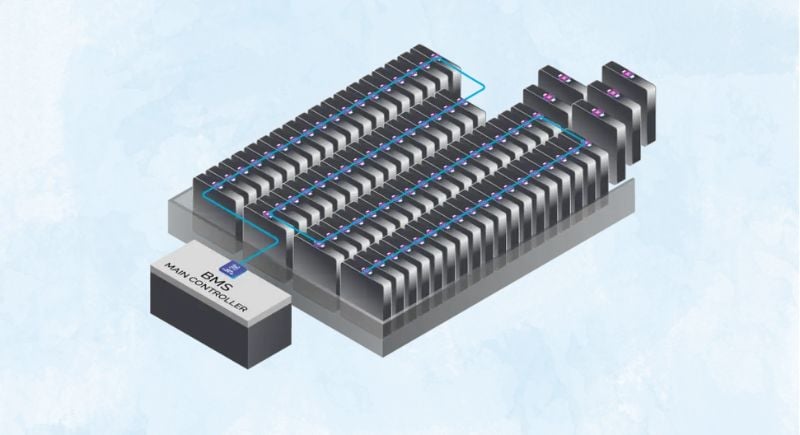
Battery management system. Image used courtesy of Dukosi
As batteries become more integral to the energy infrastructure, the stakes for reliable monitoring solutions have never been higher. However, the modern battery system’s complexity, often comprising thousands of individual cells, presents significant challenges in maintaining efficiency and preventing failures. These concerns are further confounded by the shortcomings of conventional wired systems and the challenges of implementing wireless communication in densely packed battery environments.
Unveiling Chip-on-Cell Technology
Dukosi’s DKCMS employs a unique chip-on-cell architecture. This architecture features the DK8102-AQ-25 Cell Monitor chip mounted directly on each battery cell. DK8102 features high-accuracy, per-cell voltage, and temperature measurements to support optimal battery utilization and cell synchronization. These monitor chips are supported by a single DK8202-AR-25 System Hub chip for overall management.
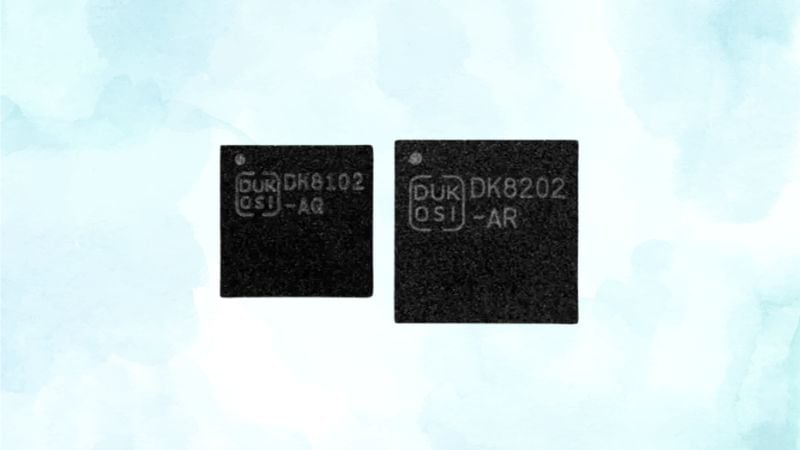
Cell monitor chips. Image used courtesy of Dukosi
The DKCMS utilizes Dukosi's proprietary C-SynQ communication protocol, allowing contactless, bidirectional data transfer between cell monitors and the BMS host via a single bus antenna. This approach overcomes the limitations of traditional wired and far-field wireless systems by ensuring highly secure, robust, and reliable communication with predictable latency. At the same time, the system synchronizes all cell monitor measurements and allows for real-time cell monitoring and diagnostics, including cell balancing.
An AEC-Q100-qualified solution, the DKCMS, is also highlighted for applications like nonvolatile embedded memory, which provides lifetime traceability for each cell.
Looking Ahead
Looking forward, Dukosi sees huge potential and volume for their solution. With one Dukosi cell monitor needed per cell in a standard battery, the company forecasts a potential demand for 2 billion such solutions by 2025.